Flying is already the safest mode of transport and keeps getting safer, but a new study suggests another way for airlines to protect passengers.
According to the research, the most efficient way to evacuate a plane is to distribute elderly individuals strategically throughout the aircraft.
It's something all air travelers dread, but if a plane must be evacuated, the US Federal Aviation Administration (FAA) set a standard time of 90 seconds for passengers to exit the craft and reach the ground.
The FAA established this standard according to controlled simulations, yet it does not reflect real-world conditions, including the inherent chaos of emergencies and the various demographics aboard commercial flights.
For example, older individuals are more likely to experience issues with mobility, dexterity, or cognition.
Accordingly, in December of 2022, the Emergency Vacating of Aircraft Cabin (EVAC) Act was introduced, calling for updated evacuation regulations that consider realistic cabin conditions – which includes limited seat pitch, narrow aisles, aging passengers, and individuals with reduced mobility.
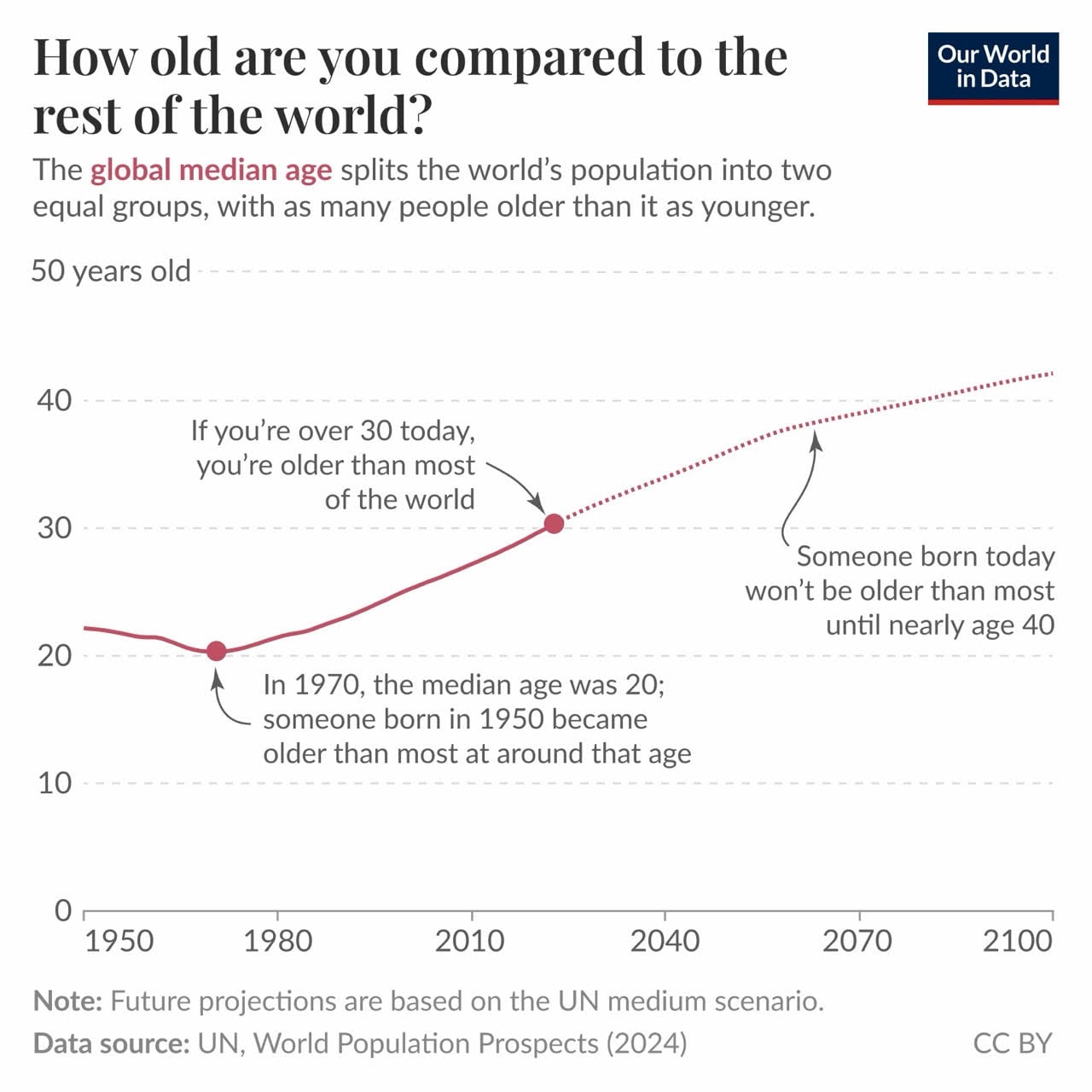
Updated guidelines are essential as the global populace grows older. The global median age is expected to rise from 31 to 36 by 2050, and the number of elderly individuals is steadily increasing.
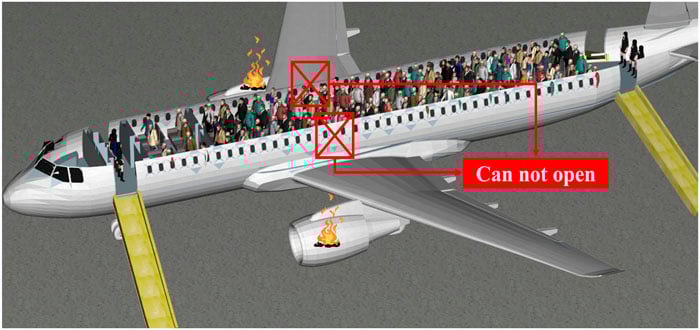
So there's a need to reassess evacuation protocols, perhaps by exploring specific ways to distribute passengers throughout aircraft in case of emergencies, like, say, a double-engine fire, one of aviation's most dangerous situations, potentially caused by bird strikes, fuel system malfunctions, or hard landings.
"While a dual-engine fire scenario is statistically rare, it falls under the broader category of dual-engine failures and critical emergencies in aviation," explains Chenyang (Luca) Zhang, a neuroscientist specializing in human factors in aviation at the University of Calgary in Canada.
"History has shown that dual-engine failures and emergencies, such as the famous 'Miracle on the Hudson' involving Captain Sullenberger, can happen and lead to severe consequences."
With improved air safety in mind, researchers simulated numerous evacuation scenarios in response to a double-engine fire aboard an Airbus A320 aircraft – a situation that prevents the use of a plane's over-wing exits, forcing flyers to funnel toward the front and rear aircraft exits.
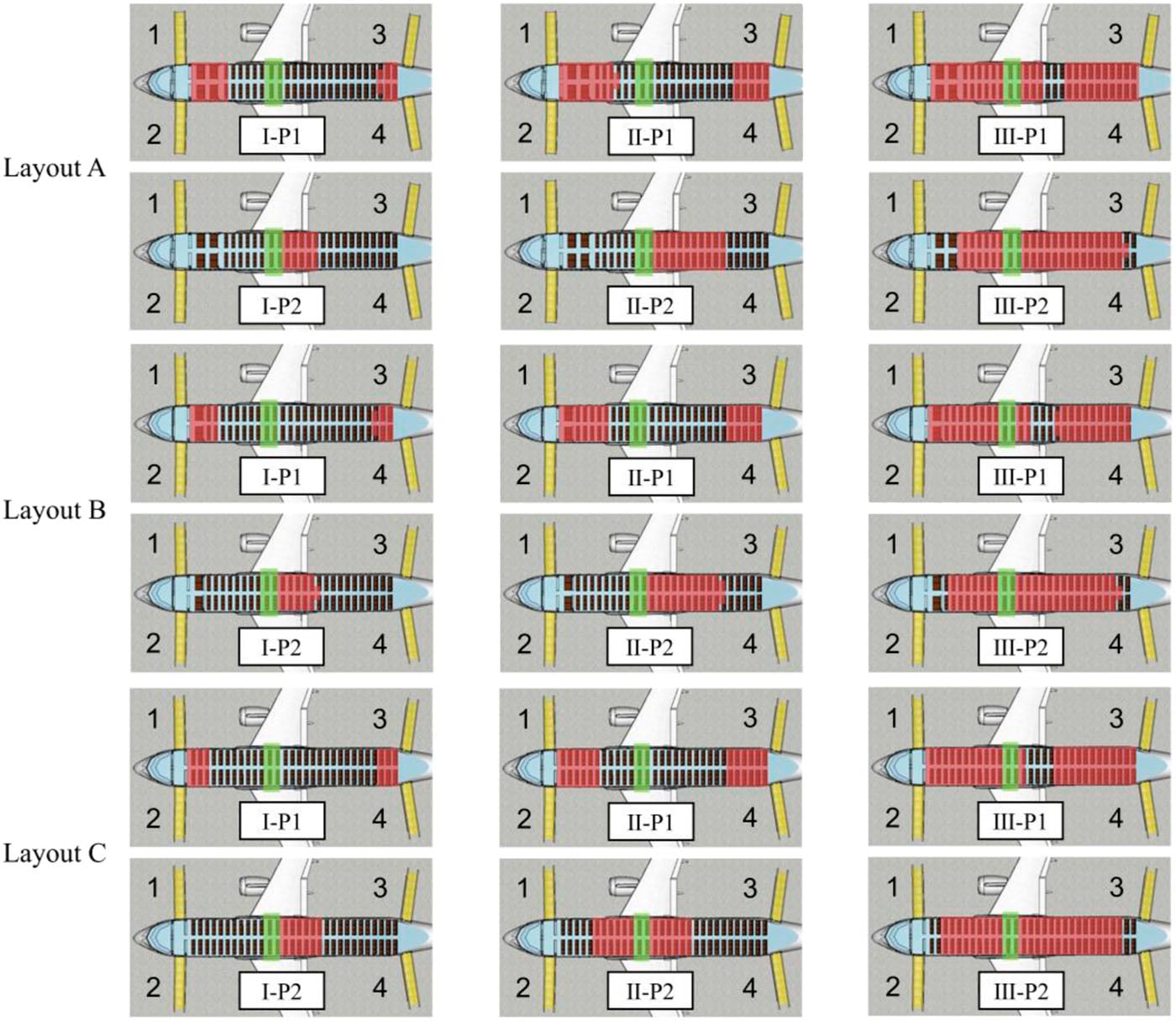
Using the dimensions of an Airbus A320, the researchers modeled three seating layouts holding up to 180 passengers, and simulated evacuation times based on the types of passengers on board and where they were seated.
This included men and women (who, on average, have slightly different heights and walk speeds) that were either over 60 (and considered elderly) or under 60.

Of the 27 total resultant evacuation scenarios, the quickest time of 141 seconds was achieved on a flight plan with the lowest percentage of elderly individuals (20 percent of passengers), and when those elderly individuals were evenly seated in exit-adjacent positions.
Conversely, "the longest time was observed when a high proportion of elderly passengers was present, even when they were positioned near exits," the researchers note, yielding a time of 218.5 seconds.
If this doesn't seem surprising, that may be the point. As the global population ages, the odds of an elderly-dominated flight grow statistically higher, requiring updated safety strategies.
Related: 4 Plane Failures That Are More Common And Less Dangerous Than You Think
"We hope these findings help airlines proactively mitigate risks," Zhang said.
"By understanding how passenger distribution affects evacuation, airlines could potentially implement more strategic seating arrangements to optimize safety without compromising operational efficiency."
This research was published in AIP Advances.