Dementia is a degenerative disease that no known drug can completely stop or reverse, despite decades of tests.
Now, a historically vilified psychedelic is emerging as a possible new avenue for controlling Alzheimer's symptoms.
Neuroscientists around the world are starting to investigate if psilocybin – the psychoactive ingredient in magic mushrooms – can help protect the aging brain.
A recent case study in Brazil hints at that tantalizing possibility.
It reports that after a patient in her 80s with advanced Alzheimer's disease took a high dose of psilocybin-containing mushrooms, she temporarily regained bladder control and the ability to speak beyond monosyllables.
The paper, written by neuroscientists in Brazil, is unfortunately light on some of the details.
But it suggests there were meaningful improvements in the patient's cognitive and physical functions, lasting for several weeks after her doses.
"The findings should not be interpreted as a reversal of Alzheimer's pathology," warn the authors, led by neuroscientist Marcos Lago from the University of Sao Paolo.
"Rather, they raise the possibility that latent functional capacities may persist in advanced neurodegeneration and become temporarily accessible under specific neuromodulatory conditions."
In other words, psilocybin may help tap into brain regions impacted by dementia, temporarily alleviating symptoms, although that idea remains speculative.
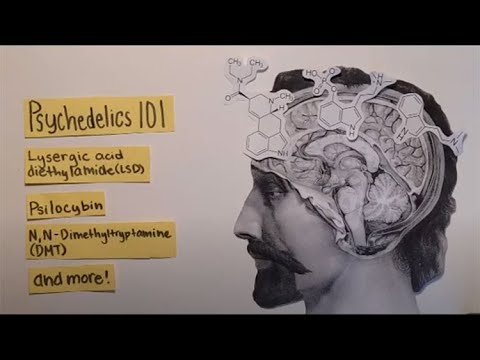
The experimental psilocybin treatment was conducted under clinical supervision in Brazil, with written informed consent from the patient's legal guardian.
The elderly woman with dementia was first treated with an incredibly high dose of 5 grams of psilocybin-containing mushrooms, which caused her to enter a prolonged, deep sleep-like state.
Before the experimental treatment, the patient could only speak in monosyllables, rarely initiated communication with others, and was very dependent on assistance for basic activities of daily living.
Roughly 19 hours after the oral dose, the woman suddenly began to talk to herself. She kept doing so for several hours.
Over the next few days, the elderly patient was reportedly able to control her bladder, dress and walk by herself, and engage in conversation, holding eye contact and smiling back.
"The persistence of urinary continence after more than 5 years of chronic incontinence is particularly notable, given that continence depends on integrated interoceptive awareness, executive inhibition, and fronto-insular network function," write the researchers behind her case report, including neurologists Mariana Cerveira and Joe Xavier Simonet.
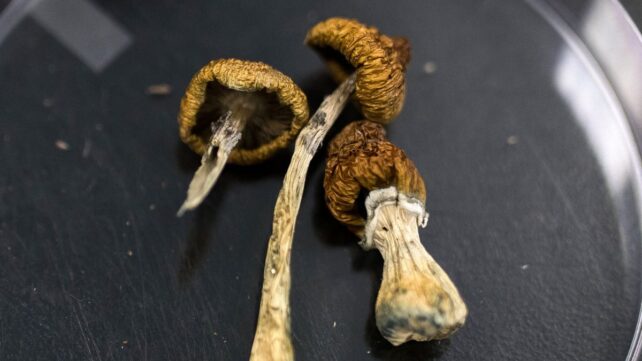
Because of the woman's promising and lingering response to psilocybin, she was administered another 3 grams of mushrooms a month after the first session. This dose was also closely supervised.
During the second session, the patient did not fall asleep but remained verbally expressive throughout. She described emotional scenes, like surfing with her son on a peaceful island.
"Facial expressivity, emotional reciprocity, spontaneous humor, and gait agility appeared markedly improved," reads her case report.
During this second session, the woman said, unprompted, "It is pleasant to come here."
It is important to note that researchers in Brazil did not monitor the woman's sleep state or brain activity during her trip, nor did they use standardized cognitive scales to assess her cognitive state.
"The present report should be understood primarily as a detailed observational description intended to generate hypotheses for future controlled investigation," the authors write.
"Systematic investigation is warranted," they add.
Already, researchers elsewhere in the world are investigating what psilocybin can do for older populations who are suffering from cognitive issues or mental health disorders.
A recent survey of more than 3,000 US adults, aged between 42 and 92, found that those who reported using a hallucinogen in the past year showed fewer depressive symptoms. They also showed more favorable changes to some brain functions.
Initial clinical trials using psilocybin have found that just a single 25mg dose can induce lasting brain changes. But that is very small compared to what the older woman in Brazil took.
Her dose is known recreationally as a 'heroic dose'. These amounts of psilocybin are said to be life-changing, although they are not without risk.
"The selected mushroom dose was relatively high compared with dosing approaches commonly used in modern clinical trials and was chosen based on prior experiential observations regarding depth and duration of psychedelic-induced neurobehavioral effects," the authors explain in the case study.

Future randomized clinical trials are needed to determine if psilocybin really can rewire the brain for the better, and at what dose it is safest and most effective.
In fact, one pilot study on cognitive decline has already started. It is evaluating whether psilocybin, provided in a supervised environment, can reduce depression and improve the quality of life in people with mild cognitive impairment or early-stage Alzheimer's disease.
Related: The Tragic Case of The Youngest Person Ever Diagnosed With Alzheimer's
"In some patient populations, psilocybin is very helpful in reducing depression, reducing anxiety, and improving quality of life," explained neuroscientist Albert Garcia-Romeu, who investigates psychedelic therapies at Johns Hopkins University, in 2023.
"Those types of benefits could be really useful in a population with Alzheimer's."
Only time will tell. Many dementia drugs have shown great promise, only to fail at clinical trials.
Perhaps psilocybin will be different.
The study is published in Frontiers in Neuroscience.