
This Week in Science: a common disorder gets a much-needed name change; an artificial island found to be older than we thought; an 'impossible' crystal forged in a historic event; and much more!
PCOS Is Officially Renamed, After Decades of Misinformation
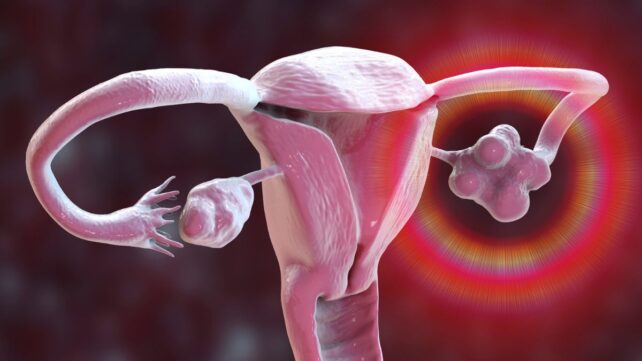
The hormone disorder PCOS has been officially renamed polyendocrine metabolic ovarian syndrome (PMOS) to address misconceptions.
"The term polycystic ovary syndrome (PCOS) has long been recognized as inaccurate and potentially harmful," writes the team behind the initiative.
"The current name reflects only one organ and fails to capture the disorder's multisystem nature."
Read the full story here.
Archaeologists Uncover 5,000-Year-Old Foundations of Strange Artificial Island
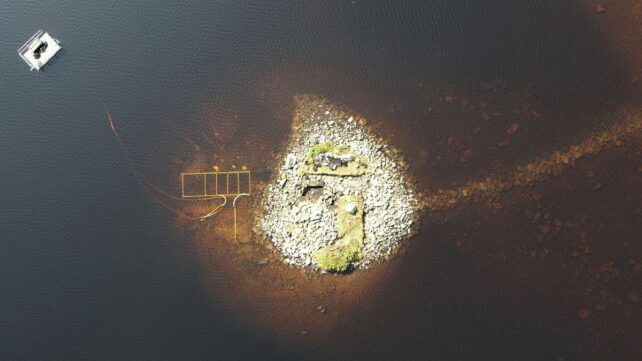
An artificial island in Scotland was first constructed more than 5,000 years ago, new archaeological excavations have revealed.
Using new technology, scientists have now discovered the wooden and stone foundations that established the Loch Bhorgastail crannog many millennia ago.
Read the full story here.
The World's First Nuclear Explosion Forged an 'Impossible' Crystal


A crystal that shouldn't be able to form on Earth has been found inside a mineral forged in the world's first nuclear bomb tests in 1945.
The researchers note, "this work underscores how rare, high-energy events – such as nuclear detonations, lightning strikes, and hypervelocity impacts – serve as natural laboratories for producing unexpected crystalline matter and for critically testing and constraining structural models beyond the reach of conventional synthesis."
Read the full story here.
Your Eyes Could Reveal Your Risk of Osteoporosis, Study Finds

We may be able to assess a person's risk of osteoporosis by examining how fast their eyes are aging, according to a new study.

For every standard deviation increase in retinal age data, the research team observed a 12 percent higher risk of osteoporosis in the dataset. This was true even when taking into account age, gender, BMI, physical activity, smoking status, and cardiovascular health.
Read the full story here.
NASA's Next-Gen Mars Helicopter Rotors Have Broken The Sound Barrier in Tests
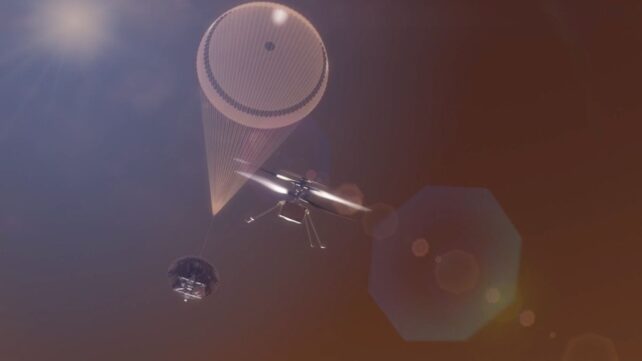
The rotors of the next-gen Mars helicopter have broken the sound barrier in NASA lab tests. The mission should launch in late 2028.
Rotors spinning this fast dramatically increase lift by about 30 percent, which will allow the next helicopter to carry heavier payloads than Ingenuity. This means more science instruments can be packed onboard.
Read the full story here.
Cannabis Use Disorder Strongly Linked to Major Depression, New Review Finds

A review study has linked cannabis use disorder with major depressive disorder – but it's not a clear cause-and-effect relationship.
Could cannabis use disorder be driving depression, or are people with depression self-medicating with cannabis?
There may even be shared risk factors underpinning both conditions. While these two conditions are known to occur together, more data is needed on their relationship.
Read the full story here.