Oxygen levels have decreased in almost 80 percent of rivers worldwide, and they're going to continue losing this precious resource unless we make some serious changes.
Satellite and climate data collected between 1985 and 2023 reveal that over 16,000 rivers across the world have been losing their dissolved oxygen.
On average, these rivers have been losing 0.045 milligrams of oxygen per liter each decade.
Without enough dissolved oxygen essential to sustain life underwater, rivers – and the communities that rely on their water and resources – are under serious threat.
These findings come from a team at the Chinese Academy of Sciences, led by environmental scientist Qi Guan.
The team compiled data from 3.4 million satellite images across the past four decades to detect patterns in the dissolved oxygen of rivers across the world and forecast their futures under different climate scenarios.
By the end of the century, assuming carbon dioxide emissions continue to rise at similar rates (as opposed to some of the worst-case scenarios), rivers across most of South America, India, the Arctic, and the Eastern United States are expected to lose around 10 percent of their dissolved oxygen.
The most severe shifts so far have occurred in tropical rivers, such as the Ganges in India and the Amazon River in South America. The Ganges River in particular is losing oxygen 20 times faster than the global average.
Scientists didn't see this coming.
Previously, they assumed that high-latitude rivers would experience the worst deoxygenation because these regions are climate change hotspots.
But tropical rivers had a disadvantage from the start: Since their waters were already warmer, they already had lower levels of dissolved oxygen. This means they're already closer to reaching hypoxia (insufficient oxygen to sustain most life).
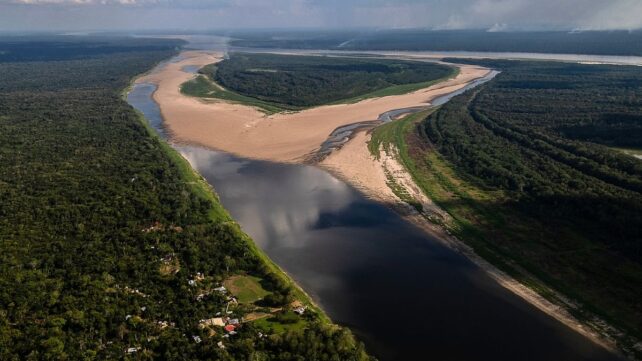
Guan and team found many factors are contributing to global river deoxygenation, but none more so than climate change.
Climate change driven by human activities is reducing oxygen solubility (the ability of a body of water to hold dissolved oxygen). According to the new study, oxygen solubility accounts for about 63 percent of global river deoxygenation.
Water temperature is most likely driving this change in oxygen solubility. Warmer waters hold less dissolved oxygen because the oxygen and water molecules are receiving more energy in the form of heat.
Dissolved oxygen is very different from the oxygen atoms that pair with a hydrogen to form water. Dissolved oxygen is what aquatic life needs to 'breathe': that goes for animals, plants, plankton, bacteria, and anything else living underwater.
But the bonds that keep oxygen gas dissolved in water are relatively weak. Just a slight shift in temperature is enough to rip them apart, allowing the oxygen to escape.
Aquatic species vary widely in terms of how much dissolved oxygen they need to survive. Still, a change of 0.1 milligrams per liter of river water – which is roughly how much has been lost, on average, across the past four decades – is enough to cause some serious shifts in river ecosystems.
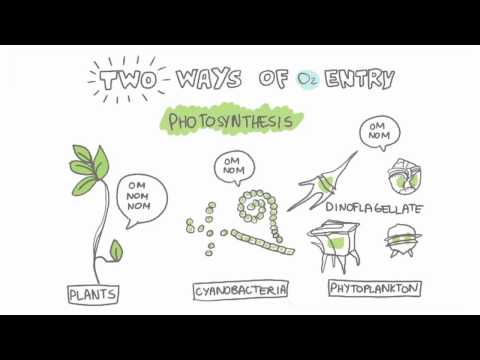
Aquatic life can add to the dissolved oxygen levels by photosynthesizing, which is why underwater plants keep waterways healthy. Oxygen from the atmosphere can also become dissolved in water via physical forces, such as burbling river rapids or the aerators used in human-made ponds.
That's why, in many of the rivers included in this study, dams in shallow waterways and heatwaves have contributed to waning levels of dissolved oxygen. Reduced water flow means less oxygen is folded into the water from the air; heatwaves essentially squeeze the oxygen out of rivers.

Water composition also has a major impact on the levels of dissolved oxygen a river can hold. Human activities are changing water composition at both ends, by reducing the amount of water in rivers, and adding to the water's load of solutes, such as salt, nutrients, and organic matter (which further reduces oxygen solubility).
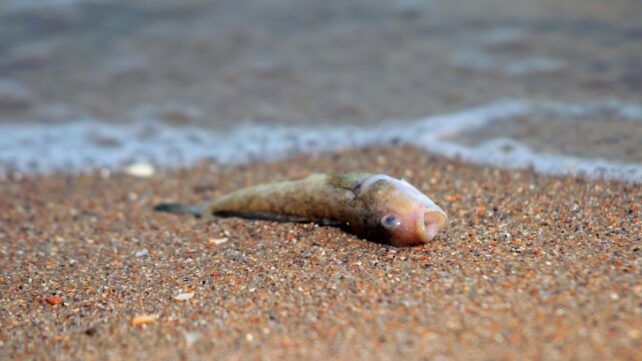
Since aquatic life relies on dissolved oxygen to survive, even a small drop in levels can quickly lead to mass die-off events.
Once that happens, a river full of dead fish and algae quickly uses up any remaining dissolved oxygen as bacteria get to work on breaking down the organic matter left behind.
With increasing rates of river deoxygenation across the world, dead zones like this may become more common.
"Deoxygenation is a very slow process. If we have a long period, the negative impact will attack the river ecosystems," Guan told Seth Borenstein at Associated Press.
"The low level of oxygen can cause a series of ecological crises such as biodiversity decline [and] water quality degradation."
Related: Droughts Are The Ideal Breeding Ground For Antibiotic-Resistant Bacteria, Study Warns
Those scenarios are far more likely if rivers lose an additional four or five percent of their dissolved oxygen: the same amount that they're expected to lose within the next seven decades, unless humanity takes urgent action to prevent further fossil fuel emissions.
"Systematically understanding these changes is crucial for enhancing the resilience of fluvial ecosystems to sustained deoxygenation risks through targeted measures and strategies, and helps to achieve sustainable management in global rivers," Guan and team conclude.
The research was published in Science Advances.