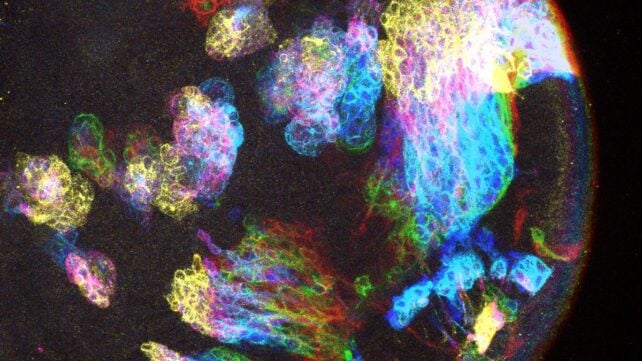
Not every region of your brain is equally susceptible to cancer.
Over many decades of treating brain cancer, doctors have noticed patterns – that some tumors consistently emerge in particular regions of the brain.
Aggressive glioblastomas, for example, are common in the cerebral hemispheres, while medulloblastomas tend to arise in the cerebellum of children.
Scientists have long suspected that some brain tissues may simply be more vulnerable to cancer than others – but exactly why has remained unclear.
Now, in the brains of fruit flies, a team of researchers has found a clue, and it may help researchers one day develop treatments for some of the more devastating forms of brain cancer.
"Mutations linked to cancer happen in our bodies all the time, but most never become dangerous because the body detects and removes those abnormal cells," says oncologist Louise Cheng of the Peter MacCallum Cancer Center in Australia.
"What we wanted to understand was why some cells escape the process and develop into tumors, particularly in specific regions of the brain."
Unlike many other tissues in the body, the living human brain cannot easily be studied experimentally as disease unfolds. Careful clinical observation and the study of donated brain tissue have yielded much information, but there's still a lot to learn.
A surprising analog can be found in the humble fruit fly (Drosophila).
You might not think that humans and insects have much in common, but the brains of flies follow many of the same developmental rules as human brains, and the Drosophila central nervous system is a well-established model for investigating how cells behave and change in the human brain.
To investigate why the same cancer-causing mutation can behave differently in different parts of the brain, the researchers edited the genes of fruit flies to alter proteins involved in maintaining the identity of brain cells, causing mature neurons in fruit flies to revert into stem-like cells that divide uncontrollably.
This is a tried-and-true method for inducing tumor-like growth in flies, and the insects soon developed proliferating masses of abnormal neural cells.
But then a strange pattern emerged.
Although the abnormal stem-like cells appeared all over the fly central nervous system, actual tumors only persisted in some regions of the brain.
This suggested that there might be a difference between the brain regions vulnerable to cancer and the regions where it failed to grow.
Previous research had identified a protein called Chinmo that helps control the development of stem-like cells.
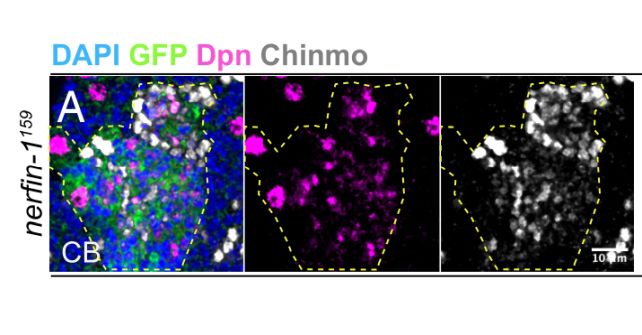
When the researchers looked at levels of Chinmo in the nervous system, they found something suspicious.
In the central brain and ventral nerve cord, where tumors were showing up, abnormal cells contained Chinmo… but in the optic lobes, where no tumors developed, there was also no Chinmo.
The next step involved deliberately reducing Chinmo in tumor-prone regions – and in a separate experiment, turning it up in the optic lobes.
The results were striking.
Where Chinmo was dialed down, tumor development screeched to a halt; but, where it was dialed up, abnormal cells grew where they hadn't before.
"We found we could change the fate of cells carrying the exact same mutation by turning Chinmo on or off," Cheng says.
"Our findings tell us that tumor formation is not only about the mutation itself, but is also influenced by the environment and developmental state of the cells, where the mutation occurs."

Humans don't have Chinmo, so the findings are not a perfect one-to-one analog.
Related: The 7 Warning Signs of Brain Cancer You Might Easily Miss
But the study does suggest there may be identifiable biological reasons why tumors emerge more frequently in some parts of the brain than others – and that humans may possess similar proteins that influence cancer susceptibility in comparable ways.
"Understanding these factors gives us a way of thinking about cancer formation beyond mutations in humans," Cheng says.
"If we can identify the conditions that allow mutated cells to become tumors, we may be able to target those conditions therapeutically and stop cancer before it develops."
The research has been published in the Proceedings of the National Academy of Sciences.