Vitamin B2 (also known as riboflavin) is crucial in keeping many different processes going in the body.
It maintains healthy skin and metabolizes fats – and new research suggests it also plays an important role in cancer cell survival.
More specifically, it's been discovered that cancer cells can make use of vitamin B2 to put up a defensive shield against ferroptosis, a special type of cell death.
When damage to the membrane occurs, it causes the cell to be scheduled for waste disposal.
Led by a team from the University of Würzburg in Germany, this new study demonstrates that when cancer cells are deprived of vitamin B2, they're more vulnerable to the controlled culling that is ferroptosis.
"Vitamin B2 plays a crucial role in protecting cancer cells from ferroptosis, a special form of programmed cell death," says biologist Vera Skafar, from the University of Würzburg.

What the vitamin is actually doing, the researchers discovered, is assisting a protein called FSP1 (ferroptosis suppressor protein 1).
In recent years, studies have shown how vital FSP1 can be in ferroptosis protection, alongside another protein called GPX4 (glutathione peroxidase 4).
Through a screening process covering thousands of genes, the team found that FSP1 depended on a gene called RFK, which is also involved in processing vitamin B2 into forms the body can use.
Further lab tests confirmed the biological pathway – that vitamin B2 was effectively fueling FSP1 via the RFK gene.
These tests also revealed that the compound roseoflavin could potentially work to disrupt this cancer cell shield. In lab-grown cancer cells, a vitamin B2 mimic called roseoflavin appeared to promote ferroptosis.
It's very early days, but this suggests a way to target cancer cells without interfering with vitamin B2 in healthy cells.
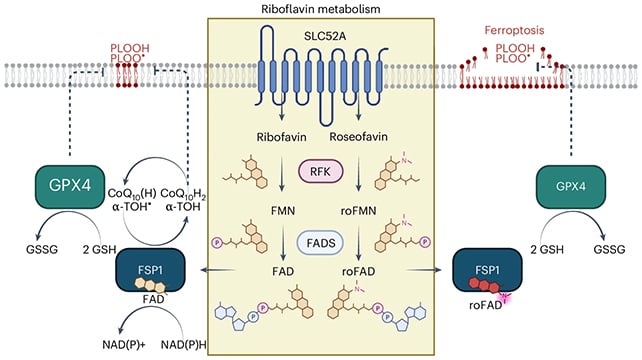
Roseoflavin essentially dupes the cancer cells into picking it up instead of vitamin B2. But importantly, it doesn't support FSP1 or the cell defense shields in the same way as vitamin B2.
While the biology is quite dense, there's potential here for targeted treatments.
"This framework constitutes a previously underappreciated approach for enhancing ferroptosis in cancer cells and other contexts where FSP1 supports survival," write the researchers in their published paper.

Our bodies don't produce vitamin B2 naturally, but it's available in plenty of foods, including dairy products, eggs, meat, and green vegetables.
The point of the study is not that vitamin B2 is dangerous, because we absolutely need it to live. However, the protection that the vitamin gives cancer cells means it's likely more difficult for drugs to take out those harmful cells.
There's a tricky balance to be found, because ferroptosis isn't necessarily bad either – it's useful at the right time for clearing out biological waste.
The next step will be to figure out how to specifically target this machinery in cancer cells.
Further down the line, something similar to roseoflavin, but custom-made to disrupt cancer cells' access to vitamin B2, could lead to better treatments for killing tumors.
And there's lots of scope for extending the research further, too.
Ferroptosis is triggered by oxidation, a sort of chemical weathering that happens over time. Both oxidative stress and ferroptosis are thought to relate to numerous other conditions besides cancer.
Related: A Common Vitamin Has a Complicated Link to Cancer, Experts Reveal
Researchers have only really taken notice of ferroptosis in recent years, but it's already been linked to health issues like strokes and neurodegenerative disease.
It's possible that this newly discovered role of B2 in ferroptosis could also have implications for future research into these conditions.
"Ferroptosis is not only relevant to cancer," says biologist José Pedro Friedmann Angeli, from the University of Würzburg.
"Increasing evidence suggests that it also contributes to pathological processes in neurodegenerative diseases and in tissue damage following organ transplantation or ischemia-reperfusion injury."
The research has been published in Nature Cell Biology.