Hundreds of people in the US so far have recently developed a specific type of food poisoning that's causing watery and occasionally explosive diarrhea.
Not only is it bad timing with 4th of July celebrations around the corner, but experts are currently at a loss when it comes to the reasons why.
As of right now, there's no one known source of infection – but it appears to be coming from within the US, not overseas.
The cases don't appear to be linked.
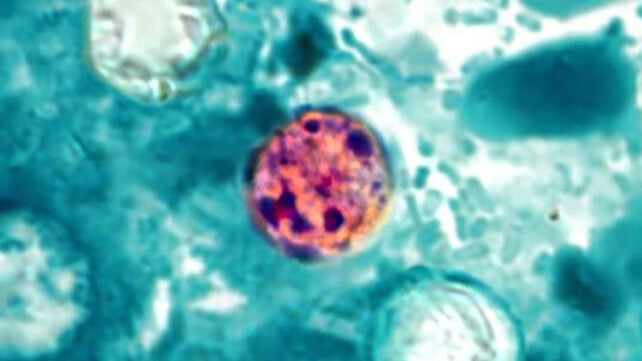
This specific infection is called cyclosporiasis food poisoning, and it's caused by Cyclospora parasites.
Cyclosporiasis is caused by eating food or drinking water contaminated by feces containing the parasite. Historically, people would acquire it outside the United States.
However, of the 190 cases reported to public health authorities between the start of May and the middle of June, 145 involve someone who hasn't traveled beyond US borders in the last couple of weeks.
The infection can't be passed directly from person to person, which means the evidence points to contaminated food or water from inside the country, according to the US Centers for Disease Control and Prevention (CDC).
"There is currently no evidence of a single, multistate Cyclospora outbreak linking all cases," the CDC said.
While this doesn't happen often, it's not unheard of. You might remember an outbreak from 2018 linked to salads sold by McDonald's.
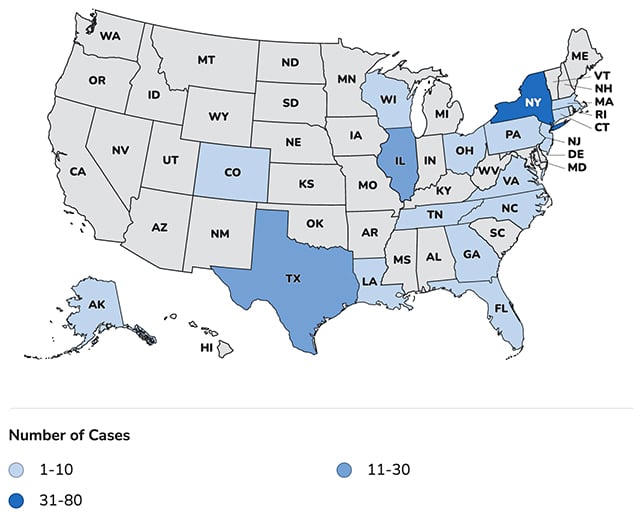
The 145 cases with US origins are spread across 17 states, with New York reporting the most: between 31 and 80, as per the latest figures. While the reports of disease are clustered towards the east coast, there are some as far west as Texas, Colorado, and Alaska.
According to the CDC, the real number of cases is likely to be higher still, as these illnesses won't always be reported.
"Sick people ranged in age from 5 to 86 years, with a median age of 42, and 61 percent were female," says the latest CDC report, dated July 1.
"Of 145 people with information available, 20 were hospitalized. No deaths have been reported."
"Local, state, and federal (CDC, FDA) public health authorities are investigating several clusters of cases in more than one state. Investigations to identify potential sources are ongoing."
The infections qualify as a 'nationally notifiable disease', which means healthcare services are obliged to report incidents of it to the government in most states. Even so, keeping track of outbreaks like this can be challenging.
Besides diarrhea, symptoms can also include weight loss, cramping, bloating, a loss of appetite, nausea, and fatigue. They usually start appearing around a week after a Cyclospora parasite infection.
If you're unlucky, you might get some of the less common and more serious symptoms as well: They vary from headaches and low-grade fever to body aches and vomiting.
Symptoms can last just a few days, or persist for a month or more if left untreated.
The standard treatment is antibiotics, though sometimes the disease goes away on its own without any drugs (hence the likelihood of unreported cases).

As for the 45 cases that do seem to have originated outside the borders of the US, the ages affected range from 17 to 89, with a median age of 43, and 62 percent of reported cases affecting females. These infections have led to three hospitalizations but no deaths.
The good news is that cyclosporiasis is familiar to doctors and healthcare professionals. There's even a summer 'cyclosporiasis season', which is considered to run from the start of May to the end of August as people start taking trips abroad – so we know how to deal with it.
If you are heading on your travels soon, the parts of the world where the Cyclospora parasites are commonly found are Central and South America, south and southeast Asia, the Middle East, and Africa.
When it comes to avoiding infection, the professional advice is to wash your hands regularly, stick to bottled water and sealed pasteurized products (like milk and yogurts) where possible, and to make sure food is thoroughly cooked.
If you do get sick with food poisoning, think about the foods you've been eating (including in recent weeks if you can recall anything particular in that timeframe), and talk to your doctor.
Related: 'Dark Matter' in Your Genome Could Unlock New Disease Treatments
The priority now for the CDC will be to identify and deal with the source of the outbreaks, before many more cases are reported. Given there were more than 1,000 cases reported in the US last year, there's likely more to come.
This article was fact-checked by Clare Watson and edited by Fiona MacDonald. While we pride ourselves on our process, we are only human. If you spot a mistake, please let us know.