
An 'old-fashioned' disease of kings is experiencing a modern resurgence.
Today, gout is the most common form of inflammatory arthritis worldwide.
And it's on the rise, even among young people.
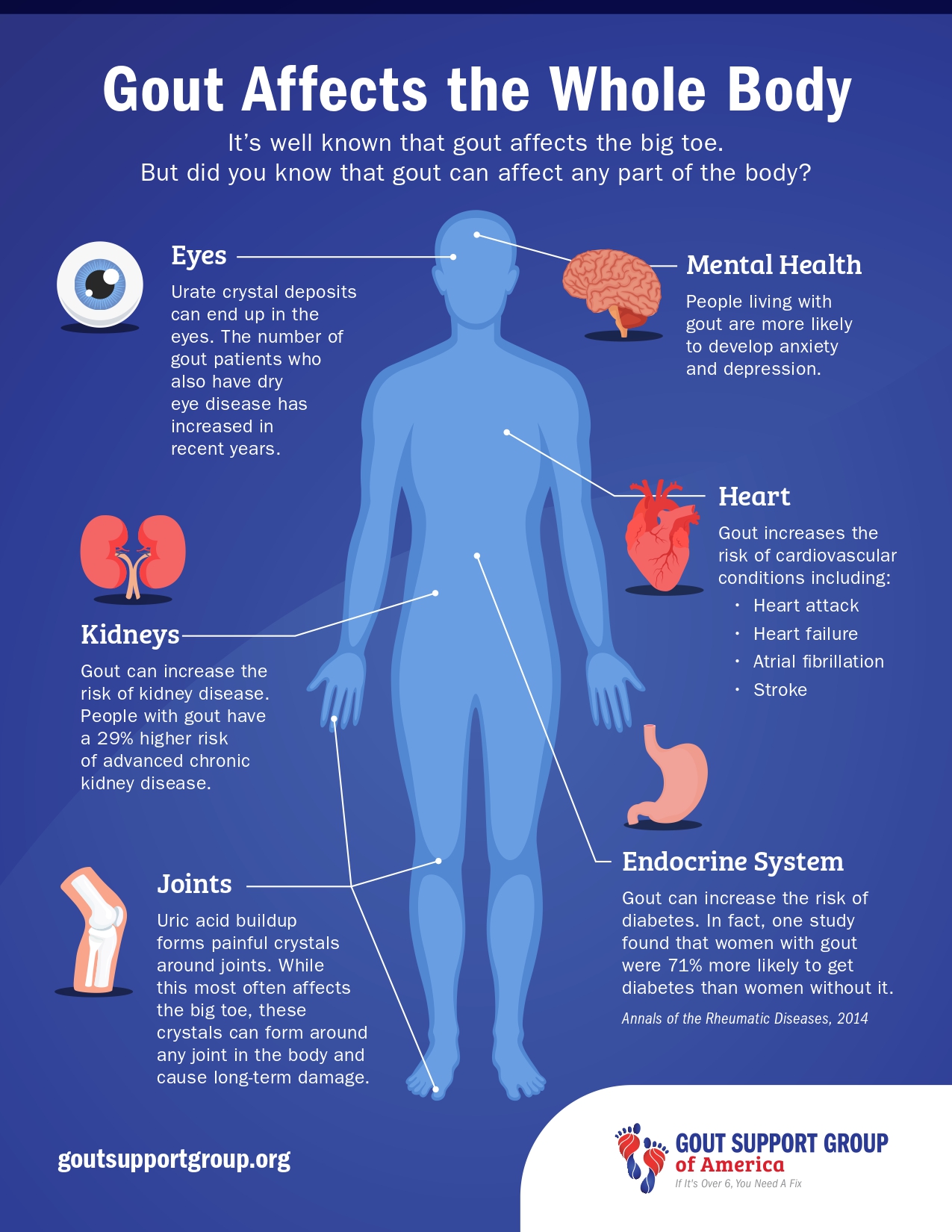
Gout is caused by an accumulation of urate crystals in tissues, leading to pain and inflammation. It can affect the whole body, from the eyes to the kidneys to the heart.
It may even impact the penis.
Recently, researchers have started to study a highly common symptom that often accompanies gout: erectile dysfunction.
The reasons why these two conditions coexist are only just coming to light.
In the last decade or so, emerging evidence has found that male patients with gout are at a dramatically higher risk of erectile dysfunction compared to the general population.
Some small studies have even shown that the majority of men with gout experience erectile dysfunction, and the condition is often severe.
This has led some health professionals to advise that all gout patients be assessed for erectile dysfunction as well.
It's not just a person's sex life that can suffer. Evidence suggests that gout patients who present with ED also have an increased risk for cardiovascular and silent coronary artery disease.
Between 1990 and 2019, the prevalence of gout among men in the US surged by more than 90 percent.
"Men don't usually volunteer sexual complaints," said rheumatologist Naomi Schlesinger after conducting a survey in 2014.
"The gout patients in our study were generally delighted and grateful that someone finally asked them about ED."
So is the connection between gout and ED a coincidence? Or are the two health conditions linked at a deeper level?
Scientists aren't yet certain, but recent evidence has revealed a bridge uniting gout and erectile dysfunction.
In 2021, a review of nine studies revealed that patients with gout and erectile dysfunction often had abnormally high levels of uric acid in the blood.
The authors suggested that erectile dysfunction could possibly be treated with urate-lowering therapies.
In 2025, a study built on that idea. It analyzed clinical data from people aged 24 to 49 and found that the odds of erectile dysfunction were more than 2.5 times greater for every 100 μmol/L increase in serum uric acid.
Sure enough, when the research team turned to rats, they found high uric acid levels in the blood impaired erectile function – even when the rodents had no other metabolic issues.
Mechanistically, the authors explained, uric acid appears to enter the erectile tissue of the penis shaft and lead to contraction. Treatments that lower uric acid could, therefore, potentially restore erectile function.
But that has yet to be tested in humans.
In nations like the US and the United Kingdom, only about one-third of people with gout in primary care are offered urate-lowering therapy.
A national audit by UK rheumatologists found that one year after a new outpatient appointment, only 25 to 45 percent of patients had achieved target serum urate level thresholds.
The reasons behind those low rates may have to do with physicians not offering the treatment, or patients not choosing to take it.
Lowering urate levels is a long process. Patients need to be tested repeatedly so their medication dose can be adjusted over time.
Once the drugs start to work, however, urate crystals in the body can dissolve, and flare-ups of gout can be alleviated.
The condition can even be put into remission.
Still, that requires a lifelong commitment to these drugs, which some patients are unprepared to take on.
Yet leaving gout untreated can also cause serious health issues.
While case studies are rare, there is some evidence that chronic, untreated gout can lead to crystal deposits building up within the penis itself, sometimes causing painful erections that ultimately require surgery.
One of these case studies included a patient just 34 years old.
Today, gout is stigmatized as an ailment of the old or gluttonous, and it is not often thought of as a modern problem.
As a result, many patients don't understand what the condition actually entails or how best to treat it.
Some surveys suggest that those with gout are hesitant to tell their doctors about their flare-ups, even when they impact daily activities like their ability to walk.
Many patients also report a significant drop in self-esteem and a disconnect from their partners.
"There seems to be an urgent need to educate both patients and the general public about the seriousness of gout and the burden on patients and their families," conclude the authors of a 2019 survey.

One of the biggest prevailing misconceptions is that gout only affects older adults.
In 2023, a study revealed a substantial increase in the prevalence of gout across all age groups from 15 to 39.
BMI was a leading risk factor, but it's unknown whether excess body weight alone is causing the surge in cases.
Alcohol and diet are linked to gout as well, and some researchers suspect that poor metabolic health in general is what underlies the disorder's rising prevalence.
Related: Erectile Dysfunction Can Be a Warning Sign of a Serious Heart Issue, Experts Warn
As more people receive a diagnosis, especially those under 40, the connection between this inflammatory condition and erectile dysfunction is receiving more attention than ever.
It's about time we started asking what gout might be doing beyond the joints.
This article was fact-checked by Rachel Garner and edited by Fiona MacDonald. While we pride ourselves on our process, we are only human. If you spot a mistake, please let us know.