Sometimes geologic features are obvious; faults can leave giant cracks in the ground, enormous boulders in a field are clear proof of glaciers dropping them as they melted, and defined layers of colorful sediment in a rock cut clearly show an area's depositional history.
And sometimes Earth's features are really, really subtle – so much so that they might be impossible to see with the naked eye.
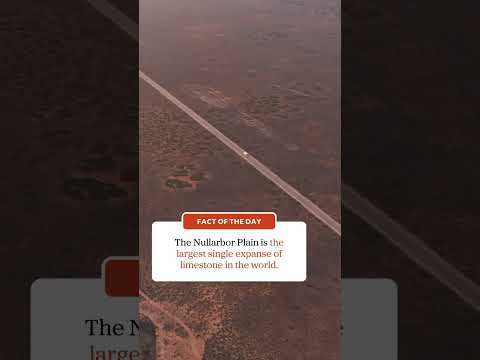
Scientists recently found the latter on Nullarbor Plain, a vast, treeless desert in Australia. This huge, flat carbonate platform covers more than 200,000 square kilometers (77,220 square miles) and has been exposed to weathering for more than 14 million years.
It has experienced little tectonic deformation, no glaciation, and minimal sediment deposition, leaving behind a remarkably stable record of its geological past.
On the surface, the Nullarbor Plain is riddled with long, shallow trenches that, at first glance, look like the sort of thing water might have carved into the ground.
They can stretch for kilometers but are generally only 100 to 500 meters (328–1640 feet) wide and less than 9 meters deep. They have barely enough topographic relief to be obvious.
"From the surface, these features can look remarkably like shallow valleys or drainage channels, but our evidence shows they have a very different origin," says Curtin University geographer Matej Lipar, first author of a new study on the phenomenon.
That research finds that these seemingly innocuous depressions may actually be the superficial scars left behind by something much deeper.
"By combining mapping, geophysical surveys, cave records and sediment analysis, we found these trenches are linked to deep cave systems beneath the Nullarbor Plain," says Lipar.
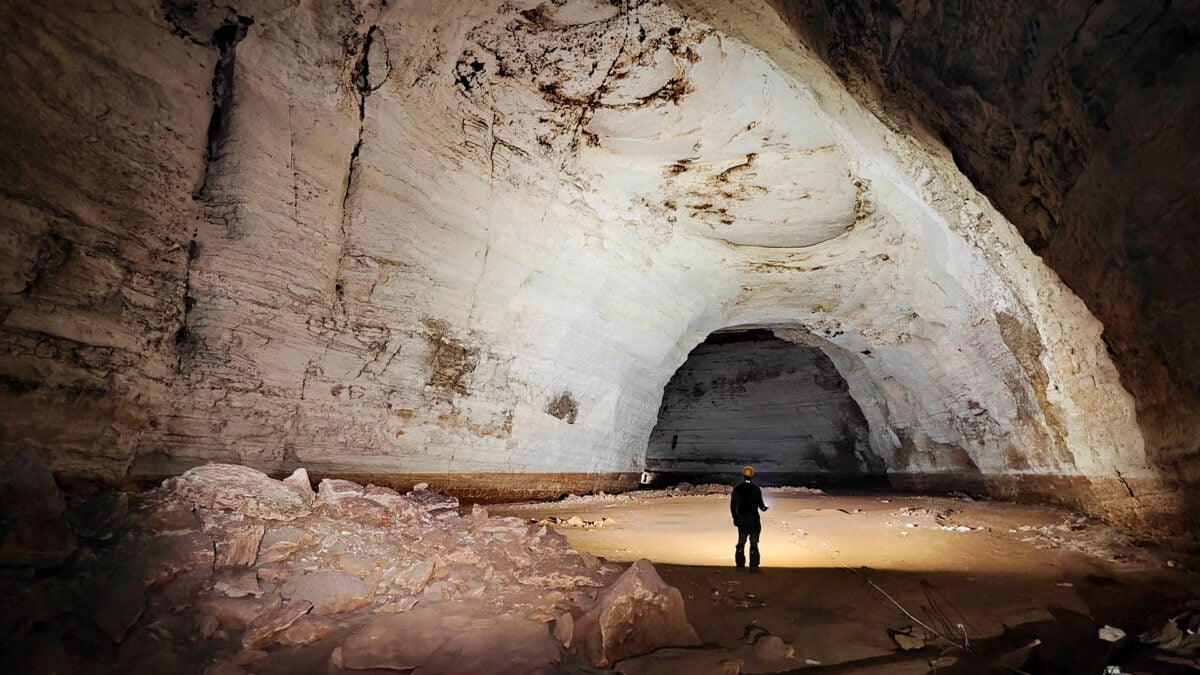
Some of the Nullarbor's caves are shallow, but the deep ones can extend 50 to 150 meters below the surface, with passages hundreds of meters long and tens of meters wide. They formed long ago when groundwater moved through the limestone, dissolving it into underground conduits.
Later, as the water table fell, the caves drained. Without the support provided by groundwater, their roofs began to fail. As these enormous cave systems collapsed from below, the earth above them shifted, leaving evidence in the Plain's surface.
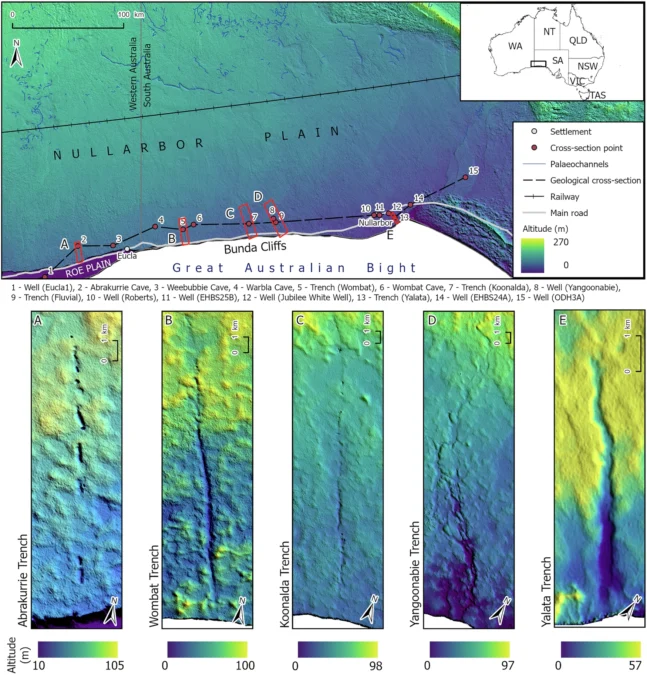
The researchers figured this out by investigating five trenches, including the roughly 22-kilometer-long Koonalda Trench and the approximately 28-kilometer Yangoonabie Trench.
Using electrical resistivity tomography, the researchers found broad, low-resistivity zones beneath the trenches, extending beyond the roughly 30 to 70-meter depth explored by the survey.
These zones are consistent with sediment-filled and fractured material beneath the surface.
Passive seismic measurements provided additional evidence of less-consolidated or more fractured rock beneath the trench axes.
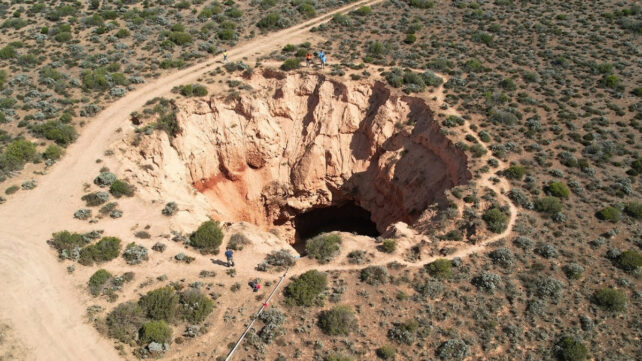
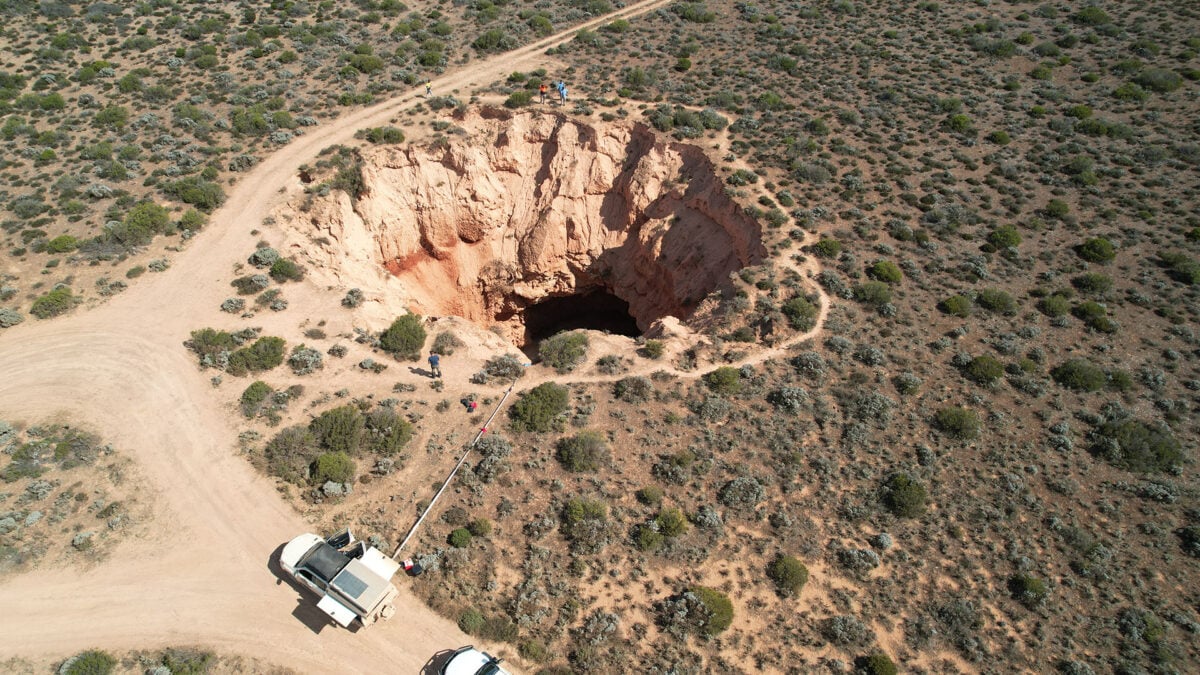
Then there was the particularly useful bit of geological detective work: Clay Dam Cave, where a collapse doline (a type of sinkhole) within the Koonalda Trench provides a literal window into what is happening underground.
About 20 meters of exposed collapse reveal sagging rock strata and sediment that match the structure inferred from the geophysical measurements.
Along the nearby coastal cliffs, the researchers also found zones more than 100 meters wide containing sagging strata, collapse arches, and caves.
Why do we even care about knowing where caves are?
Caves work as natural preservation spaces, where archaeological remains and organic materials of all kinds are protected from sun, temperature extremes, and other types of weathering.
In that way, caves are "vital for reconstructing past climates, environments and the history of life on Earth," according to the authors of the study.

Because similar-looking depressions occur on other rocky worlds, the researchers say the Nullarbor could also provide a useful analog for identifying caves on other planets, especially Mars, which has many Earth-like geological features.
"Potential caves on other planets could provide protected subsurface environments relevant to the search for evidence of extraterrestrial life or act as bases for future astronauts," says Curtin University geologist Milo Barham.
Related: Mountains That Helped Complex Life Flourish May Lie Hidden Beneath Antarctic Ice
The Nullarbor's lesson is a classic reminder not to judge a book by its cover: A landscape doesn't have to look dramatic to conceal something enormous beneath it.
And if that principle holds elsewhere, some of the seemingly ordinary lines and depressions on Mars may deserve a second look.
Read the full study in Communications Earth & Environment.
This article was fact-checked by Rebecca Dyer and edited by Rebecca Dyer. While we pride ourselves on our process, we are only human. If you spot a mistake, please let us know.