Nature is a cycle in which nothing is wasted and death leads to life.
When an animal dies, it becomes carrion, a source of nutriment that upholds ecosystems.
For example, a "whale fall" settling on the seafloor creates a thriving mini-environment for decades.
However, these hotspots also pose dangers to the opportunists that feed here, including the risk of pathogen transmission and predation.
Accordingly, it has long been suggested that scavengers avoid eating carcasses that are more closely related to them to reduce the risk of infection.
But the evidence to explore that idea is scarce and limited in scale.
So researchers recently expanded that scale, examining an essential gap in the ecology of some of nature's most derided denizens: those who scavenge.
In a study published in the journal Ecology Letters, a quartet of Spanish biologists, ecologists, and zoologists used camera traps, phylogenetic analyses, and computational modeling to see what kind of carcasses these consumers choose to chow down upon.
"Here, we provide the first empirical evidence from a diverse vertebrate scavenger assemblage that phylogenetic distance is a key driver of selective carrion consumption," the researchers say.
From February 2020 through May 2021, they placed nearly 200 fish, bird, and small mammal carcasses across El Hondo Natural Park in Alicante, in southeastern Spain, along with two cameras at each spot to capture images and video of the resultant feeding frenzies.
These animals – including carp, quails, ducks, rodents, and rabbits from sources like roadkill and invasive-carp-reducing efforts – are present in the park and were strategically placed where each would naturally die; the researchers did not, say, airlift a whale carcass into a swamp.
They chose El Hondo because it's a highly productive wetland featuring extensive reedbeds, marshes, and even salt flats.
It's abundant in resources and hosts many species in a relatively small area, creating frequent opportunities for carrion.
Interestingly, despite its diversity, it does not host large predators or the world's most famous obligate scavengers: vultures.
They also consulted a species-level phylogenetic tree to ascertain the genetic distance between carrion and its scavenger, gauged by the millions of years of independent evolution between different taxa.
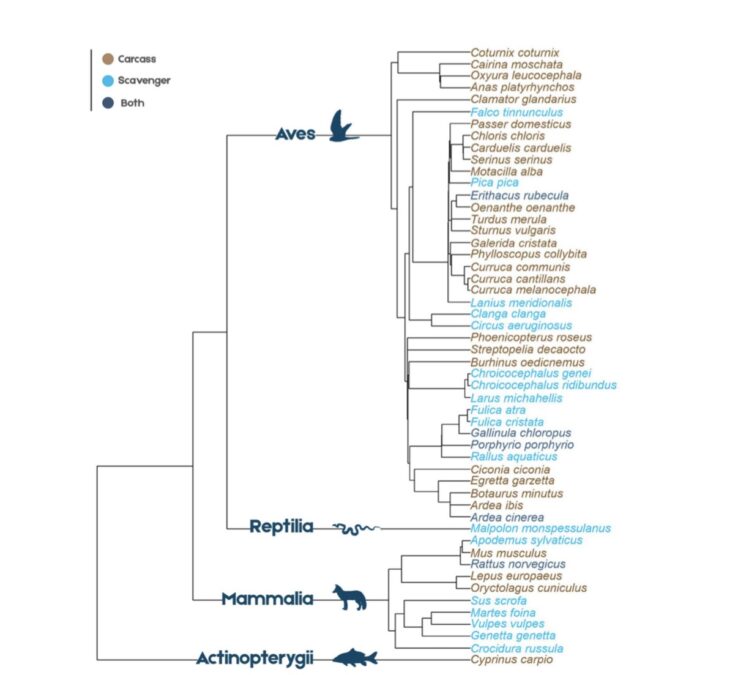
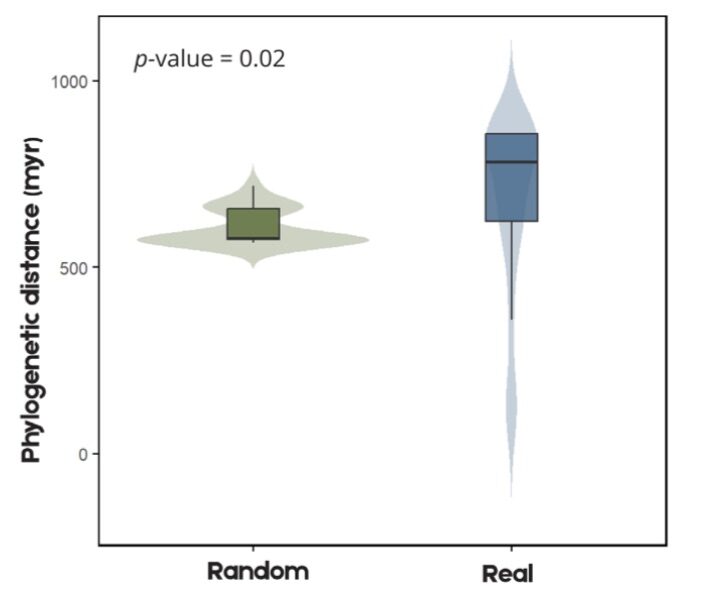
They observed that animals often consumed carrion that was more distantly related to them than would be expected through random occurrence.
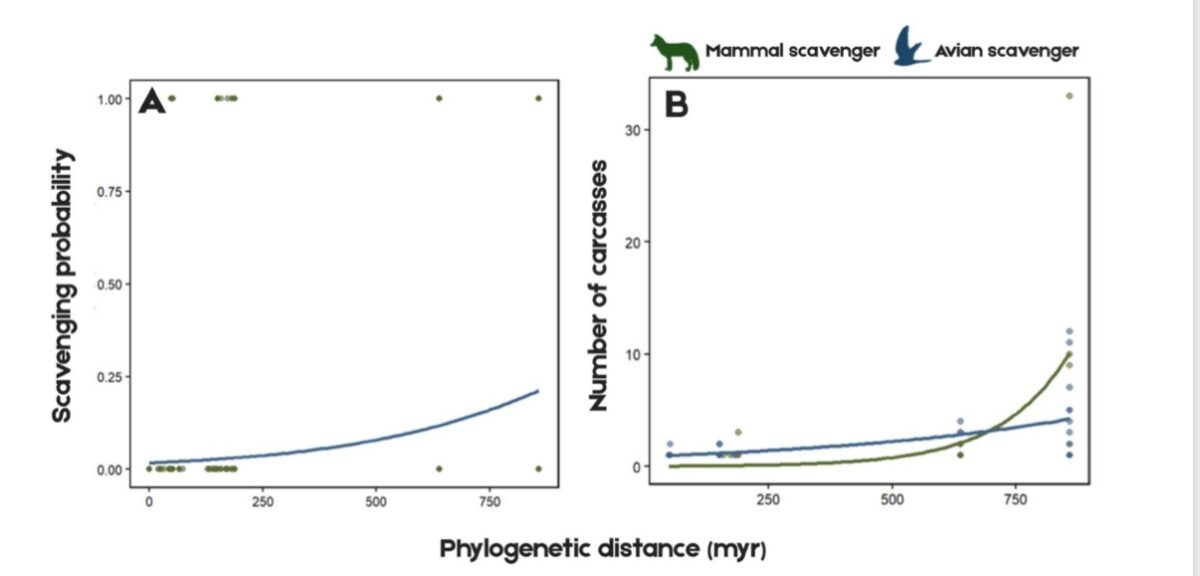
"We found a consistent pattern across the assemblage: scavengers generally avoided consuming carcasses of phylogenetically related species," the researchers explain.
"This trend held for both the probability of consuming a given carcass species and the total number of carcasses consumed, although the strength of the relationship varied between taxonomic classes (birds vs. mammals)."
At the extreme ends of the observed trends, the brown rat (Rattus norvegicus) – notoriously and erroneously blamed for the 'Chicago rat hole' – proved the main consumer, chomping on 38 carcasses, mostly fish.
Among the few species that fed on more closely related carrion was a bird, the Iberian grey shrike (Lanius meridionalis), observed to feed only on bird carcasses.
Incidentally, shrikes further belie their birdly cuteness by impaling their prey on spikes.
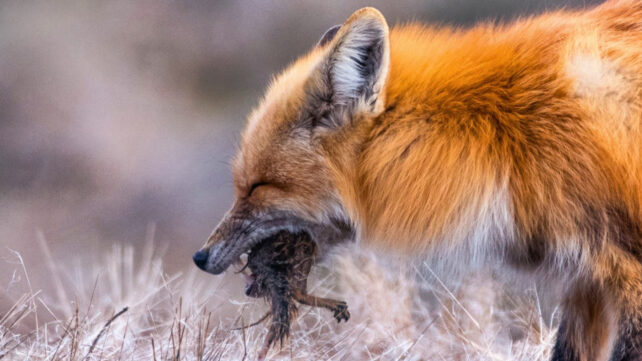
Animals that didn't seem to care about what they ate included the Eurasian magpie (Pica pica) and the globally ubiquitous red fox (Vulpes vulpes).
The latter has also established itself as the land mammal with the largest distribution, second only to humans, according to the National Park Service.
The researchers suggest that avoiding closely related carrion may serve as a first line of defense, helping animals avert infections and the energy costs of immune responses.
Since more closely related animals are more likely to share physiological traits, they are also more likely to share pathogens and transmit diseases among each other.
Study limitations include the absence of fish as scavengers.
And since some of the scavenging animals in this study only exhibited a few feeding events, more evidence is necessary to explore specific factors, such as how their feeding behaviors are affected by their health, life stages, sociability, or environmental food scarcity.
Importantly, this work highlights that scavengers are essential parts of their ecosystems, cycling nutrients and shaping food webs. They also help boost public health by reducing zoonotic disease potential.
As an example, a crash in vulture populations in India has been linked to the deaths of more than half a million people.
"Recognizing and preserving healthy scavenger communities may therefore provide both ecosystem-level benefits and contribute to mitigating zoonotic risks," the researchers conclude.
"These insights highlight the importance of integrating scavenger species into broader wildlife management and conservation frameworks."
This research was published in the journal Ecology Letters.
Nature is a cycle in which nothing is wasted and death leads to life.
When an animal dies, it becomes carrion, a source of nutriment that upholds ecosystems.
For example, a "whale fall" settling on the seafloor creates a thriving mini-environment for decades.
However, these hotspots also pose dangers to the opportunists that feed here, including the risk of pathogen transmission and predation.
Accordingly, it has long been suggested that scavengers avoid eating carcasses that are more closely related to them to reduce the risk of infection.
But the evidence to explore that idea is scarce and limited in scale.
So researchers recently expanded that scale, examining an essential gap in the ecology of some of nature's most derided denizens: those who scavenge.
In a study published in the journal Ecology Letters, a quartet of Spanish biologists, ecologists, and zoologists used camera traps, phylogenetic analyses, and computational modeling to see what kind of carcasses these consumers choose to chow down upon.
"Here, we provide the first empirical evidence from a diverse vertebrate scavenger assemblage that phylogenetic distance is a key driver of selective carrion consumption," the researchers say.
From February 2020 through May 2021, they placed nearly 200 fish, bird, and small mammal carcasses across El Hondo Natural Park in Alicante, in southeastern Spain, along with two cameras at each spot to capture images and video of the resultant feeding frenzies.
These animals – including carp, quails, ducks, rodents, and rabbits from sources like roadkill and invasive-carp-reducing efforts – are present in the park and were strategically placed where each would naturally die; the researchers did not, say, airlift a whale carcass into a swamp.
They chose El Hondo because it's a highly productive wetland featuring extensive reedbeds, marshes, and even salt flats.
It's abundant in resources and hosts many species in a relatively small area, creating frequent opportunities for carrion.
Interestingly, despite its diversity, it does not host large predators or the world's most famous obligate scavengers: vultures.
They also consulted a species-level phylogenetic tree to ascertain the genetic distance between carrion and its scavenger, gauged by the millions of years of independent evolution between different taxa.
They observed that animals often consumed carrion that was more distantly related to them than would be expected through random occurrence.
"We found a consistent pattern across the assemblage: scavengers generally avoided consuming carcasses of phylogenetically related species," the researchers explain.
"This trend held for both the probability of consuming a given carcass species and the total number of carcasses consumed, although the strength of the relationship varied between taxonomic classes (birds vs. mammals)."
At the extreme ends of the observed trends, the brown rat (Rattus norvegicus) – notoriously and erroneously blamed for the 'Chicago rat hole' – proved the main consumer, chomping on 38 carcasses, mostly fish.
Among the few species that fed on more closely related carrion was a bird, the Iberian grey shrike (Lanius meridionalis), observed to feed only on bird carcasses. Incidentally, shrikes further belie their birdly cuteness by impaling their prey on spikes.
Animals that didn't seem to care about what they ate included the Eurasian magpie (Pica pica) and the globally ubiquitous red fox (Vulpes vulpes). The latter has also established itself as the land mammal with the largest distribution, second only to humans, according to the National Park Service.
The researchers suggest that avoiding closely related carrion may serve as a first line of defense, helping animals avert infections and the energy costs of immune responses.
Since more closely related animals are more likely to share physiological traits, they are also more likely to share pathogens and transmit diseases among each other.
Study limitations include the absence of fish as scavengers.
And since some of the scavenging animals in this study only exhibited a few feeding events, more evidence is necessary to explore specific factors, such as how their feeding behaviors are affected by their health, life stages, sociability, or environmental food scarcity.
Importantly, this work highlights that scavengers are essential parts of their ecosystems, cycling nutrients and shaping food webs. They also help boost public health by reducing zoonotic disease potential.
As an example, a crash in vulture populations in India has been linked to the deaths of more than half a million people.
"Recognizing and preserving healthy scavenger communities may therefore provide both ecosystem-level benefits and contribute to mitigating zoonotic risks," the researchers conclude.
"These insights highlight the importance of integrating scavenger species into broader wildlife management and conservation frameworks."
This research was published in the journal Ecology Letters.
This article was fact-checked by Rebecca Dyer and edited by Rebecca Dyer. While we pride ourselves on our process, we are only human. If you spot a mistake, please let us know.