The heart is, inarguably, one of the most important organs in the body.
It sits in your chest, carefully armored by sternum and ribs, constantly pulsing to maintain the flow of blood, transporting oxygen, nutrients, and other essential substances to every extremity of your body.
It might be reasonable to think that there's an indelible link between the heart and the body it resides in – the processes that affect one inevitably affect the other.
But a new preprint, uploaded to bioRxiv and yet to be peer-reviewed, suggests that this may only be true up to a point. Take the heart out of the body and put it in a new one, and something incredible happens.
The transplanted heart begins to take on the biological age of its new owner.
Older hearts transplanted into younger recipients appear to become biologically younger, while younger hearts placed in older bodies show signs of accelerated aging.
That's the fascinating finding of a study led by molecular biologist Jesse Poganik of Harvard Medical School, suggesting that an organ's biological age isn't entirely intrinsic to the organ itself, but is strongly influenced by the body around it.
And it could, they say, ultimately save lives – by loosening current constraints on donor age limits, thus expanding the pool of available organs for people who need transplants.
Although we tend to think of age in terms of how many years an organism has been alive, chronological age is only one part of the complicated process of aging.
A large part is biological aging – the accumulated molecular and physiological changes that accompany aging, don't necessarily proceed at the same rate as the calendar, and can vary from person to person.
Scientists have developed several ways of estimating this biological age. Among the most widely used are epigenetic clocks, which look for characteristic patterns of chemical tags called methyl groups attached to DNA.
Poganik and his colleagues wondered if those clocks would change when an organ is suddenly transplanted into a body significantly older or younger than the one it was born into.
Answering that question started with mice.
The researchers performed heart transplants in mice using an established technique in which the recipient keeps its original heart, while a donor heart is connected to blood vessels in the neck.
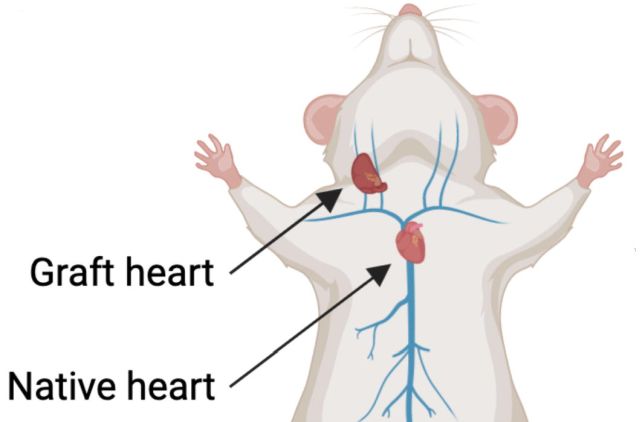
This approach allows the animals to remain alive while researchers study the effects of the transplant – in this case, the two-way relationship between the body's possible effect on the transplanted heart and the transplanted heart's effect on the body.
The team performed transplants between mice of different ages, including young hearts into old mice and old hearts into young mice, alongside same-age transplants for comparison.
Four to six months later, they examined DNA methylation in the transplanted hearts, the mice's original hearts, their livers, and their blood.
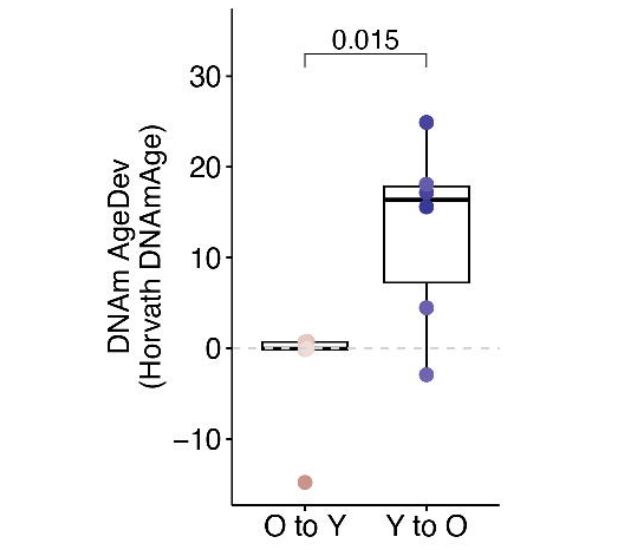
This is where things got interesting. In both younger mice that had received older hearts and older mice that had received younger hearts, the transplanted organ began to assimilate the biological age of its new body.
Older hearts in younger mice showed signs of rejuvenation, while younger hearts in older mice showed signs of accelerated aging.
Intriguingly, the effect appeared to be largely one-way. The biological ages of the recipients' original hearts, livers, and blood were mostly unaffected by whether the transplanted heart came from an older or younger donor.
It seemed that, when transplanted into a new ecosystem, the heart adopts the biological age of its new home.
But, for all their similarities for investigative research purposes, mice are very much not humans.
For multiple very good reasons, scientists cannot open humans up and bung a second heart inside to see what happens – but humans are frequent transplant recipients for real, and these procedures generate detailed medical records and tissue samples that can be studied retrospectively.
Poganik and his colleagues obtained archived heart tissue collected from 11 transplant recipients, from biopsies taken during follow-up care after their transplants.
Those patients' ages differed substantially from those of their donors, ranging from recipients 24 years younger than their donor to 50 years older.
And when the researchers analyzed DNA methylation in those samples, they found much the same thing they had seen in mice.
The biological ages of the transplanted hearts were more closely associated with their recipients' ages than those of the donors.
That meant an older heart transplanted into a younger person showed signs of biological rejuvenation, while a younger heart transplanted into an older person appeared biologically older than its chronological age would suggest.
Although the sample was very small – just 11 patients – the similarity to what the researchers had observed in their mouse experiments was promising.
So, the researchers went looking to see if they could find evidence of this beyond the molecular markers only accessible through hard-to-obtain biopsy samples.
This was available in other data from transplant follow-up care – detailed records of heart function and physical performance from hundreds of heart recipients, collected one year after transplantation.
Here, too, the pattern held.
When the researchers analyzed the records, they found that several aspects of the transplanted hearts' structure and function were associated with the recipients' ages, rather than the ages of the donors.
But the clearest effects emerged in exercise performance – both functional capacity and maximum oxygen consumption declined with increasing recipient age, regardless of the age of the donated heart.
The findings, the researchers say, could have important implications for how donor hearts are selected for transplantation.
Although there is no official upper age limit for heart donors, younger hearts are generally preferred. The researchers note that donors under 45 are recommended, and few transplant programs routinely accept hearts from donors older than 50.
But if an older heart can lose some of the biological hallmarks of its age after transplantation into a younger body, chronological age alone may not tell the whole story about the organ's potential.
The researchers suggest this could eventually allow older donor hearts to be considered for younger recipients, opening up a desperately limited pool of available organs.
There's still a lot we don't know, though. In particular, the study doesn't show whether the apparent rejuvenation of older hearts translates into better long-term outcomes.
Nor do we yet know how quickly the transformation takes place in humans, how long it lasts, or whether other transplanted organs undergo a similar shift; further studies in that direction are needed.
Exactly how the recipient's body exerts this influence on a transplanted heart is also unclear. But the researchers found a possible clue in the gene activity of the transplanted mouse hearts.
Changes associated with mitochondrial and metabolic processes were particularly prominent, suggesting these pathways could play a role in the exchange of aging characteristics between an organ and its new body.
The study is an important step that sheds light on something intriguing, but there are many more steps to be taken.
Still, the researchers are optimistic that their work could pave the way to better options for transplant patients.
"Our carefully controlled mouse study paired with our extensively quality-controlled human DNAm data present compelling evidence supporting age assimilation of tissues placed into heterochronic systemic environments," they write.
The research is available on preprint server bioRxiv.
This article was fact-checked by Fiona MacDonald and edited by Fiona MacDonald. While we pride ourselves on our process, we are only human. If you spot a mistake, please let us know.