
It's extremely not very good for your brain to deprive it of oxygen.
Starved of the oxygen they need to produce energy, your neurons can start dying within minutes, rapidly leading to seizures, unconsciousness, and death in the most extreme cases.
A seahorse-shaped region called the hippocampus is particularly vulnerable to this hypoxia. It's deeply involved in forming and retaining memories, as well as our ability to navigate the physical world.
Yet there are people in this world who voluntarily and repeatedly put themselves under hypoxia.
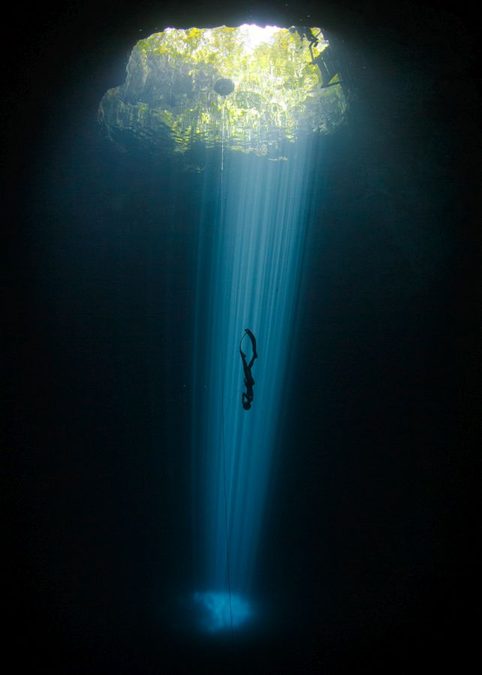
These are the freedivers, performing an extreme sport that involves holding one's breath for minutes at a time while diving into deep waters.
The record for this is held by Croatian freediver Vitomir Maričić, who held his breath for an astonishing 29 minutes and 3 seconds at the bottom of a diving pool.
But, puzzlingly, these athletes don't appear to show the impaired memory function we might expect from repeated hypoxia.
Now, a team led by neuroscientist Julia Micaux of the University of Paris-Saclay may have figured out how.
In a brain imaging study of 17 freedivers over seven months of training, the researchers watched patterns of communication in each diver's brain reorganize across the salience, frontoparietal, sensorimotor, visual, and cerebellar systems.
"These findings suggest that repeated voluntary hypoxia during freediving training is associated with selective functional reorganization of hippocampal and large-scale brain networks," the researchers write in a preprint, yet to be peer-reviewed, uploaded to bioRxiv.
"This pattern may reflect adaptive neuroplasticity linked to preserved episodic memory under intermittent hypoxic exposure."

The hippocampus is particularly sensitive to hypoxia because of its high energy demands.
Studies have found that oxygen deprivation can interfere with neurogenesis, the process by which new neurons are produced, and synaptic plasticity, the ability of connections between neurons to adapt in response to changing conditions.
Both processes are important for learning and memory, so perhaps unsurprisingly, hypoxia has also been associated with problems with memory, attention, and other cognitive functions.
But previous studies on freedivers have found none of the signs of cognitive impairment associated with clinical hypoxia.
Intrigued by this, Micaux and her colleagues began to investigate freediver brains and cognition.
Their previous work, published in 2025, found that the hippocampus remained structurally preserved, with no accompanying impairment to episodic memory.
This suggested to the researchers that something adaptive may be taking place…
Since exercise is consistently associated with the reorganization of large-scale brain networks, they decided to take a closer look at what changes in freedivers' noggins over time.
The researchers recruited 17 experienced recreational freedivers, all men between the ages of 27 and 55, who underwent seven months of standardized freediving training.
They also recruited 20 non-freediving men of similar ages and backgrounds as a control group. Importantly, these participants weren't sedentary: they performed around five hours of aerobic exercise each week, comparable to the freedivers' training load.
Before and after the seven months of training, the freedivers underwent functional magnetic resonance imaging (fMRI) to measure functional connectivity – patterns of synchronized activity that can reveal which regions of the brain are working together.
The researchers also wanted to see what happened to the brain both while the freedivers were breathing normally and while they were actually holding their breath, or apnea.
During each scan, the participants completed four rounds consisting of up to two minutes of apnea followed by 90 seconds of normal breathing.
The researchers could then compare brain connectivity during and after breath-holding, and see how those patterns changed after seven months of training.
The divers also performed a test of episodic memory, in which they were shown combinations of locations and gestures, then 15 minutes later asked to distinguish combinations identical to the ones they had been shown from similar and entirely new ones.
This allowed the researchers to look not only for changes in brain connectivity, but also for whether those changes were associated with how well the divers' memories were working.
Well, the researchers certainly found changes – and they were not minor.
After seven months of training, the freedivers showed altered connectivity across networks involved in cognitive control, attention, sensory processing, and movement.
Overall, the connectivity between frontoparietal regions and sensorimotor, salience, and visual networks grew stronger.
But the hippocampus was doing something different.
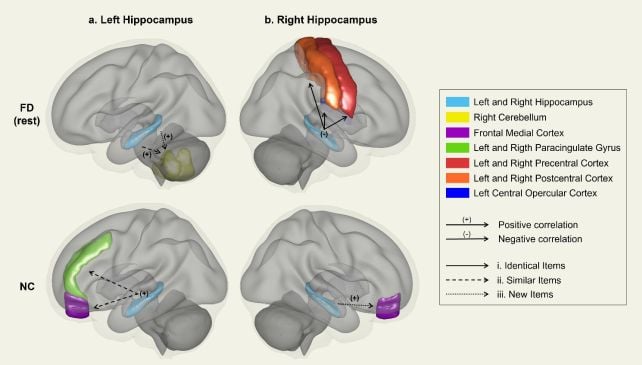
After training, both hippocampi showed stronger connectivity with the cerebellum, a region increasingly recognized for its role in cognitive functions such as memory, as well as its more familiar role in coordinating movement.
At the same time, connectivity between the hippocampus and sensorimotor regions weakened, particularly while the freedivers were breathing normally.
The researchers think this combination may reflect a shift away from processing external sensory and motor information toward the internal processes that help preserve memory under the unusual physiological demands of freediving.
The memory tests appeared to support that interpretation.
Among the freedivers after training, those with stronger connectivity between the left hippocampus and cerebellum tended to perform better at distinguishing similar memories and identifying entirely new ones.
Meanwhile, those with weaker connectivity between the right hippocampus and sensorimotor regions tended to be better at recognizing identical memories. Together, these suggest that repeated hypoxia is associated with changes in the hippocampus's connections with other brain regions that may help preserve memory function.
Now, there are some caveats. A study cohort of just 17 people isn't particularly large, and they were all men to boot.
And although the freedivers were scanned before and after training, the control group was only scanned once, making it impossible to say for certain that freediving itself caused the changes.
Still, the findings are intriguing. They suggest that repeated, controlled hypoxia may affect the brain very differently from the involuntary oxygen deprivation associated with illness or injury.
Exactly how that adaptation works – and whether it could eventually be harnessed for medical purposes – will require much more research.
"Beyond sport," the researchers conclude, "these insights open translational avenues for therapeutic interventions targeting hippocampal vulnerability, such as in aging, neurodegeneration, or hypoxia-related pathologies, through controlled hypoxic training paradigms designed to harness adaptive neuroplasticity."
The findings are available on preprint server bioRxiv.
This article was fact-checked by Carly Cassella and edited by Carly Cassella. While we pride ourselves on our process, we are only human. If you spot a mistake, please let us know.