If you're looking for a boost of household happiness, then you might want to consider getting yourself a cat.
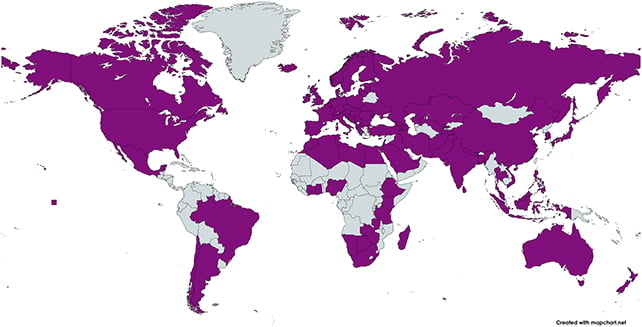
In a new study published in PLOS One, an international team of researchers analyzed publicly available data across 93 countries to examine the relationship between happiness scores, domestic cat density, and infection rates of Toxoplasma gondii – the parasite that affects as many as 1 in 3 people and which felines are the primary host of.
The researchers wanted to see if having a cat made a difference to happiness, and whether the risk of parasite infection affected that in any way.
While T. gondii is usually harmless and symptomless for most people, it can cause problems in more vulnerable groups, and has been linked to anxiety, depression, and schizophrenia.
Wealth was also included as it's often one of the first factors people consider when it comes to leading a happy and comfortable life.
"What we found is that countries with more cats tended to report higher levels of happiness, while countries with higher exposure to Toxoplasma gondii tended to report lower levels of happiness," say the study authors in a press release.
Those apparently conflicting results need some picking apart. Certain countries may have had a disproportionate impact on the results, the researchers suggest.
China, for instance, had a relatively high happiness score despite a lower cat density than most nations.
One of the more surprising wrinkles in the data was that countries with more cats tended to have lower levels of T. gondii exposure.
Cats aren't the only way humans can be infected by this parasite, but you would expect the association to be in the other direction.
"Of course, these are associations at the country level, so we cannot say that having more cats makes people happier or that Toxoplasma makes people less happy, but the patterns are interesting enough to deserve further investigation," say the study authors.
Then there's the consideration that wealthier countries may make people more likely to own cats and have better access to vet care.
Felines in richer countries are more likely to be kept indoors, get regular check-ups at the vet, and eat commercial cat food.
The findings suggest that biological and ecological factors can play a role in finding that much-desired feeling of happiness, factors which aren't typically included in studies.
"This goes against the simple assumption that having more cats necessarily means greater parasite exposure and suggests that factors such as pets management, sanitation, and socioeconomic conditions may be important," says biologist Javier I. Borráz-León, from the National Institute of Psychiatry Ramón de la Fuente Muñiz in Mexico.

How happy (or otherwise) populations are can have very tangible effects on public health, which is why studies like this are so important.
When people are stressed, anxious, and unhappy, they're less productive, more vulnerable, and more likely to need treatment and care from other people.
Now we know that having a cat around could lead to a boost in contentment and well-being, adding to other recent cat and pet discoveries – including research that showed animal companions may help to slow down cognitive decline.
To take the research further, future studies could track cat owners and non-cat owners on an individual basis, rather than at the country level.
That should reveal more about the relationship between cats and happiness and how it might change over time, in combination with other factors.
"Future studies of happiness at the national level should integrate both socioeconomic and biological perspectives and include longitudinal and interdisciplinary approaches to elucidate the underlying mechanisms and processes," write the researchers in their published paper.
The research has been published in PLOS One.
This article was fact-checked by Carly Cassella and edited by Carly Cassella. While we pride ourselves on our process, we are only human. If you spot a mistake, please let us know.