
Most of us have heard of the Mediterranean diet and its many health benefits, but there's another European eating plan that could also help you live longer.
It's called the Nordic diet, and it is based on the traditional foods of Denmark, Finland, Iceland, Norway, and Sweden.
It shares many elements with the Mediterranean diet, but it's essentially the cold-climate version. Sometimes it's called the 'Mediterranean diet of the north'.
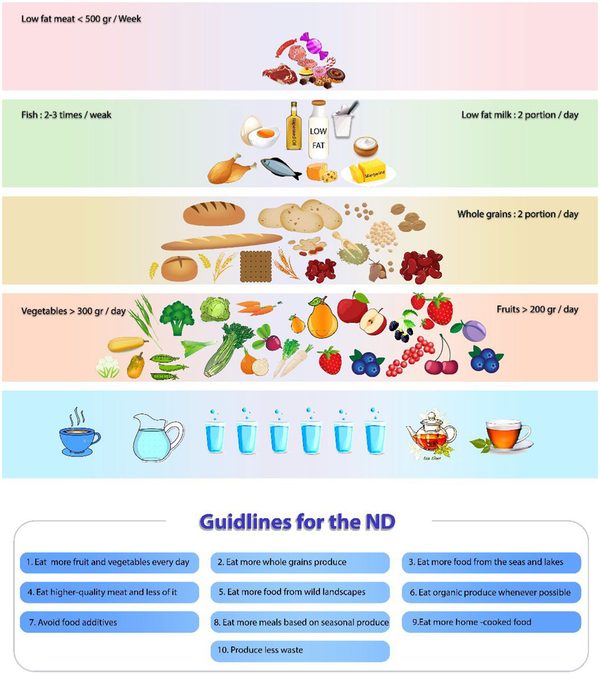
The meals are mainly plant-based and tend to emphasize long-established foods from the Nordic culture, such as fatty fish and root vegetables.
This means favoring rapeseed oil over olive oil, oats and rye over wheat and rice, and pears and apples over oranges and bananas.
Now, a new study adds to growing evidence that a healthy Nordic diet may help you live longer.
Researchers in Denmark drew on health data from more than 64,000 middle-aged and older adults in Sweden and used it to emulate a long-term randomized trial comparing dietary interventions.
Their hypothetical analysis estimates that strictly following a healthy Nordic diet could significantly lower the risk of dying from any cause over 24 years.
The findings are published in The American Journal of Clinical Nutrition.
They support a systematic review from 2025 that found individuals whose eating habits were more aligned with the Nordic diet had lower risks of all-cause mortality, cardiovascular mortality, and cancer mortality compared to those with lower adherence.
The findings also partly support a recent randomized controlled trial (RCT) among Swedish adults with prediabetes or type 2 diabetes.
In this trial, some participants swapped white bread and pasta with porridge and rye bread. They used canola oil instead of butter, and ate locally grown produce like apples, berries, and cabbage. They also ate fatty fish like salmon.
Those who stuck to this healthy Nordic diet outperformed the 2012 Nordic nutritional recommendations in reducing liver fat, liver enzyme markers, body weight, blood glucose levels, and lipid markers.
"The healthy Nordic diet gave the best results in the study participants with diabetes; just over 20 percent of their liver fat was reduced, and blood sugar (glucose) control improved over one year," said lead author of the RCT study, Ulf Risérus from Uppsala University in Sweden, in 2025.
"More than half of the participants also saw a remission of their fatty liver disease. This makes these results equally important for people with non-alcoholic fatty liver disease as those with type 2 diabetes."
Compared to the Mediterranean diet, there is far less research on the long-term health associations of the Nordic diet, and unfortunately, research takes time.
The recent study from Denmark is not a clinical trial, but it is a clever statistical shortcut to investigate the long-term potential of the Nordic diet without waiting for a 20-year trial to finish.
In this way, researchers have compared Nordic nutritional recommendations to a more traditional Nordic diet.
Interestingly, the new study found no clear reduction in serious liver outcomes when eating the healthy Nordic diet compared to 2023 Nordic health recommendations.
But it did find a significant difference in estimates for all-cause mortality.
Compared to general health recommendations, the healthy Nordic diet was tied to a 4 percent lower risk of dying from any cause over the next 24 years.
Compared to no diet intervention, it was tied to a 6 percent lower risk of all-cause mortality.
Zooming in on specific subgroups, researchers found evidence that some individuals may benefit more from a healthy Nordic diet than others.
The group with better estimated mortality outcomes included a slightly higher proportion of females and adults over 65 with hypertension and diabetes.
Whereas those who exercised at least two hours a week and had lower alcohol consumption were less represented in this group.
That sort of nuance, however, will need to be verified in future trials. This particular study relies on hypothetical interventions that keep someone strictly on one diet for decades.
But more unites the Nordic diet and the Mediterranean diet than separates them, and the Mediterranean diet is also linked to a substantially lower risk of disease and death.
Lead author of the recent study, Michael Fridén of Aarhus University, thinks there are strong reasons to suspect that traditional Nordic diets, rich in berries, unsaturated fats, and dietary fiber, are good for human health.
Fridén recently wrote a piece for The Conversation with Christina C. Dahm and Daniel Borch Ibsen discussing why the Nordic diet could help you live longer – and also more sustainably to boot.
"For people living in northern Europe, like the UK, this more Nordic way of eating may actually be an easier diet to follow than the Mediterranean diet, given that many of the ingredients are already grown locally and familiar," writes the trio.
"Plus, because it leans on foods grown and caught close to home, rather than shipped in from afar, this way of eating tends to do more to support local food production. Thus potentially making it better for the climate."
A possible two for one.
The research has been published in The American Journal of Clinical Nutrition.
This article was fact-checked by Rachel Garner and edited by Rebecca Dyer. While we pride ourselves on our process, we are only human. If you spot a mistake, please let us know.