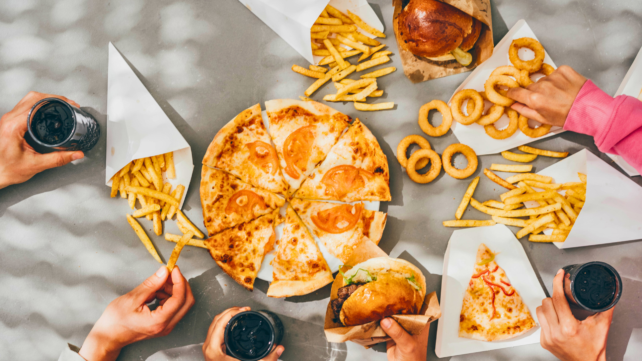
The blood vessels feeding your brain can sustain damage without an obvious warning.
Scientists have now linked higher consumption of ultraprocessed foods to signs of that damage in middle-aged adults, raising questions about how everyday eating habits relate to the brain's vascular health.
These changes can show up on brain scans even when someone has no noticeable symptoms.
Understanding their connection to diet could help researchers investigate how food choices relate to processes associated with later stroke and dementia.
The study, published in JAMA Network Open, examined dietary questionnaires, MRI scans, body fat measurements, and cognitive assessments from 8,783 adults in Canada. Participants were aged 35 to 69 and had no established cardiovascular disease.
Researchers classified reported foods by their degree of processing, investigating a category that includes many industrially formulated foods.
Among participants in the highest consumption group, approximately one in nine had MRI evidence of vascular brain injury. In the lowest consumption group, the proportion was approximately one in 12.
"These findings are important because they are established markers of cerebrovascular disease and have been associated in previous research with a higher risk of future stroke, cognitive decline, and dementia," McMaster University nutrition researcher Russell de Souza told ScienceAlert.
The scans captured two kinds of abnormalities. One involved bright areas in the brain's white matter, the tissue carrying signals between brain regions.
The other involved areas of tissue injured by interrupted blood supply, sometimes without recognizable stroke symptoms.
The association persisted in the main analysis after accounting for differences including age, smoking, exercise, income, education, hypertension, and diabetes.
Additional adjustments for body fat and fat surrounding internal organs made little difference, suggesting that adiposity alone did not explain the relationship.
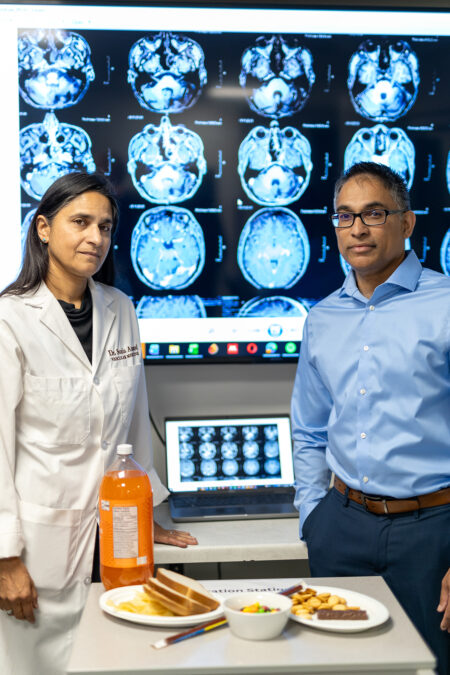
Despite the differences on brain scans, ultraprocessed food intake showed no consistent association with memory and thinking test performance.
One possible explanation is that MRI can detect tissue changes before they affect abilities measured by these tests. Following participants over time could help establish whether that happened here.
"Many of the biological processes that contribute to stroke, cognitive decline, and dementia likely begin years or even decades before they become clinically apparent," de Souza said.
Heart and brain health are closely linked through the circulation supplying both organs. Habits that protect cardiovascular health may therefore also benefit the brain.
De Souza highlighted physical activity, managing blood pressure, cholesterol and diabetes, and avoiding smoking as established approaches that may help reduce risk.
The dietary findings came with substantial uncertainty.
The main analysis compared ultraprocessed food servings per 2,000 calories consumed. When intake was instead calculated as a percentage of total calories or total food servings, the associations weakened and generally lost statistical significance.
Diet, brain scans, and cognitive performance were also assessed at the same visit. The study therefore cannot show whether eating patterns preceded the brain abnormalities.
Questionnaires may misclassify foods, and unmeasured differences in people's circumstances and habits could contribute to the results.
"However, the study does not establish that UPF caused the brain changes we observed," de Souza cautioned.
It also cannot separate the possible effects of industrial processing from foods' nutritional composition or the foods they replace.
To determine whether reducing ultraprocessed food consumption can change these outcomes, researchers will need studies that track participants over time and trials that deliberately change their diets.
The research has been published in JAMA Network Open.
This article was fact-checked by Fiona MacDonald and edited by Fiona MacDonald. While we pride ourselves on our process, we are only human. If you spot a mistake, please let us know.