In a quest to improve patients' mental health, it seems scientists are working their way through a list of every psychedelic 'party' drug of the past century.
Ketamine, psilocybin, MDMA, LSD, and DMT have all become legitimate research drugs in recent decades, with some now established in certain countries as prescribed treatment options for cases of depression and other mental illnesses that don't improve with typical treatment.
Now, a relatively obscure psychedelic compound based on toad venom is being investigated for its antidepressant potential. The results of a phase 2b randomized clinical trial have been published today in the Journal of the American Medical Association.
The trial, funded by biotech company AtaiBeckley (a subsidiary of pharmaceutical giant Eli Lilly and Company), suggests a single-dose nasal spray formula of the substance could be a safe and speedy option for patients with difficult-to-treat depression.
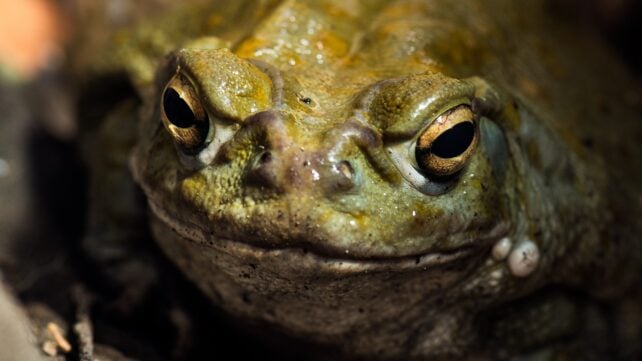
The active ingredient is known as mebufotenin, or 5-MeO-DMT, and it originates from the Sonoran Desert toad (Incilius alvarius).
It's one component of the notorious yet rare street drug 'bufo'. Usually sold as a dried form of the toad's actual venom, bufo contains both mebufotenin and bufotenin (5-HO-DMT).

In the new clinical trial, however, researchers were testing a synthesized form of pure 5-MeO-DMT. It's not the first time this drug has gone through clinical trials – but it is the largest and most rigorous trial of it being used as a nasal spray yet.
"Single-day dosing with mebufotenin appears to be effective for postpartum depression – and now for difficult-to-treat depression – and the benefits are sustained with or without retreatment for eight days to six months," explains psychopharmacology researcher Chittaranjan Andrade, of India's National Institute of Mental Health and Neurosciences.
Andrade was not involved in the new clinical trial, but has written an opinion piece on the research, also published in JAMA.
Mebufotenin's unique mystical psychedelic effects kick in rapidly and subside within about an hour, with some variation depending on how the drug is taken. In that regard, it's similar to DMT, though the visual effects tend to be much less intense.
Neuropsychiatry researcher David Feifel and colleagues think this rapid psychedelic experience could give mebufotenin an edge over options like esketamine and psilocybin, though the research isn't quite there yet.
Their phase 2b clinical trial explores the drug's "safety, efficacy, and time to discharge readiness". The results are promising, but we're still a long way from seeing this Schedule 1/Class A drug in medical use outside research settings.
The trial included 193 participants undergoing treatment for moderate to severe major depression at institutions across Australia, Europe, and the US. They had tried two to five different antidepressant drugs during their current depressive episode, to no effect.
Each participant was randomly assigned a single dose of the mebufotenin benzoate nasal spray, containing either 0.3 mg, 8 mg, or 12 mg of the active substance, but to avoid bias, they were unaware of their dose.
They also received psychological support before, during, and after the 'trip', and followed protocols around set and setting typical of existing psychedelic treatments.
Most patients were ready to leave the treatment session within about two hours of taking the drug, after confirming they were no longer experiencing any acute psychedelic effects.
"This rapid return of dosed participants to baseline, together with infrequent dosing indicated by the long antidepressant durability after a single dose, can offer important potential advantages for patients and clinicians compared with treatment options currently available or in advanced stages of development," Feifel and team report.
"Esketamine and transcranial magnetic stimulation require frequent retreatment, and psilocybin and LSD require four to twelve hours of monitoring due to longer acute subjective effects."
Typically, patients started experiencing benefits about two days after the session, and these benefits continued for at least eight weeks.
The majority of patients experienced adverse side effects, but almost all of these were mild or moderate: things like headaches, nausea, and nasal pain, which quickly passed and occurred only on the day of dosing. However, one person experienced two severe panic attacks during their treatment.
The 12 mg and 8 mg doses both performed better than the 0.3 mg dose, improving depression scores by 5.3 and 6.2 more points than the lowest dose, respectively.
The 8 mg dose will proceed to phase 3 since it seemed to produce the best balance of safety and efficacy. In phase 3, the drug will be tested on a much larger group of people and compared to other existing treatments.
Andrade is not convinced these results bode well for mebufotenin as the next big thing in treating depression.
"The antidepressant effect was incomplete," he points out.
"The average patient became only about 30 percent better, and the response and remission rates were below those typically seen, for example, with ketamine and electroconvulsive therapy."
He also notes the study had a fairly lenient definition of 'treatment-resistant' depression: no patients had undergone ketamine or electroconvulsive therapy, for instance. 'Difficult-to-treat' depression is, in his eyes, a more accurate description of these patients.
The study also excluded any patients who reported suicidality, which means it's unclear how safe or effective mebufotenin would be for them.
He is also skeptical of the speed with which mebufotenin can really improve people's lives.
"Patients with difficult-to-treat depression require long-term maintenance treatment, but because mebufotenin was examined as monotherapy, the trial
offers no insight on when and how the transition to a conventional antidepressant should be made or whether mebufotenin itself might be used for maintenance," he writes.
The research has been published in Journal of the American Medical Association.
This article was fact-checked by Fiona MacDonald and edited by Fiona MacDonald. While we pride ourselves on our process, we are only human. If you spot a mistake, please let us know.