Getting enough fiber is one of the healthiest tweaks you can make to your diet.
But despite decades of nutritional advice, research shows the vast majority of Americans are falling short on fiber intake, with only 4 percent of men and 11 percent of women meeting recommended levels.
It turns out, one way to address that huge gap has been hiding right in front of us.
In a new study in the International Journal of Food Sciences and Nutrition, researchers found that parts of fruit and vegetables that people routinely discard as food scraps often contain more fiber than the parts they actually consume.
If we could modify that behavior and stop throwing these valuable fiber-packed parts of fruits and vegetables into the bin, we could improve our health, reduce food wastage, and save money too.
"This isn't about perfection and this isn't about forcing people to eat unpalatable food," says nutrition scientist Rachel Gibson from King's College London.
"It's about recognizing the nutritional value in components we've been conditioned to discard."
In the study, Gibson and fellow researchers analyzed the 'root-to-tip' components of 12 common fruits and vegetables, examining how much fiber is contained in edible parts of the plant that are usually discarded during food preparation, such as peels, skins, seeds, and stalks.
The fresh produce investigated included beetroot, bell pepper, broccoli, butternut squash, cauliflower, celeriac, curly kale, fennel, kiwi fruit, leek, pineapple, and watermelon.
Of these 12 different foods, the researchers found that in all but 2 (broccoli and fennel), the discarded parts of the plants had higher fiber content by weight than the commonly consumed portions – and sometimes much more.
"The variation in fiber content between the parts of the food we consume and that most throw away was striking," Gibson says.
"The 'root-to-tip' components in our study represented between 25 percent and 48 percent of the total weight of the produce. That means people are discarding a significant portion of the produce we buy."
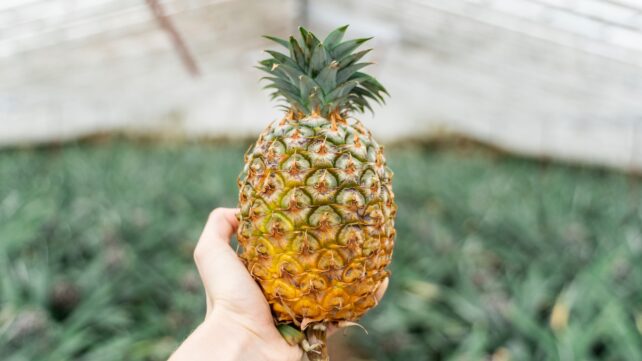
Among the foods analyzed, the three with the largest relative differences were pineapple (by weight, the skin and core together contain approximately 453 percent more fiber than the flesh), watermelon (rind has 425 percent more fiber than flesh), and butternut squash (362 percent more fiber in skin, seeds, and innards than in flesh).

By contrast, in foods like broccoli and fennel, the parts we normally eat contain more fiber by weight than the bits people tend to discard. For example, broccoli stalks contain 28 percent less fiber by weight than the florets.
Of course, just because some of these root-to-tip components are edible doesn't mean they're necessarily easy or enjoyable to eat.
The study's standout winner in terms of its fiber differential, pineapple skin and core, might technically be edible, but the skin can contain naturally occurring toxic compounds, so the aim is to highlight the variety of fiber-rich foods we're currently wasting.
"Importantly, this is not about encouraging people to eat '100g of butternut squash skin and seeds' to increase fiber intake," says gut physiologist Balazs Bajka from King's College London.
"Rather, by making better use of the often-overlooked parts of fruits and vegetables as part of everyday meals, we have an opportunity to increase dietary fiber intake in a simple and sustainable way."
As part of their research, the team conducted focus groups in which participants were asked questions about food, fiber, food waste, and food preparation.
The sessions showed that, even though some people had awareness of fiber content in root-to-tip components of fruit and vegetables, there can still be concerns about eating them.
The researchers suggest that by promoting the nutritional benefits of root-to-tip eating, it might be possible to further educate consumers and overcome these negative preconceptions.
"I know that there's a lot of fiber and nutrients in the skins," one participant said. "But yeah um, it's just something about eating the skins that isn't quite sitting right with me."
The findings are reported in the International Journal of Food Sciences and Nutrition.
This article was fact-checked by Rebecca Dyer and edited by Rebecca Dyer. While we pride ourselves on our process, we are only human. If you spot a mistake, please let us know.