
Stress is much more than just an emotional reaction.
When we experience the feeling of stress, it can do things to our bodies, producing a distinct chemical response.
What's more, physiological responses to stress exposure can speed up our biological aging, and the extent of the acceleration appears to be different for different people.
In a new study in PNAS, scientists found new evidence of this variation in biological aging tied to stress, stemming from one of the most universally stressful events of living memory: the COVID-19 pandemic.
A growing body of research suggests that the stresses of the pandemic rapidly aged people, with the effects appearing to be the most pronounced in young people, with teenagers in particular showing greater indicators of aging after lockdown.
Now, in what they claim is a first, researchers have found signs of the stress phenomenon in epigenetic data, based on saliva samples from over 1,000 people in Germany, measuring age-related changes in DNA methylation using four different kinds of epigenetic clocks.
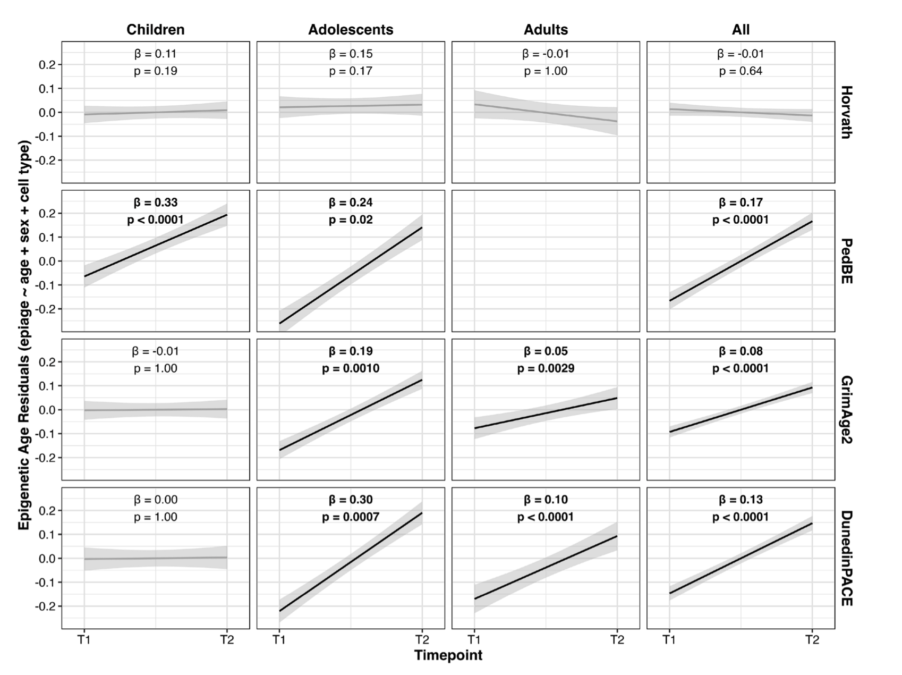
In the study, the researchers analyzed data from the TwinLife Epigenetic Change Satellite (TECS) project, which collected saliva samples from children (aged approximately 8–10), adolescents (14–16), and adults (20–29) before the first German lockdown in March 2020, and then again in 2021–2022, after the country emerged from its second national lockdown.
"We leveraged this design in which the COVID-19 pandemic constituted a natural experiment occurring between repeated assessments and, thus, were able to test whether a major, globally shared stressor was associated with detectable epigenetic changes," the researchers explain in their paper, led by first author and neuroscientist Alicia Schowe from the Max Planck Institute of Psychiatry in Munich.
While the results varied, measurements from three of the four epigenetic clocks found a significant increase in age acceleration or pace of aging from the pre-pandemic baseline in the full sample, with the clocks PedBE, GrimAge2, and DunedinPACE each finding increases in two age groups (PedBE was only used for children and adolescents).
Only one of the epigenetic clocks found faster aging in children, which the researchers suggest could be related to sensitivity issues with the other clocks used, as the systems might not be adequately calibrated to children.
Interestingly, however, when the researchers compared the epigenetic results with participants' self-reported experiences of the pandemic, only one age group showed a link between perceived stress and accelerated biological aging: the adolescents.
"This suggests that adolescence may be a time period that is especially sensitive to the effects of stress," Schowe says.
"This could be due to the changes happening in the body during puberty, or because lockdown measures, like restrictions on seeing peers, had a particularly strong impact on this age group."
Among adolescents, those who felt more burdened by restrictions on their freedoms and separation from important people in their lives showed stronger signs of accelerated biological aging, although the associations varied depending on which epigenetic clock was used.
Beyond the stress burden faced by adolescents, the strongest overall links to accelerated epigenetic aging across all age groups were factors related to physical health: higher body mass index (BMI) and smoking exposure.
"Accordingly, observed increases in sedentary lifestyle and weight gain during the pandemic may also partly account for the observed increases in GrimAge2 and DunedinPACE in the overall sample, alongside psychosocial burden in adolescents," the researchers write.
"Long-term follow-up will be needed to confirm whether these changes persist and predict adverse health outcomes later in life."
The findings are reported in PNAS.
This article was fact-checked by Rebecca Dyer and edited by Rebecca Dyer. While we pride ourselves on our process, we are only human. If you spot a mistake, please let us know.