
Our experience of time seems uniform and unidirectional, but relativity allows it to be a bit more loosey-goosey than you might expect.
For example, in a strong gravitational field, time runs more slowly compared to time farther away – as though gravity itself were dragging it out.
Likewise, if you travel fast enough, time will pass more slowly for you compared to someone who stays behind.
In these examples, time still only flows in one direction.
But looking beyond relativity, into the realm of quantum mechanics, another possibility emerges – one in which time might not merely slow down, but effectively run backward.
What happens when it does, though? A new mathematical exploration of this question has returned a surprising answer: The quantum environment itself imposes a limit on how far back time can effectively run.
And it's extremely short.
For the simplest model explored by physicists Yakir Aharonov of Tel Aviv University and Avshalom C. Elitzur of the Israel Institute for Advanced Research, time could only effectively run backward for about a femtosecond – or one quadrillionth of a second.
Their work is detailed in a preprint uploaded to arXiv.

This isn't Aharonov's first time-reversal rodeo.
In 1990, he and his colleagues proposed a theoretical device called a quantum time-translation machine, which could exploit the strange properties of quantum mechanics to make a system behave as though time had sped up, stopped, or even run backward.
The idea hinges on a quirk of quantum mechanics called superposition, in which a system can exist in a combination of different possible states at once.
Imagine you have a clock in such a state of superposition, occupying two different positions in a gravitational field at once – with enough of a difference in gravitational strength to affect the rate at which time passes.
In one position, deeper in the gravitational field, time passes more slowly. In the other, farther away, time passes more quickly.
Quantum mechanics allows both possibilities to coexist. And when the two branches of the clock are brought back together, they can interfere with each other.
Here's where things get weird. By selecting a particular outcome of that interference – a process called post-selection – physicists can theoretically make the clock behave as though it has experienced an amount of time outside the range of either possibility.
That could mean more time than has passed for either branch. It could mean no time at all. Or it could mean a negative amount of time – as though the clock had been running backward.
Now, 36 years later, Aharonov and Elitzur have returned to the idea to investigate a particularly thorny question: How far could that negative time actually go?
Because the concept remains theoretical, rather than experimentally realized, the pair turned to mathematics to explore four slightly different configurations of the machine.
But before they could start, they had to answer a deceptively simple question.
Suppose you do manage to make time run backward. How in the heck do you prove it?
And this is where a little bit of atomic decay steals the floor.
When an atom absorbs energy, one of its electrons can jump to a higher energy level, putting the atom into what's known as an excited state.
But atoms are a little bit lazy – they tend to settle back to their unexcited state (relatable). Eventually, the electron can drop back to a lower energy level, releasing the excess energy as a photon. This process is called spontaneous emission, and under ordinary circumstances, it only goes one way.
So the researchers proposed starting with a collection of atoms that had already begun to decay, and seeing whether their theoretical machine could reverse the process.
Imagine you have 100 excited atoms. You wait until some of them have released their energy, leaving just 80 still excited.
Now suppose you put those 100 atoms through the theoretical time machine.
If you end up with more than 80 excited atoms, the machine has effectively reversed some of the decay that had already taken place.
Now, if time really did run backward, the emitted light would have to return to the atoms, restoring them to their excited states – which poses a new problem. The photons might already have traveled away, or been absorbed by something else.
To account for all of this, Aharonov and Elitzur imagined enclosing the atoms inside a completely sealed cell, along with the light they emitted and walls that could absorb it.
The entire cell would then pass through the theoretical machine, allowing the researchers to investigate whether the whole process could effectively be reversed.
And here's where a rather draconian barrier emerged.
Even inside a sealed cell, the atoms don't exist in isolation. As they emit light, they interact with the surrounding electromagnetic field, leaving traces of what has happened.
For the simplest version of the machine, reversing the decay depends on those interactions retaining the quantum coherence needed for the two possible histories to interfere.
But that window doesn't stay open for long.
In the researchers' optical example, it lasts around one femtosecond.
Beyond that, the environment has effectively retained too much information about the emission for the simplest two-branch machine to produce the desired reversal.
So the limit isn't imposed by time – it's imposed by the environment's memory of the light.
More elaborate versions of the machine could theoretically reverse longer intervals, but only by introducing vastly more quantum branches, with increasingly improbable chances of success.
But what, you are now no doubt asking, about the second law of thermodynamics? A salient point, sage reader, and one the researchers addressed directly.
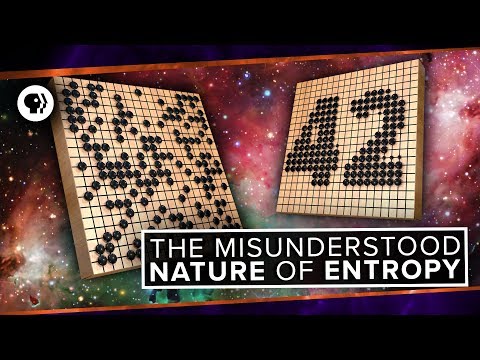
According to the second law of thermodynamics, the total entropy of an isolated system can never decrease. Natural processes tend to move in one direction, from more ordered states to less ordered ones.
As Sir Arthur Eddington so succinctly put it, "If your theory is found to be against the Second law of thermodynamics I can give you no hope; there is nothing for it but to collapse in deepest humiliation."
But if time could run in reverse, wouldn't that violate the second law? Well, not necessarily.
The loophole lies in post-selection. The apparent reversal of time occurs only in a very small fraction of possible outcomes, carefully selected from all the others.
When all the outcomes are considered together, the system as a whole still obeys the second law of thermodynamics. Entropy hasn't magically started decreasing across the board.
So Aharonov and Elitzur's theoretical machine can produce something that looks like time running backward without overturning one of the most fundamental laws of physics – thus evading Eddington's threatened humiliation.
But why go to such extraordinary lengths to risk an eggy face?
Well, because the question isn't really whether we can build a machine that sends things backward through time. It's why time appears to move in only one direction in the first place.
Many of the fundamental equations of physics work just as well backward as forward. Yet the world we experience is full of processes that seem impossible to undo.
By identifying exactly where quantum time reversal breaks down, Aharonov and Elitzur's work could help physicists understand how the environment gives rise to the irreversible processes that define our experience of time.
"The arrow of time enters exactly where the machine stops," the researchers write.
The research is available on preprint server arXiv.
This article was fact-checked by Carly Cassella and edited by Carly Cassella. While we pride ourselves on our process, we are only human. If you spot a mistake, please let us know.