
One way of beating certain cancers could be to stop them from developing in the first place, and there's a growing interest in using vitamin C to tackle pre-cancer blood disorders and early-stage blood cancers.
Vitamin C levels are often chronically low in people with blood cancers, and there's long been debate about whether topping up these levels might work as a cancer therapy.
So far, the evidence has been pretty mixed.
To gather more data – specifically on vitamin C's effects before the cancer properly gets started – a team led by researchers from the University of Copenhagen in Denmark and the Van Andel Institute has now completed a phase 2 clinical trial involving 109 participants.
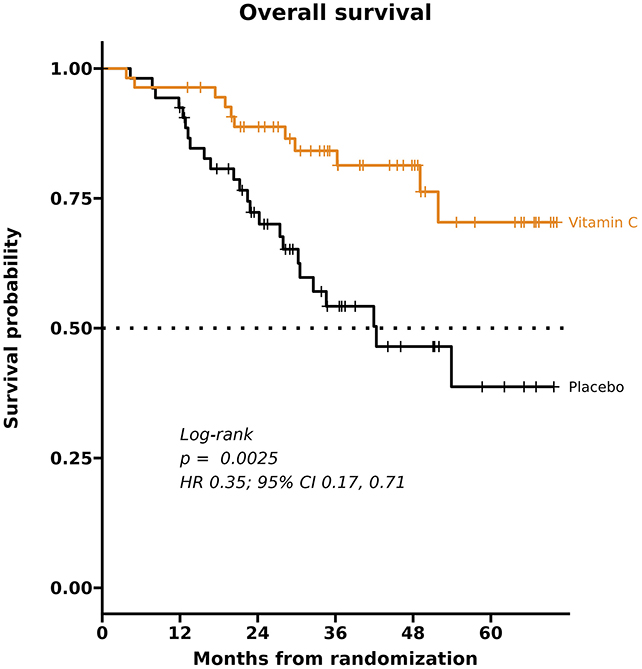
The results, published in Cancer, show that a daily oral dose of 1,000 milligrams of vitamin C was linked to a 65 percent lower risk of death compared to a placebo group, in an exploratory analysis over a three-year follow-up.
"We are tremendously excited and cautiously optimistic that our results could one day translate into a simple way to improve care and outcomes for people with pre-leukemia disorders," says epigeneticist Peter Jones, from the Van Andel Institute.
"Our approach reflects a growing emphasis on cancer interception – intervening before cancer becomes established."
All of the participants in the trial had been given a diagnosis of either clonal cytopenia of undetermined significance (CCUS) or a lower-risk myeloid malignancy such as myelodysplastic syndrome (MDS), all of which can lead to the stubborn cancer type acute myeloid leukemia (AML).
At the moment, there are no treatments available to stop CCUS from turning into AML. MDS can be tackled with stem cell transplantations, but it's not suitable for everyone.
"The standard approach for patients with pre-cancer blood disorders is to monitor their blood cell counts over time," says hematologist Casey O'Connell, from the University of Southern California.
"This is, understandably, very frustrating – no one wants to hear that they have a condition that increases leukemia risk but there's nothing that can be done other than watch and wait."

Based on previous research, vitamin C has been identified as an important helper for the TET2 enzyme (a kind of worker protein).
TET2 can help protect against cancer cells by controlling gene switches, and in blood conditions like those studied here, TET2 function is often impaired.
The thinking is that replenishing vitamin C levels keeps TET2 working properly and doing its job of keeping cancer at bay – though this wasn't directly measured in the trial, and needs to be confirmed in future studies.
"Vitamin C is important because it is involved in a range of biological functions, including the activity of enzymes that regulate normal cell function," says hematologist Stine Ulrik Mikkelsen, from the University of Copenhagen.
Outside of the survival rate, fewer people in the vitamin C cohort went on to develop higher-risk, aggressive blood cancers – five participants versus nine – though as there were only 109 patients in total, this isn't statistically significant.
Other positive signs from the trial included smaller rises in several inflammatory biomarkers than in the placebo group (pointing to a system under stress), and a return to normal vitamin C levels for those who were deficient to begin with.
Overall, the results are positive and suggest that vitamin C could be a relatively easy, low-cost way of reducing the chances of cancer developing in those at high risk.
However, a larger phase 3 trial will need to be needed to definitively say whether a course of vitamin C can reduce cancer risk or extend lifespans.
"We are working to build on the trial findings by exploring how exactly vitamin C interacts with pre-cancerous cells, including the idea that it may help restore normal epigenetic function in blood cells at risk of becoming leukemia," says Jones.
The research has been published in Cancer.
This article was fact-checked by Rebecca Dyer and edited by Rebecca Dyer. While we pride ourselves on our process, we are only human. If you spot a mistake, please let us know.