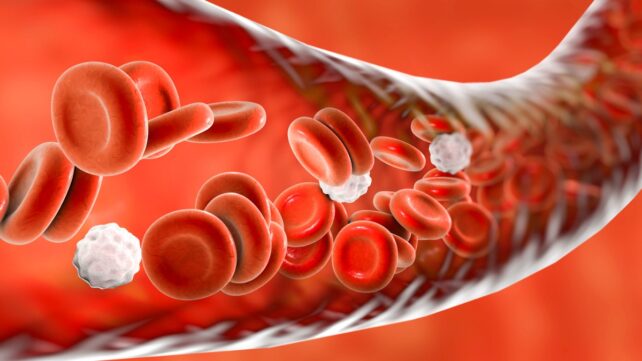
A filter used to clear excess fats from the blood of people with cardiovascular disease may also trap much smaller stowaways: some persistent synthetic chemicals and microplastics.
The treatment, known as therapeutic apheresis, passes a patient's blood through a machine, filters out targeted substances, and returns the blood to the body.
It was not developed to remove environmental pollutants. It is generally used in severe cases where medication alone cannot sufficiently remove cholesterol – fat-carrying particles linked to cardiovascular disease risk.
But when researchers in Germany compared blood samples collected immediately before and after the procedure, levels of some synthetic chemicals fell.
Early findings suggest that certain microplastics may also be retained by the filters.
The chemicals examined in the Brain Health study are per- and polyfluoroalkyl substances, or PFAS – used in many products such as non-stick surfaces, waterproof textiles, and some food packaging.
Because some PFAS persist in the environment and human body for years, they are often called "forever chemicals".
People can be exposed to PFAS in many ways, including through contaminated water and food, consumer products, packaging, and even household dust.
"What we consider the most important finding of our study is that therapeutic apheresis, a procedure originally developed to remove lipoproteins from the blood of patients with severe cardiovascular disease, also reduced circulating levels of PFAS and microplastics," molecular endocrinologist Charlotte Steenblock of the Dresden University of Technology told ScienceAlert.
"This was unexpected, as PFAS and microplastics are chemically distinct from lipoproteins and were not the intended targets of the treatment."
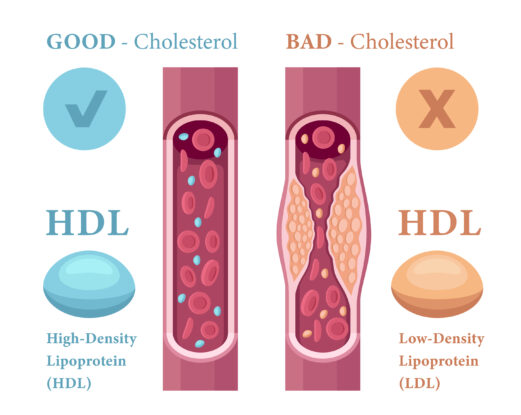
Long-term exposure to certain PFAS has been associated with higher levels of total cholesterol as well as higher LDL (the 'bad' cholesterol), immune and hormonal changes, and some cancers, although risk depends on the type, dose, and duration of exposure.
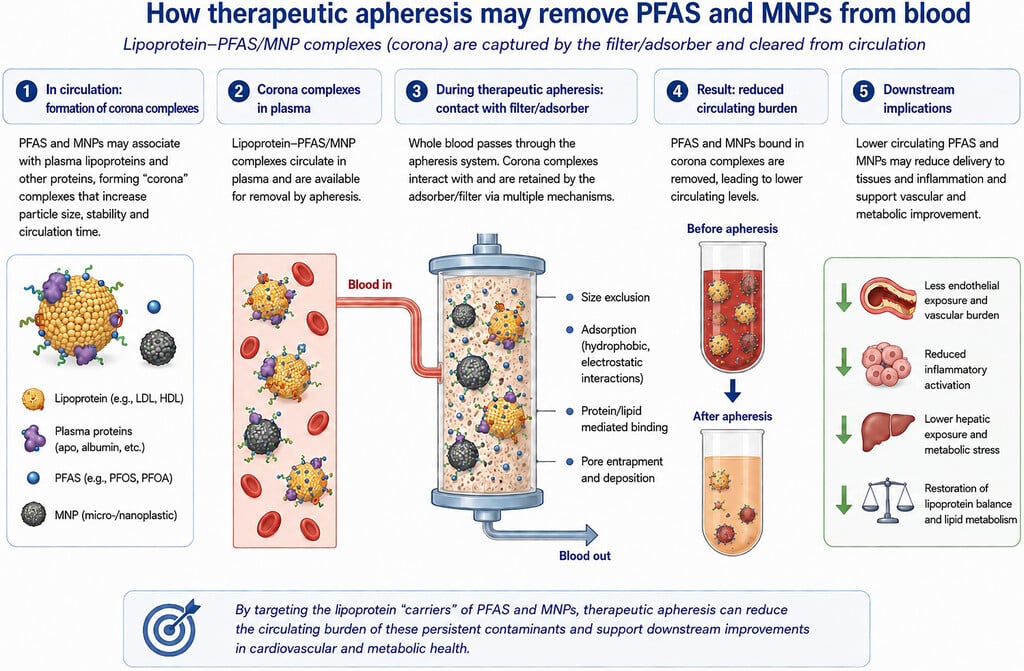
The researchers studied 14 patients undergoing double filtration plasmapheresis. Blood cells are separated from plasma, which then passes through a second filter that retains larger targets such as lipoproteins.
Before and after each of two double-filtration sessionss, four common PFAS were measured in these patients. Immediately after one procedure, their blood concentrations had fallen by up to 25 percent.
Another laboratory analyzed samples from four patients using a different method and found average reductions of 43.5 to 75.8 percent across five PFAS.
However, the small sample and different methods mean the two sets of results cannot be directly compared. Nor do the higher percentages mean that more than half of those specific PFAS molecules were removed from every patient.
Some PFAS bind to blood proteins and may travel with lipoproteins, so they could be retained directly by the filters or removed alongside the intended targets.
"Our current hypothesis is that these environmental pollutants are retained directly within the apheresis filters or that they form aggregates or complexes with lipoproteins and plasma proteins, allowing them to be co-removed during the procedure," Steenblock says.
The microplastic findings were less consistent.
Among four patients, polyethylene levels fell in all, while polyvinyl chloride declined in three. But other polymers did not follow the same pattern, and some circulating plastic levels increased after treatment.
These inconsistencies could reflect measurement methods, environmental contamination, or plastic components of the apheresis system. The study therefore does not prove that apheresis reliably reduces microplastics in human blood.
Steenblock says the team repeatedly detected microplastics in material washed from used filters.
"We are very confident that apheresis does not merely redistribute microplastic particles but actually removes them from the circulation, as we have repeatedly detected microplastics in the eluates recovered from the apheresis filters after treatment," she says.

Yet particles captured by a filter do not necessarily indicate a reduction in the body's total microplastic burden. Blood tests show only what is circulating at that moment; particles stored in tissues could later re-enter the bloodstream.
This matters because microplastics have been detected in human brain, liver, and kidney tissue, but their long-term health effects remain unclear.
The exploratory study involved small, partly different patient groups, and microplastic measurements are vulnerable to environmental contamination. The researchers did not determine how long the reductions lasted or whether patients' health improved.
Larger controlled trials, standardized measurements, and longer follow-up are therefore needed before apheresis could be considered a treatment for environmental pollutant exposure.
A separate 2026 study published in the Journal of Clinical Apheresis examined 174 plasma-exchange procedures in 114 patients. Microplastic levels fell in patients with high starting levels but rose in those with low levels.
The authors of that paper suggest plastic tubing and fluid bags used during the procedure may have released particles into the blood.
Related: 'Forever Chemicals' Found in 98.8% of Human Blood Samples Tested
For now, the evidence does not support apheresis as a microplastic 'detox'. It is a medical intervention for specific conditions, performed under specialist supervision.
Still, the findings raise an intriguing possibility: A filter designed to capture harmful fat-carrying particles may also remove some PFAS and microplastics traveling alongside them.
The study was published in Brain Health.
This article was fact-checked by Rachel Garner and edited by Rebecca Dyer. While we pride ourselves on our process, we are only human. If you spot a mistake, please let us know.