
A metric that looks beyond height and weight to underlying biological markers of metabolic health is providing revised estimates of disease risk.
According to a new study led by scientists at the University of Gothenburg in Sweden, a higher metabolic BMI (MetBMI) is associated with an increased risk of type 2 diabetes and related conditions.
Recently, BMI (body mass index) has been reevaluated as a crude measure of health. It's easy to calculate – dividing weight by height – but it ignores crucial factors such as where fat (adipose tissue) is stored and how effectively the metabolism converts food into fuel.
The team says MetBMI may offer a more accurate way. Their analysis revealed a molecular signature of metabolic dysfunction, reflected in the metabolites produced by gut microbes during food digestion.
Related: Caffeine in Your Blood Might Affect Body Fat And Diabetes Risk, Study Shows
"Our metBMI uncovers a hidden metabolic disorder that is not always visible on the scale," says endocrinologist Rima Chakaroun, from the University of Gothenburg.
"Two people with the same BMI can have completely different risk profiles depending on how their metabolism and adipose tissue function."
The researchers used health data and blood samples from 1,408 people to build an algorithm to assess MetBMI, focusing on blood metabolites that indicate how well biological processes are functioning.
"Circulating metabolites, shaped by host genetics, diet, and the gut microbiome, offer a systems-level readout of metabolic health beyond excess weight," the researchers explain in their paper.
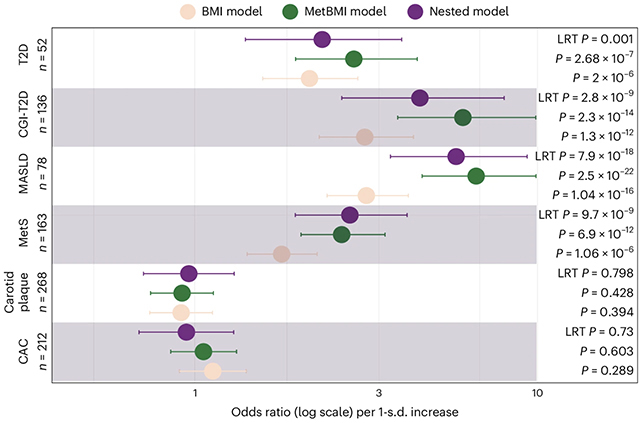
This MetBMI algorithm was then tested on a separate group of 466 individuals, and proved an accurate predictor of the amount and distribution of weight and body fat. What's more, it was a much better predictor than standard BMI of those who had diabetes, fatty liver disease, and other metabolic diseases.
People whose MetBMI was higher than expected for their body weight had 2.6 times the odds of having type 2 diabetes and up to 5 times the odds of metabolic syndrome, a condition often considered a precursor to diabetes.
The findings didn't stop there: The study also revealed a strong connection between MetBMI and the gut microbiome. Higher MetBMI scores were associated with a less diverse bacterial community and fewer microbes capable of breaking down dietary fiber.

"The metabolites that heavily contribute to the metBMI prediction are in fact modulated or produced by the gut microbiota, making it something of a metabolic dial," says Fredrik Bäckhed, a biomedical researcher at the University of Gothenburg.
That suggests that factors that affect gut bacteria, such as diet and exercise, might also improve metabolic indicators of health that aren't captured by measuring someone's weight.
In a further analysis, involving 75 patients undergoing bariatric surgery, those with higher MetBMI scores lost less weight after the procedure. It's another indication that metabolic health is an important factor in managing weight.
Related: One Weight Loss Strategy Is 5x More Effective Than Ozempic, Study Finds
While MetBMI will require further validation before it's widely used in clinics, these early results suggest it may ultimately provide a more accurate, reliable predictor of obesity-related disease risk beyond weight measurements.
"The traditional BMI often misses people who have normal weight but high metabolic risk," says Bäckhed.
"MetBMI can contribute to a fairer and more accurate assessment of disease risk and thus pave the way for more personalized prevention and treatment."
The research has been published in Nature Medicine.