
Gastrointestinal cancers are among the most common cancers worldwide, and a leading cause of death. Diagnosis isn't a particularly pleasant experience, usually involving inserting a camera where the Sun don't shine.
But soon, doctors might be able to spot this kind of cancer by looking at the other end.
New evidence from a study published in the journal Cell Host & Microbe suggests that a simple – and far less invasive – oral sample could be enough to tell whether someone has a gastrointestinal cancer or not.
"Many species of microbes associated with the mouth are also present in the gut and may flourish there," says Jihyun Kim, systems biologist at Yonsei University in South Korea and lead author of the new study.
"These observations made us wonder whether oral microbes reach and persist in the gastrointestinal tract differently in people with cancer."

To find out, the researchers collected saliva and fecal samples from 507 people, including 77 people with stomach cancer, 86 with colorectal cancer, and 215 with metabolic disorders such as hypertension, type 2 diabetes, and metabolic syndrome. A control group of 129 healthy individuals was also tested.
Then, the researchers sequenced the genes of microbes in those samples to create a measure with a pretty off-putting name: the mouth-to-feces (MF) index. Essentially, this measured the extent to which the same microbes could be found in both saliva and feces from the same person.
From there, the team could explore whether the MF index changed between people who were healthy, had cancer, or had metabolic conditions. Ultimately, the idea was to see whether people with gastrointestinal cancers had specific microbial signatures that could be detected through oral samples alone.
Sure enough, the researchers found that the MF index was significantly elevated in people with gastrointestinal cancers, compared to healthy controls. That means that in cancer patients, more of the oral microbes migrate further into the gut than they normally would.
No such increase was detected for people with metabolic disorders, however.
"The presence of oral-associated bacteria in the gut of patients with cancer was not entirely unexpected," says Sun Ha Jee, an epidemiologist at Yonsei University.
"What we had not fully anticipated was how the signal varied across disease groups, how much of it could be detected in oral samples alone, and how strongly it depended on the way microbial features were represented."
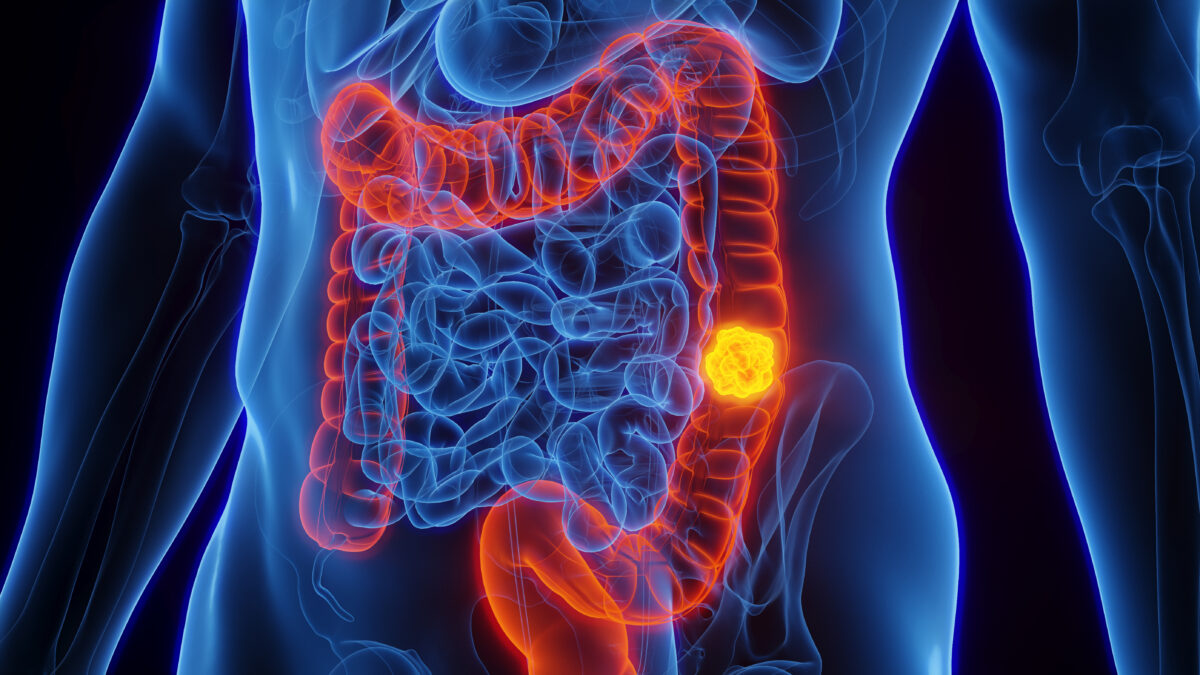
Intriguingly, the team found that tests of oral samples were more accurate at detecting signs of colorectal cancer than some current standard screening tools.
One of the first tests often used for patients without symptoms is what's called a fecal occult blood test. As the name suggests, it detects signs of blood in stool samples, which can be a sign of colorectal cancer. If a positive reading is returned, doctors might then request further tests to confirm a diagnosis.
The problem is that these tests have a high rate of false positives and negatives. Not all cancerous or precancerous polyps bleed, so they're often missed. Meanwhile, blood can come from other conditions like hemorrhoids.
And while it's not as invasive as a full colonoscopy, catching your own poop, dipping a stick into it, and mailing it to a lab is still not many people's idea of a fun time.
Given the choice, most patients would probably prefer to provide a mouth rinse sample.

"It was notable that cancer-related information could be recovered from oral samples alone," says Yong Chan Lee, a gastroenterologist at Yonsei University.
"Although only a small fraction of oral bacterial variants were also detected in the gut, models built using only these oral features could distinguish patients with cancer from healthy individuals across several independent cohorts."
Related: Sugar-Sweetened Beverages Linked to Stomach Cancer For The First Time
It's an intriguing step, but there's still plenty of work to be done before oral tests could be used clinically to diagnose gastrointestinal cancers.
For one thing, the researchers aren't sure why there's a connection at all – do mouth bacteria moving to the gut contribute to cancer, or does cancer make it easier for mouth bacteria to migrate and persist in the intestines? Perhaps a bit of both.
Future research will investigate this causality, as well as develop more sensitive versions of the test, and assess how accurately it works in patients who don't already have a cancer diagnosis.
The research was published in the journal Cell Host & Microbe.
This article was fact-checked by Clare Watson and edited by Clare Watson. While we pride ourselves on our process, we are only human. If you spot a mistake, please let us know.