
Artificial sweeteners are in the news almost constantly.
If you believe the headlines, they are terrible blights on our health that are far worse than the sugar they replace.
This isn't always supported by the evidence, but it's something that we love to hear, and so it gets reported on almost weekly regardless of what the data actually shows.
The most recent furor over artificial sweeteners is a perfect example. The headlines have been claiming for months that artificial sweeteners speed up cognitive decline.
According to a recent study, there are six of these 'dangerous chemicals', including common ones like xylitol and aspartame, that may be causing our brains to rot more quickly.

The study has been covered by hundreds of media outlets (for full disclosure, ScienceAlert didn't report on that paper specifically, but we do write a lot about recent findings on artificial sweeteners!).
Despite being published in September 2025, it's still making headlines in the second half of 2026.
"This is all made especially remarkable given that it doesn't really show any issues from artificial sweeteners at all." – epidemiologist Gideon Meyerowitz-Katz
This is all made especially remarkable given that it doesn't really show any issues from artificial sweeteners at all.
The study itself is a very simple piece of observational research.
The authors took a cohort of public servants in Brazil called the ELSA dataset. This is a longitudinal study which measured people's brain function over time using a standard battery of tests.
At the start of the study, people also filled in very extensive questionnaires about their lives, including what's called a food frequency questionnaire, which measures what people say that they eat – NOT what they eat.
This is important, and we'll get back to it.
The authors looked at the correlation between reported sweetener intake – calculated from those food frequency questionnaires – and cognitive decline as measured using four different scales.
Over the eight years of the study, they found that people in the highest third when it comes to sweetener intake had a modest amount of additional brain aging compared to people in the bottom third.
This research suffers from the normal issues that such observational studies do.
One big thing is that food frequency questionnaires don't really measure intake of food. They measure what people THINK they eat, but we know that we are often unreliable historians.
Most of these questionnaires ask about the last 12 months of eating, and people rarely remember their food intake for that long with any degree of accuracy.
The analysis also assumes that people's food intake didn't change over the course of the study.
The authors only had a single food frequency questionnaire to rely on, which meant that if people changed their food intakes over this period, there would be no way for them to know about it.

As letters to the journal have noted, there are also serious questions about the biological plausibility of the claim.
Some of the sweeteners are natural substances, one is actually a very rare form of sugar, and all of them are very different molecules. It would be extremely unlikely for all of these different chemicals to have the same impact on the brain.
There's also the problem of reverse causality – that is, people who were already experiencing brain declines due to diseases like diabetes or heart disease may have been more likely to eat and drink artificial sweeteners at the start of the study.
This is an issue that's hard to correct with the sort of analysis that we see in this paper.
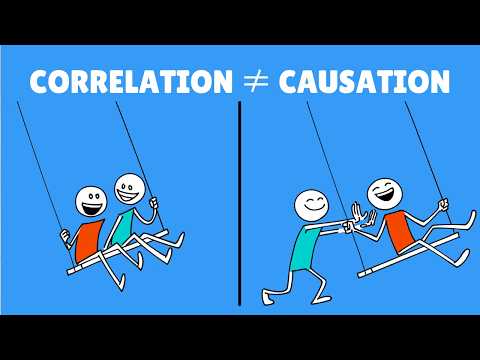
It's also worth noting that at least one of the authors' analyses did not find any relationship between sweeteners and brain aging. In a series of statistical models that were relegated to the supplementary appendix, they showed that in the full case analysis there was no relationship between sweeteners and aging.
This analysis includes all of the people in the original cohort, whereas the one that got the most attention excluded people for various reasons such as having Parkinson's disease or reporting unusually high caloric intake.
But the problems don't end there. Independent reviewers have pointed out a series of very clear mathematical mistakes in their paper.
Despite a correction, errors remain, including a mistake in the confidence interval reported in the abstract.
This particular research therefore proves very little about artificial sweeteners and brain health.
At worst, the study shows that there may be some negative impacts, although it depends on which analysis you choose to believe.
Related: Artificial Sweetener Can Trick Your Brain Into Feeling More Hungry
More likely, the finding that's been everywhere in the media is based on mathematical errors.
Despite decades of fearmongering when it comes to artificial sweeteners, the reality is that they are very well-tested and generally not harmful.
Some research has even suggested that artificially sweetened beverages may be better for your health in some ways than water, although these results are likely caused by people who drink artificially sweetened drinks choosing to consume fewer high-calorie sugary beverages.
Artificial sweeteners get a bad rap, but the data show quite convincingly that they are, at least, better for you than sugar.
Gideon Meyerowitz-Katz is an epidemiologist working in chronic disease in Sydney, Australia. He writes a regular health blog covering science communication, public health, and what that new study you've read about actually means. He's previously helped ScienceAlert break down the real science behind the most viral papers.
This article was fact-checked and edited by Rebecca Dyer. While we pride ourselves on our process, we are only human. If you spot a mistake, please let us know.