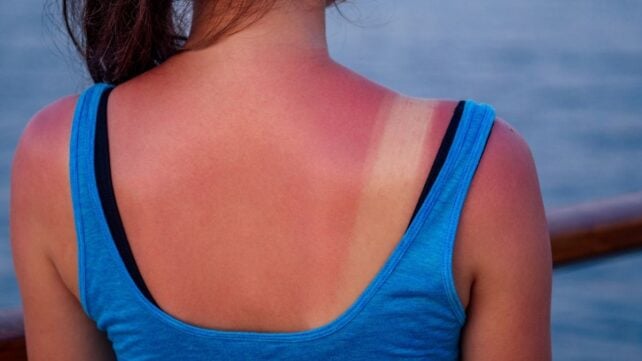
For anyone whose childhood summers included an annual peeling of sunburned skin, here's an uncomfortable question: Did those regular burns do lasting damage to your skin?
A meta-analysis published in JAMA Dermatology suggests the answer is probably yes.
Among 17 studies involving more than 321,000 people, those with a history of painful, blistering, or severe sunburns had higher odds of developing cutaneous squamous cell carcinoma (cSCC), one of the most common forms of skin cancer.
Researchers searched thousands of published studies and pooled data from 17 to analyze. They found that people with medium frequencies of painful, blistering, or severe sunburns over their lifetime had 51 percent higher odds of cSCC than those with no such history.
For people with high frequencies, the odds were 69 percent higher.
Experts at the University of Rochester Medical Center in New York call these scaldings "life-changing sunburns" because the damage UV radiation inflicts on DNA in skin cells can have lifelong effects.
We might feel relieved when the heat of a sunburn subsides, but the damage to DNA lingers.
"When the body repairs that damage, mistakes can sometimes occur," Adrienne Victor, an oncologist at the University of Rochester's Wilmot Cancer Institute, who was not involved in the analysis, said in a recent news release.
"Over time, these mutations can accumulate and contribute to the development of skin cancer."

The meta-analysis, published in 2025, was conducted by dermatologist Isaac Weber and colleagues at the University of Texas MD Anderson Cancer Center and other US institutes.
"While the role of UV exposure in cSCC is well-established, the specific effect of sunburns remains less certain," Weber and colleagues wrote, likely because it's hard to measure the effects of past sunburns decades after they occur.
"Disentangling chronic UV exposure from sunburn is challenging due to their potential overlap – individuals with more sunburns may also have greater chronic exposure."
The researchers used data that had been adjusted for age, sex, skin color, and skin sensitivity, where possible.
Strikingly, frequent severe sunburns in childhood were associated with a higher risk of developing cSCC – up to three times the odds – and even a few bad sunburns seemed to increase cSCC risk.
Although the certainty of evidence remained low, in part due to the data relying on people recalling their past sunburn histories, Weber and colleagues concluded that their findings reinforce the importance of effective sunburn prevention strategies, especially for kids and teens.
Dermatologist Jinia El-Feghaly echoed that advice in the University of Rochester release.
"Children are more susceptible due to multiple risk factors, including the biology of their pigment-producing skin cells, the higher likelihood of sun exposure, and inconsistent use of sun protection," she explained.
Past meta-analyses examining other skin cancers and sunburn histories have found similarly: the more severe sunburns in childhood, per decade or over a lifetime, the greater the risk of melanoma or basal cell carcinoma, for example.
Essentially, the damage adds up, and frequent severe burns are dangerous, so avoiding them likely goes a long way to reducing skin cancer risk.

As upsetting as this data might be, it doesn't tell the whole story.
UV radiation is a known carcinogen, and a person's lifetime sun exposure has a very real impact on the possibility of cancer, but there are other important considerations.
Genetics plays a role, but layered on top of that are lifestyle choices, such as cigarette smoking, that can contribute to skin cancer risk.

Using tanning beds also raises the risk of melanoma, with a 2025 study suggesting regular exposure to artificial UV light may be worse for the skin than sunlight.
Brief sun exposure may help boost vitamin D levels, but the findings from the recent meta-analyses on sunburn histories and skin cancer risk suggest we really ought to avoid sunburns that leave skin visibly injured.
And although we can't rewrite our old sunburn histories, we can avoid adding new chapters.
Protecting yourself from excessive sun exposure takes a bit of thought and planning. As the now world-famous Australian public-education campaign from the 1980s suggests: Slip (on a shirt), Slop (on some sunscreen), Slap (on a hat).

"Some people avoid sunscreen because of myths that its ingredients can cause skin cancer," says Victor.
"However, the strongest evidence points to UV exposure as the primary cause of most skin cancers."
Related: FDA Approves First New Sunscreen Ingredient in Decades
Avoiding intense midday sun and seeking shade under a tree or umbrella are other smart ways to keep a sunburn at bay.
The meta-analysis was published in JAMA Dermatology.
This article was fact-checked by Rachel Garner and edited by Clare Watson. While we pride ourselves on our process, we are only human. If you spot a mistake, please let us know.