It may soon be safer than ever for people in the US to go out into the sun.
That's because your sunscreen could soon be doing a better job of protecting you from harmful rays than older formulations.
The US Food and Drug Administration (FDA) has now approved a new chemical for use in sunscreen formulations – the first time it's done so in more than 25 years.
The chemical, known as bemotrizinol or BEMT, doesn't break down in sunlight and offers protection against a broad spectrum of harmful ultraviolet rays.
And importantly, testing shows it's safe: BEMT has been widely used in other countries for decades.
"This is excellent news and long overdue," dermatologist Gary Goldenberg told Women's Health.
"We have been stuck in the past, while the rest of the world enjoys superior formulas with lightweight, elegant, safer sunscreens with better protection."
But what makes BEMT so effective? The science of sunscreen is more complicated than you might expect.
In the spectrum of radiation that the Sun emits, ultraviolet wavelengths are well known as the bad guys. But there are two types of these villains, which damage your skin in different ways.
About 95 percent of the UV rays that reach Earth's surface are UVA rays. These have longer wavelengths than other types of UV rays, meaning they can penetrate deeper into your skin.
There, they can start to damage cells and, indirectly, DNA. This can lead to premature aging of the skin, causing things like wrinkles and sun spots, and contributing to some forms of skin cancer.
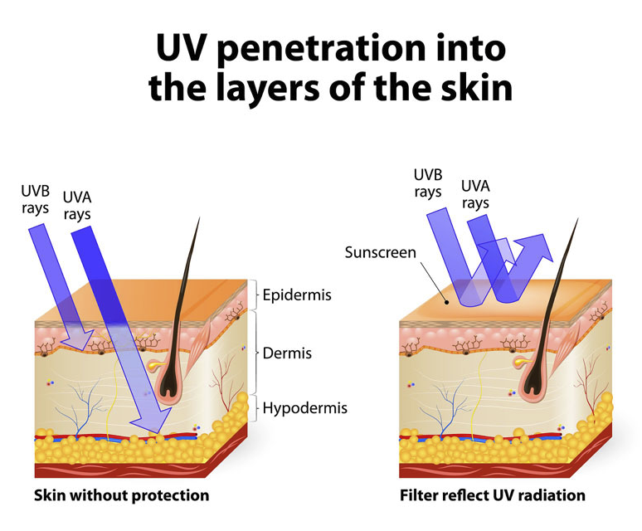
The last 5 percent of UV rays we're exposed to from the Sun are UVB. These are high-energy rays, but they don't penetrate as deeply as UVA, meaning they can severely damage the outermost layers of skin.
UVB rays directly damage DNA, so they are the leading cause of skin cancers and the main culprit behind sunburn.
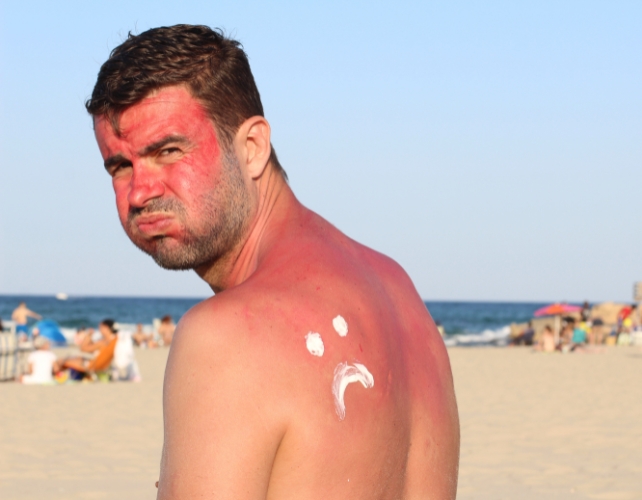
These effects can take a few hours to appear, which is why you can feel like you got away unscathed until you step into a hot shower after a day at the beach.
Enter sunscreen. These lotions, creams, oils, butters, and sprays are all designed to block UV rays, reducing the damage to our skin.
No chemical filters currently on the US market can block both types of UV, but sunscreen formulations use different combinations of active ingredients to cover both bases.
BEMT, however, is broad-spectrum on its own, blocking both UVA and UVB. In fact, it's particularly effective against UVA rays, which most existing sunscreens in the US haven't adequately shielded skin from.
Another advantage is that BEMT is more photostable than other formulations. The latter can start to break down as soon as they're exposed to sunlight – which is, of course, the exact thing they're meant to protect us from.
That should mean BEMT-based sunscreens offer longer-lasting protection and shouldn't need to be reapplied as often as others (unless you're swimming or sweating).

The FDA has classified BEMT as "generally recognized as safe and effective" for use in sunscreens for adults and children over six months of age.
This is based on a few safety studies: One indicates it's minimally absorbed into the bloodstream through the skin.
A two-year animal study also found no evidence that it causes cancer.
And a multigenerational study found no harmful reproductive or developmental effects.
Related: Some 'SPF 50+' Sunscreens May Be as Weak as SPF 4, Tests Find
The first sunscreen formulations containing BEMT should be available in the US soon, sold under the brand name of Parsol Shield.
After 18 months, the ingredient will become available for other manufacturers to include in their formulations.