
If puberty is like climbing a physiological cliff, then menopause may be like falling off one.
A new study, published in Nature Medicine, argues that the end of menstruation is not a gradual part of aging, as previously assumed, but an abrupt physiological transition.
Using more than 300 million lab tests from over one million women, the new study identifies a number of sudden 'jumps' that occur throughout the body when menopause begins.
Some of the most obvious changes are to do with sex hormones, which the ovaries help produce, but there are also sudden shifts in bone health, liver function, kidney function, blood chemistry, and blood fats.
"Menopause reshapes female physiology, yet current understanding is
limited by small longitudinal cohorts that characterize it as a gradual
transition," explain the authors, led by molecular cell biologist Glen Pridham from the Weizmann Institute of Science in Israel.
That may be a misconception.
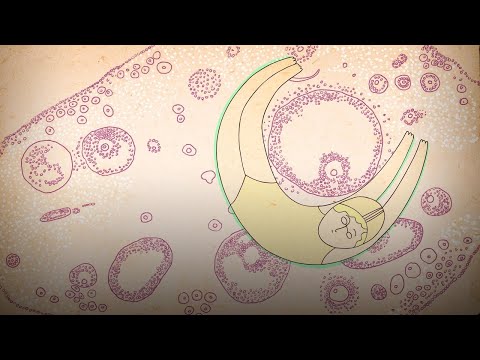
Pridham and colleagues have instead used a computational framework to analyze the transition to menopause in two large cohorts of women, one in the United States and another in Israel.
Their method is designed to disentangle a person's chronological age from their reproductive timeline, which has previously complicated population-wide studies.
According to both cohorts, the final menstrual period is marked by a "step-like physiological cliff" across nearly all physiological systems.
The changes are most pronounced in systems such as bone metabolism, liver tests, and lipid handling.
"While prior longitudinal studies… have established bone loss and specific hormonal surges, the scale of this study, covering 90 types of tests, demonstrates that this transition is sharp and systemic," the authors conclude.
In the US dataset, for instance, 52 of 90 laboratory tests showed a statistically significant and sudden change with menopause.
"Notably," the authors add, "we find that male individuals lack these abrupt physiological shifts, suggesting that the cliff is a consequence of the menopausal transition rather than general aging."
Not everyone agrees that these changes should be described as a cliff.
Martha Hickey, an obstetrics and gynecology professor at the University of Melbourne in Australia, who was not involved in the study, says that this description is "potentially alarming for women and implies a dramatic physical and mental decline, which this study does not demonstrate."
Other studies which show widespread changes at menopause have reframed this transition not as a step down, like 'reproductive retirement', but as a sudden 'career change' for the body and brain.
During a person's reproductive years, the ovaries work to develop follicles that produce and release eggs.
But that's not their only role.
The hormones that these organs release, such as estrogen, progesterone, and testosterone, have widespread effects on the rest of the body, and this could have important ramifications for a person's health as they age.
At menopause, one hormone in particular seems to pull a lot of strings: estrogen.
"The systems where the most significant changes were seen (e.g. bone health, or the liver) are very sensitive to estrogen, and systems that didn't show detectable changes have a much weaker known link to estrogen," explains physiologist Mia Schaumberg, who was not involved in the study.
Schaumberg, from Australia's University of the Sunshine Coast, also finds another result interesting. In the study, around 15 and 12 years before the end of menstruation, the Anti-Müllerian hormone (AMH) and oestradiol show signs of decline.
Whereas around 14 years before menopause, follicle-stimulating hormone (FSH) increases.
"This shows that systemic changes experienced during menopause could be predicted by hormone changes much sooner than originally thought," says Schaumberg.
The findings are supported by recent research among mice, which suggests that the ovaries begin aging decades before menopause begins.
But this study is only observational, and health scientist Andrew Shelling from the University of Auckland in New Zealand warns that while these results are interesting, they are not conclusive.
Menopause is a major transition in human health that we still know so little about.
"The study opens a new way of thinking about menopause and provides a new framework for future research," says Shelling, who was not involved in the study.
"As we work to better understand how menopause reshapes female physiology, this research is likely to be the beginning of many new discoveries to come."
The research has been published in Nature Medicine.
This article was fact-checked by Fiona MacDonald and edited by Fiona MacDonald. While we pride ourselves on our process, we are only human. If you spot a mistake, please let us know.