
Raising a low hormone level might seem like a straightforward way to restore balance, but for testosterone, health improvements could depend on how far that level rises.
Testosterone helps support sexual desire, muscles, and bones. Some men with a deficiency receive replacement treatment. Could the hormone's level also affect how regularly the heart beats?
A review in the Journal of the Endocrine Society, led by cardiovascular researcher Anand Reddy Maligireddy at the University of Kansas Medical Center, explores that question. The team examined existing human studies and laboratory research.
Their conclusion is that both low and high testosterone levels are linked to a higher risk of a heart rhythm disorder, though it's not yet clear whether the hormone itself is to blame. The researchers suggest that risk may be lowest around the middle of the normal hormone range.
For men who need testosterone treatment, this could help inform the hormone level doctors aim for and how they monitor patients.
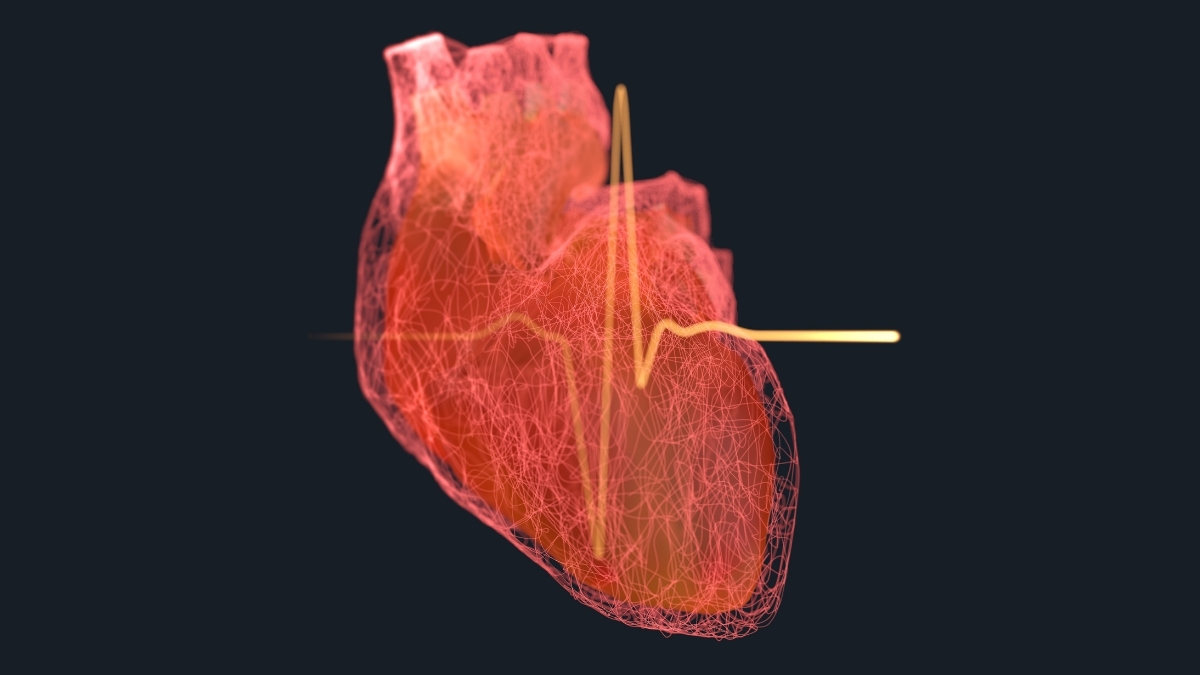
The disorder occurs when the heart's upper chambers lose their coordinated rhythm. Called atrial fibrillation, it can cause a fluttering heartbeat, fatigue, and dizziness, although some people have no symptoms. It also raises stroke risk, and some patients need long-term blood-thinning medication.
"Both too little and too much testosterone appear to raise the risk of atrial fibrillation, through separate biological mechanisms," says study co-author and cardiologist Rajat Barua of Kansas City Veterans Affairs Medical Center.
Earlier population studies had linked low testosterone to a higher risk of the rhythm disorder. Among them, the Framingham Heart Study found that lower hormone levels were associated with a higher risk of developing atrial fibrillation in some age groups.
Evidence concerning higher levels includes an analysis of 4,570 older men without previous cardiovascular disease.
Over a median 4.4 years, men in the highest two testosterone groups had roughly twice the risk of atrial fibrillation as those in the middle group. Overall, 286 of the men developed the condition during the study. The same study found no statistically significant increase in risk at the low end.
The 2023 TRAVERSE trial examined testosterone treatment. It randomly assigned 5,246 men with low testosterone and existing cardiovascular disease or increased cardiovascular risk to receive either testosterone gel or a gel containing no testosterone.
Atrial fibrillation occurred in 3.5 percent of the testosterone group and 2.4 percent of the comparison group. However, the trial did not find an increase in its main combined measure of cardiovascular death, nonfatal heart attack, or nonfatal stroke.
Laboratory research suggests that low and high testosterone could affect the heart through different pathways. Low levels may disrupt calcium regulation inside heart cells, while higher levels may alter potassium currents. These processes help control the electrical signals coordinating heartbeats.
The researchers recommend assessing a patient's heart health and other risks before treatment begins. Obesity, high blood pressure, alcohol use, and sleep apnea – in which breathing repeatedly stops and starts during sleep – should also be considered. Excess body fat is itself linked to lower testosterone.
It's worth noting that not all studies agree, however. A 2024 analysis of 106 randomized trials did not find a statistically significant increase in atrial fibrillation when trials other than TRAVERSE were considered together.
Observational studies also cannot establish that hormone levels caused the disorder, only show correlations in the data.
Aiming for the middle of the normal range has not yet been shown to reduce atrial fibrillation, but the findings could help guide us toward more individualized testosterone treatment and monitoring.
For now, further trials are needed to establish whether doing so leads to fewer heart rhythm problems.
The research has been published in Journal of the Endocrine Society.
This article was fact-checked by Peter Dockrill and edited by Peter Dockrill. While we pride ourselves on our process, we are only human. If you spot a mistake, please let us know.