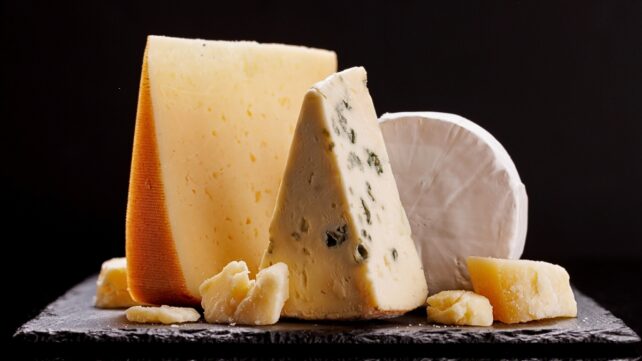
One of the finest foods available to humanity may carry an unexpected benefit.
A new study has found that eating 50 grams (1.76 ounces) or more of high-fat cheese a day correlates with a lower risk of developing dementia. That means all cheeses with more than 20 percent fat content, including brie, gouda, cheddar, parmesan, gruyere, and mozzarella.
The extensive, long-term study followed 27,670 adults in Sweden for around 25 years. The findings establish an association between daily consumption of high-fat cheese and lower dementia risk that is statistically detectable – although more research needs to be done to figure out the potential mechanism behind it.
Related: A Common Sleeping Pill Could Reduce Buildup of Alzheimer's Proteins, Study Finds

"For decades, the debate over high-fat versus low-fat diets has shaped health advice, sometimes even categorizing cheese as an unhealthy food to limit," says nutrition epidemiologist Emily Sonestedt of Lund University in Sweden.
"Our study found that some high-fat dairy products may actually lower the risk of dementia, challenging some long-held assumptions about fat and brain health."
Dementia is an umbrella term for several conditions that impair cognitive function, such as Alzheimer's disease (the most common form), vascular dementia, and dementia that can develop in disorders like Parkinson's disease.
An estimated 57 million people were living with dementia in 2021, and an estimated 10 million new cases are diagnosed every year. A 2019 Global Burden of Disease analysis projected that, by 2050, the number of cases could rise as high as 153 million.
Since there's a dearth of effective treatments for dementia, some researchers are focusing their efforts on ways of reducing the chances of developing dementia, with diet playing a major role in these risk mitigation strategies.
The so-called MIND diet – a variation of the Mediterranean diet – has been touted as promising; however, findings from different studies are inconsistent.
Dairy is one particular food group whose association with dementia has been difficult to establish. Studies from Finland, the UK, and Japan, for example, have looked at different amounts of cheese consumption and found varying results in dementia links.
In the new paper, led by nutrition epidemiologist Yufeng Du of Lund University, researchers set out to clarify these inconsistent findings.
They based their analysis on the Malmö Diet and Cancer cohort, a long-running observational study surveying Swedish residents about their diet and tracking health outcomes. Of the 27,670 participants, 3,208 developed dementia over the course of about 25 years.
Participants recorded their diet at baseline using a 7-day food diary, a food-frequency questionnaire, and a detailed interview about food preparation and eating habits.
After adjusting for age, sex, education, and overall diet, people who ate more than 50 grams of high-fat cheese per day had a 13 percent lower all-cause dementia risk compared to people who ate less than 15 grams per day.

No such association appeared for low-fat cheese or cream, any kind of milk, or fermented milk products such as yogurt and kefir. Butter showed mixed results, including a possible increased Alzheimer's risk at high intake compared to people eating no butter.
But before you chow down on cheese with abandon, other researchers point out important issues with the research.
"One of the biggest limitations of this study is the cheese consumption as recorded from a food diary and interview at one time point 25 years before the analysis of dementia diagnosis. It is highly likely that diet and other lifestyle factors changed in those 25 years," says Tara Spires-Jones, Division Lead in the UK Dementia Research Institute, who was not involved in the study.
As nice as it would be, it may not be wise to pin your hopes on any one food to protect yourself against dementia.
The research has been published in Neurology.