
Modern life comes with plenty of stresses and strains for many of us, including money worries, struggles with mental health, and uncertainty about the future due to climate change and the effects of AI.
It can be a lot – and new research published in the European Journal of Preventive Cardiology suggests that the constant background hum of stress may be creating structural changes in the heart that put our health at greater risk.
When our bodies are often at least a little on edge, stress can contribute to what's known as chronic low-grade inflammation – where our immune system is always alert to danger – and this has been linked to cardiovascular problems before.
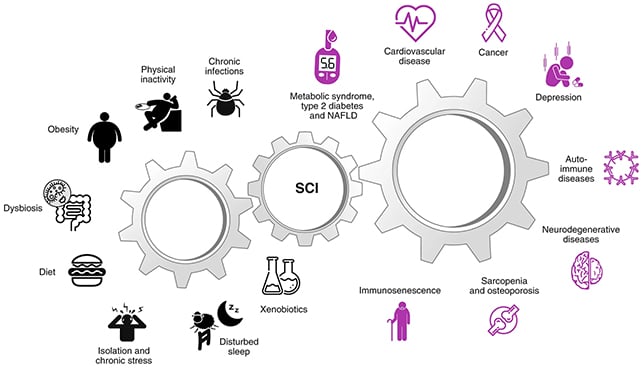
In this new study, researchers from Imperial College London wanted to take a closer look at what might be driving this chronic low-grade inflammation, and the specific physical changes that might be happening as a result.
Crucially, the damage done might not be noticeable until someone has a severe health issue, such as a heart attack.
"Our study, which is the largest of its kind, suggests that millions of people could be living with hidden inflammation, which is slowly changing their heart and causing long-term damage – increasing the risk of heart attack and stroke," says Declan O'Regan, a cardiovascular researcher at Imperial College London.
The study analyzed records of 488,079 individuals in a UK research database, including heart scans, blood markers related to inflammation, genetic information, body fat levels, and 169 "environmental exposures".
Those exposures included socioeconomic status, whether or not someone smoked, physical activity, household size, level of loneliness, anxiety, sleep habits, diet, financial difficulties, divorce, and air pollution levels – the full gamut of everything that can affect physical and mental health.
Three key findings emerged.
First, higher chronic inflammation was associated with smaller chambers and thicker walls in the heart, as well as less blood being pumped by each heartbeat. Those changes can precede heart failure.

Second, higher inflammation was indeed linked to a greater risk of heart attack and stroke.
The top fifth of the participants by inflammation level were 43 percent more likely to experience a major cardiovascular event, such as a heart attack or stroke, than the bottom fifth – roughly 15 percent versus 11 percent over the follow-up period.
And the third significant connection was between a greater amount of inflammation in the body and measures of socioeconomic disadvantage and psychological distress.
While it's not enough to prove cause and effect, it points to a possible pathway: daily stressors may drive chronic inflammation, which in turn is linked to structural heart changes and a greater risk of heart problems.
"The surprising thing was how much social factors and mental health are linked to inflammation and damage to the heart – as well as more well-known risk factors like smoking and inactivity," says O'Regan.
"There was also a strong genetic factor, with some people being naturally more resilient or susceptible to the inflammatory damage that comes from different lifestyles."
The study also identified inflammatory proteins that may help explain the link between inflammation and heart damage, an important step towards developing medications that could potentially reduce some of this biological stress.
Next steps for the research might also include developing blood tests that can be combined with genetic risk scores to understand who's most at risk from cardiovascular trouble – and might benefit from early interventions.
Tackling issues such as poverty and mental health are hugely challenging, but the researchers are keen to emphasize that there are many easier ways to reduce the risk of heart problems – some examples could be changes to diet and exercise routines.
"Chronic inflammation is complicated, but we know it's tied to our health and driven by a range of lifestyle and economic factors – meaning people may be at more risk just because of their surroundings, their economic status, their family's health and their lifestyle," says O'Regan.
"But while tackling health inequalities remains an issue, there are things that we can do about inflammation, including reducing risk factors like smoking and obesity."
The research has been published in the European Journal of Preventive Cardiology.
This article was fact-checked by Rebecca Dyer and edited by Rebecca Dyer. While we pride ourselves on our process, we are only human. If you spot a mistake, please let us know.