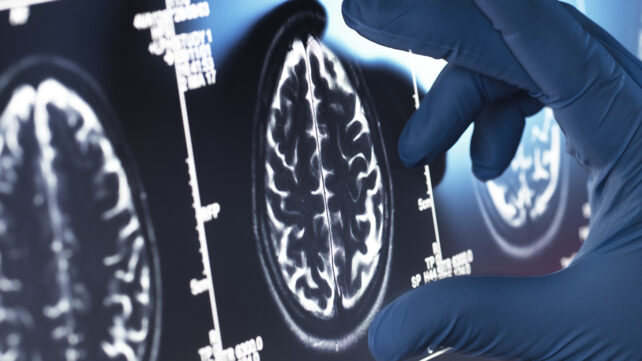
Depression can affect the brain, but not in the same way for everyone.
A 10-year study suggests that what matters may not be whether someone has depression, but how the illness unfolds over time.
And there is an encouraging side to the story: people whose depression followed a more favorable course showed relatively stable brain structure.
The findings challenge the idea that depression inevitably causes lasting damage. They suggest the brain may follow different paths depending on how long depression lasts, how often it returns, and how severely it disrupts life.
Researchers in Germany followed 206 people for up to a decade. Fifty-seven had major depressive disorder – the medical term for clinical depression severe enough to significantly interfere with daily life – while 149 were healthy controls.
Each person underwent between three and six MRI scans, about two years apart. The team analyzed all 791 brain scans.
That timeline really matters.
Most brain-imaging studies of depression are more like photographs. They compare people with and without depression at one moment. But a single image cannot show whether a brain difference was already present, appeared during a difficult episode, or slowly developed over years.
This study was more like a film.
The researchers watched how each participant's brain changed while also recording the course of their illness.
They focused on three brain regions often connected with depression: the hippocampus, insula, and dorsolateral prefrontal cortex.
The hippocampus helps form memories and process emotions. The dorsolateral prefrontal cortex supports planning, decision-making, attention, and emotional control. The insula helps the brain interpret emotions and signals coming from inside the body.
To measure the long-term weight of depression, the researchers combined four details: how long each person had lived with the illness, how many depressive episodes they had experienced, how much time they had spent depressed, and how often they had been hospitalized.
People carrying a greater burden over the years tended to show a faster reduction in gray matter in the hippocampus and dorsolateral prefrontal cortex.
Gray matter contains many of the brain cells and connections involved in processing information. A change in its measured volume does not automatically mean that brain cells have died or that a person has suffered irreversible brain damage.
Importantly, simply having a depression diagnosis did not predict the same pattern of brain change in everyone.
Acute symptoms were significantly linked to hippocampal change in the main analysis, but the inconsistent pattern did not replicate.
Instead, the overall journey of the illness appeared to be more important than either the diagnosis or a temporary rise in symptoms.
This may explain why earlier studies comparing groups at only one point in time have produced inconsistent results. Depression is not one identical experience repeated across millions of brains.
Some people recover and remain well. Others face repeated episodes or spend long periods with symptoms. Those different paths may be hidden when everyone with the same diagnosis is placed in a single group.
The study cannot prove that long-lasting or recurring depression caused the brain changes.
It is possible that differences already present in the brain made some participants more likely to experience a severe course. Stress, physical health, living conditions, medication, and therapy could also influence both depression and the brain.

The researchers considered participants' overall medication use; however, they could not fully separate the effects of individual medicines or psychotherapy.
There were other limitations. The depression group was fairly small, all participants were of Western European ancestry, and the study was conducted at one center.
Some findings, particularly those involving the hippocampus, changed depending on which data or statistical methods were used. An independent replication analysis produced mixed results; the prefrontal cortex showed a similar pattern, but it was not statistically significant.
The detected changes were also confined to small areas of the brain. Larger studies involving more diverse populations will be needed to confirm them.
Still, repeatedly scanning the same people offers an unusually detailed view of depression across time.
The results do not describe a brain that is simply damaged once a person receives a diagnosis. They reveal several possible paths – from declining gray matter in people carrying a heavier, longer illness burden to relative stability in those with more favorable courses.
Related: A Specific Part of Your Brain Seems to Shrink If You Have Depression
Researchers do not yet know whether effective treatment can protect these regions or reverse the changes. But the finding that decline was not inevitable leaves that important question open.
Depression may influence the brain, but this study suggests that the ending is not written at diagnosis.
The study was published in JAMA Network Open.
This article was fact-checked by Rebecca Dyer and edited by Rebecca Dyer. While we pride ourselves on our process, we are only human. If you spot a mistake, please let us know.