
A new clinical trial reveals intriguing results about a potential treatment for high-risk smoldering multiple myeloma, a pre-cancerous bone marrow condition that brings an elevated risk of multiple myeloma, a type of blood cancer.
The study focuses on teclistamab, a monoclonal antibody already used for treating later stages of multiple myeloma – namely once a patient has relapsed after initial treatments, or once the disease has become refractory, meaning it's resistant to previously effective therapies.
Teclistamab was approved in both the European Union and the United States in 2022 to treat relapsed or refractory multiple myeloma. The US Food and Drug Administration (FDA) identified it as a first-in-class drug.
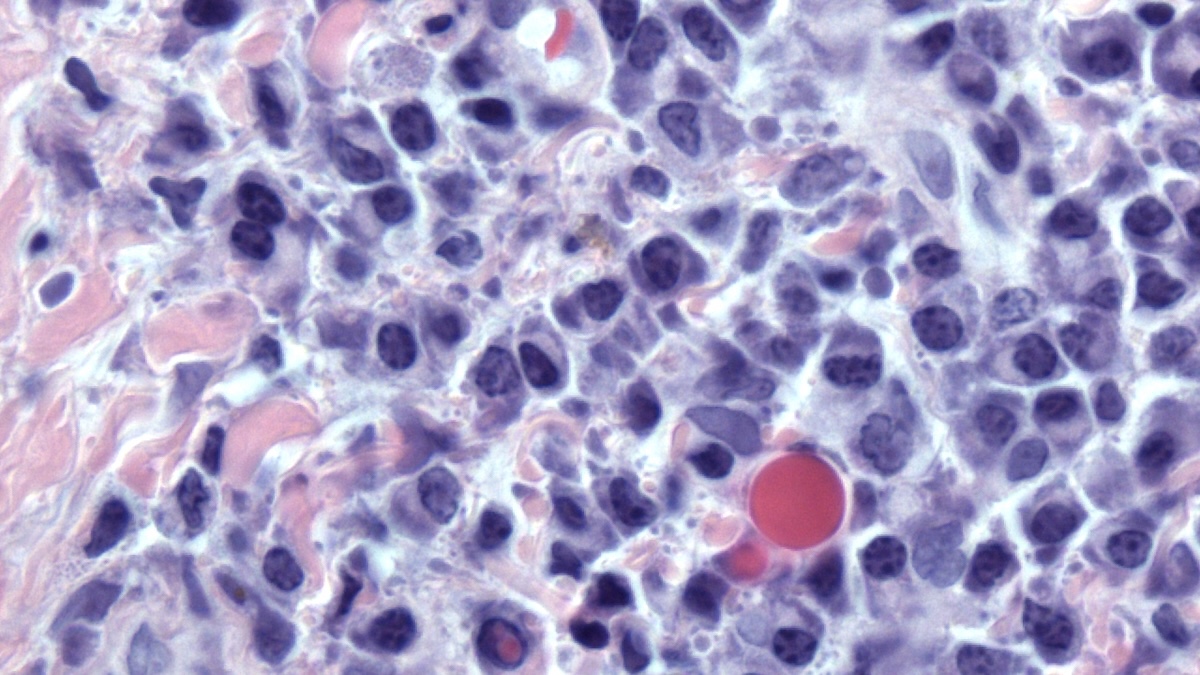
Multiple myeloma develops in plasma cells, a category of white blood cells that play key roles in the adaptive immune system. Under normal circumstances, plasma cells produce proteins called antibodies that help us fight infections.
In multiple myeloma, however, abnormal plasma cells appear in the bone marrow and churn out abnormal antibodies known as myeloma proteins.

Symptoms can be sparse and subtle in the early stages, potentially delaying diagnosis.
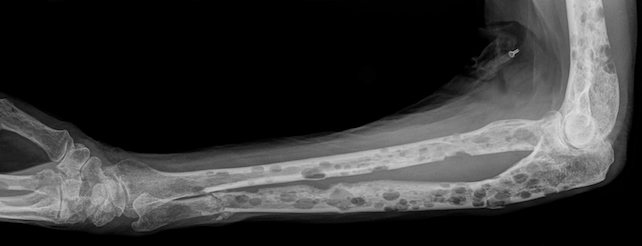
As the cancer progresses, it may reveal itself via complications such as bone weakness, kidney damage, anemia, hypercalcemia, and increased vulnerability to infections.
About 188,000 new cases of multiple myeloma were diagnosed globally in 2022, and an estimated 121,000 deaths were attributed to the disease.
Multiple myeloma is treatable, although treatments may become less effective over time, resulting in relapse. New patients often take a combination of drugs such as daratumumab, dexamethasone, or lenalidomide.
Relapses can become increasingly severe, requiring many patients to cycle through an array of treatments including chemotherapy, stem-cell transplants, and various immunotherapies.
Teclistamab belongs to a newer class of immunotherapy drugs, bispecific antibodies, that can simultaneously bind to two different targets. It works by linking the body's T cells with specific proteins found on myeloma cells, thus helping the immune system identify and fight the cancer.
Although teclistamab is still relatively new, it has yielded results that rival or even surpass those of existing treatments.
In one recent study, patients with relapsed multiple myeloma who received teclistamab survived longer and stayed in remission longer than patients who received standard therapies.
After 18 months, nearly 70 percent of teclistamab recipients showed no disease progression, versus about 27 percent of subjects given conventional treatment.

Yet while teclistamab has shown clinical promise in patients with relapsed or refractory multiple myeloma, "the durability of disease control remains limited in this advanced-disease setting," the authors of the newer paper write.
In their study, they examined whether the drug is similarly potent against a common cancer precursor: high-risk smoldering multiple myeloma (HR-SMM).
Patients with HR-SMM have historically been placed on observation, or "watchful waiting," until symptoms progress, at which point treatment begins.
Since multiple myeloma often relapses and grows resistant to treatments, this caution is meant partly to preserve effective therapies for later, once cancer develops and the situation is more dire, in addition to factoring in the cost and toxicity of existing treatments.

Recently, however, there have been hints of success from intervening earlier. Based on results from clinical trials, the FDA made daratumumab the first approved treatment for HR-SMM in late 2025. Previous trials of lenalidomide suggest it may help protect HR-SMM patients, too.
Yet despite observed benefits, "patients still develop disease progression, likely due to a lack of deep responses seen with these less intensive therapies," the authors of the new study write.
"While additional studies using more potent combination regimens have improved depth of response in HR-SMM, these therapies have also not yielded curative potential," they add.
Given its success against multiple myeloma, the researchers wondered if immunotherapy with teclistamab might lead to deep remissions in HR-SMM, due to the "lower tumor burden and more immunocompetent host in these patients as compared to later lines of therapy."
They conducted a randomized phase 2 trial of teclistamab, comparing it with lenalidomide-dexamethasone (Rd), the previous standard of care for HR-SMM.
After an initial safety run-in involving 6 patients, the researchers enrolled 64 patients with HR-SMM, 59 of whom finished at least one treatment cycle.
In this group of 59 subjects, 45 received teclistamab, including those treated during the safety run-in, and 14 received Rd.
Teclistamab induced a complete response – the disappearance of all cancer markers following treatment – in 77.8 percent of patients, the study found, compared with 0 percent in patients treated with Rd.
Related: A 3-Year-Old's Metastatic Cancer Disappeared After Two Doses of Experimental Therapy
At a median follow-up of 24.5 months, the rate of survival without disease progression was 92 percent among patients who received teclistamab and 49 percent among those given Rd.
"Overall, response rates, duration of response, and time to progression were significantly improved in teclistamab compared to Rd," the researchers write.
While further research is needed, these findings point to teclistamab as a "highly active immune-interception strategy" for HR-SMM, they add.
The study was published in Nature Medicine.
This article was fact-checked by Rebecca Dyer and edited by Rebecca Dyer. While we pride ourselves on our process, we are only human. If you spot a mistake, please let us know.