A straightforward blood test could one day reveal the earliest signs of Parkinson's disease years before more noticeable symptoms appear, according to a new study of DNA repair and cell stress.
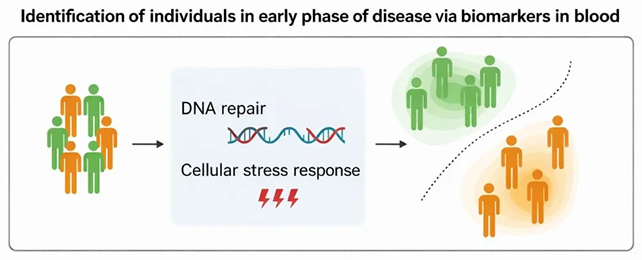
The processes through which cells repair their DNA and adapt to stress have been linked to Parkinson's before. Here, researchers identified blood biomarkers for these mechanisms in people diagnosed with early-stage Parkinson's disease, a stage that can last for up to 20 years before the main symptoms show up.
According to researchers from Chalmers University of Technology in Sweden and the University of Oslo in Norway, the findings could inform new methods of catching Parkinson's ahead of time – and possibly finding ways to prevent it from developing.
"We highlighted biomarkers that likely reflect some of the early biology of the disease and showed they can be measured in blood," says Annikka Polster, a biostatistician at the University of Oslo.
"This paves the way for broad screening tests via blood samples: a cost-effective, easily accessible method."
As Parkinson's progresses, the death of dopamine-producing neurons reduces motor functions, thinking, and memory. In recent years, studies have shown that reductions in cell resilience and problems with DNA maintenance might be behind this damage.
For three years, the researchers tracked gene expression in blood samples in 188 healthy control participants, 393 people with fully developed Parkinson's, and 58 people with prodromal Parkinson's – the stage when the disease is just getting started in the brain.
Through comparing samples from the three groups, the study showed that variations in genes related to DNA repair and cell stress responses – and the resulting effects on blood cells – can distinguish healthy individuals from people with prodromal Parkinson's with a high level of accuracy, up to 91 percent in some cases.
Notably, markers of cell stress weren't observed in the blood of people with fully developed Parkinson's. It's almost as if the beginnings of Parkinson's trigger an emergency state in cells, which is eventually overcome by the disease.
"This means that we have found an important window of opportunity in which the disease can be detected before motor symptoms caused by nerve damage in the brain appear," says Polster.
"The fact that these patterns only show at an early stage and are no longer activated when the disease has progressed further also makes it interesting to focus on the mechanisms to find future treatments."

Once the classic motor control problems and tremors associated with Parkinson's disease start showing up, a considerable amount of damage has already been done to the brain. Preliminary tests could allow treatment and support to be put in place sooner.
The researchers estimate that it may take around five years to get a blood test like this up and running, but compared to brain scans and other Parkinson's screening techniques, taking a blood sample is simple, quick, and uncomplicated – and it's not the only blood test in development.
There are now more than 10 million people worldwide affected by Parkinson's, and we don't yet have a cure for it. The best chance of changing that might lie in catching the disease well before it's able to take hold.
Related: Missing Link Between Parkinson's Protein And Damage to Brain Cells Discovered
"By the time the motor symptoms of Parkinson's disease appear, 50-80 percent of the relevant brain cells are often already damaged or gone," says Chalmers University of Technology systems biologist Danish Anwer.
"The study is an important step towards facilitating early identification of the disease and counteracting its progression before it has gone this far."
The research has been published in npj Parkinson's Disease.