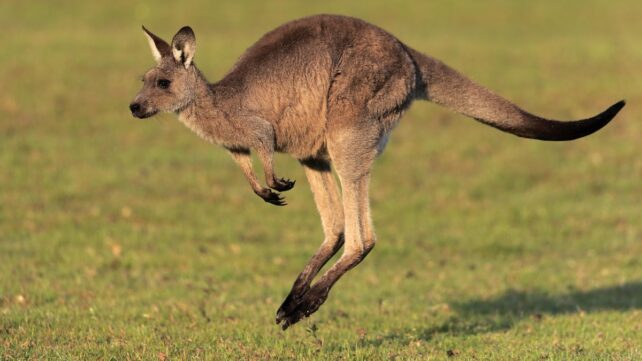
The image of kangaroos hopping their way across the Australian outback is iconic – and it turns out it might have been an even more impressive sight during the Pleistocene.
A new study by researchers from the Universities of Manchester and Bristol in the UK, and the University of Melbourne in Australia, has calculated that giant kangaroos, estimated to be more than twice as heavy as their modern descendants, could also hop if they needed to.
As in many other parts of the world, Australian animals were much bigger in the past. The largest known kangaroo species, Procoptodon goliah, may have stood 2 meters (6.6 feet) tall and weighed up to 250 kilograms (550 pounds) – which would have made the modern kangaroo's 90-kilogram frame seem puny.
Related: Giant Prehistoric Kangaroos in Australia Were Doomed, And Now We Know Why
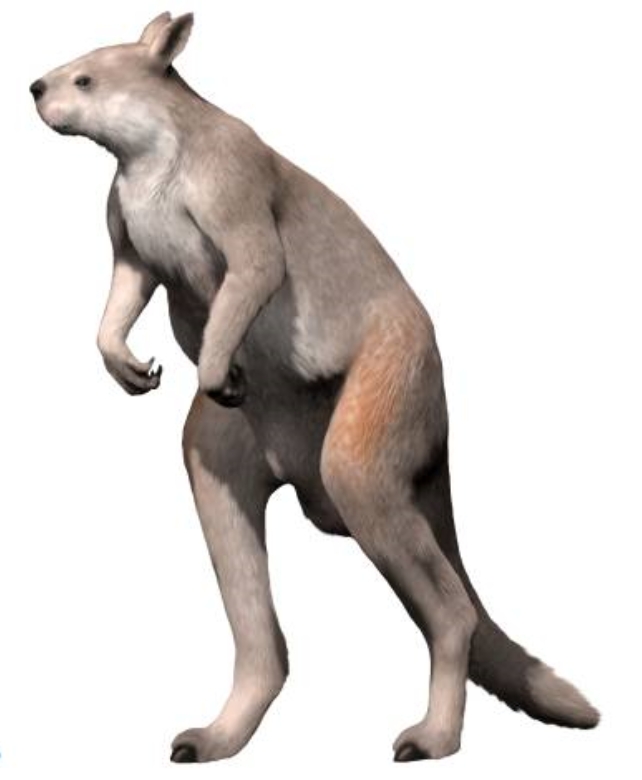

This extra bulk, it's long been assumed, should have made it impossible for these creatures to hop around without blasting out their Achilles tendons. Instead, it's thought these ancient kangaroos strolled around with an eerily (or hilariously) human-like gait.
But a new anatomical study suggests that yes, they could have hopped – at least in short bursts.
Researchers analyzed the limb bones of 63 kangaroo and wallaby species, both living and extinct, including 94 modern specimens and 40 fossils.

Using today's species as a reference, the researchers estimated the size and width of the tendons needed to withstand the forces that hopping would impart on the feet of the giant kangaroo species. Then, they checked the heel bones to see if they had the right attachments for tendons of that size.
The team also measured the length and diameter of their fourth metatarsals – the foot bones that are most vulnerable to bending until breaking point during a hopping motion.
Sure enough, all of the ancient species seemed to be packing the right equipment for hopping. The heel bones had big enough attachment points to support those meaty tendons, and the metatarsals were strong enough to withstand the stress, suggesting the rest of the hindlimbs would have been too.

Just because it was possible, though, doesn't mean these prehistoric giants were bounding across the open plains like their sprightly descendants. Instead, they probably preferred to walk like a furry T. rex most of the time, and only hopped to get over rough terrain or escape predators.
"While hopping may not have been their primary mode of locomotion, our findings suggest that it may have formed part of a broader locomotor repertoire, for example, for short bursts of speed," the researchers write.
The study was published in the journal Scientific Reports.