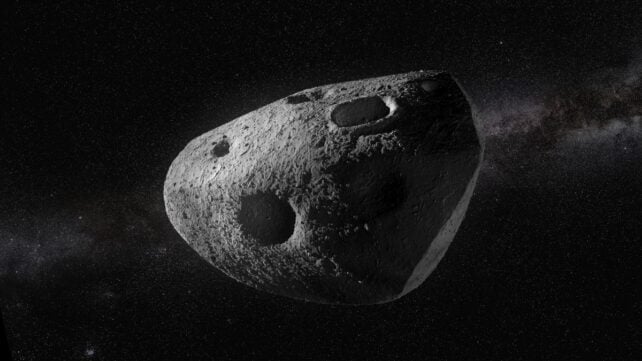
In April 2029, a rare visitor is going to swing through near-Earth space.
Asteroid 99942 Apophis – a chunk of space rock around 370 meters (1,210 feet) long – is going to sail past within hailing distance, less than 32,000 kilometers (20,000 miles) from Earth.
Scientists have crunched, and re-crunched, and crunched the numbers again for good measure, and they're as certain as they can be that Apophis poses no imminent threat to the inhabitants of Earth.
But do the inhabitants of Earth pose a threat to Apophis? Well, the answer to that question is a surprising maybe, according to a paper published in The Planetary Science Journal.
In particular, our penchant for littering near-Earth space with junk could jeopardize a once-in-a-lifetime scientific opportunity, according to physicist Giulia Schettino and astrodynamicist Alessandro Rossi of the Institute of Applied Physics "Nello Carrara" (IFAC) of the Italian National Research Council (CNR).
"I am an expert both on space debris and on asteroid dynamics," Rossi told ScienceAlert.
"Hence, from the very beginning, when I was seeing the usual animations of Apophis' trajectory during the closest approach, I immediately started to wonder if there was any possibility of encounter with the vast population of human-made space debris."
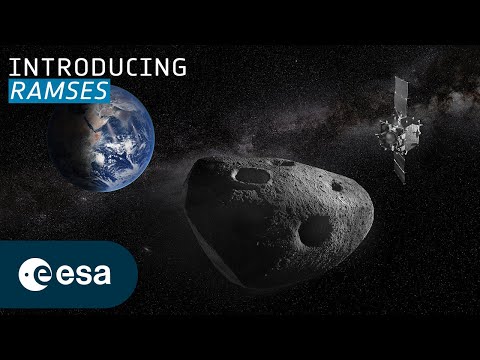
Apophis's close flyby could transform our understanding of asteroids.
As it skims within a cooee of Earth, our planet's gravity will tug on it strongly enough to alter its spin, potentially trigger landslides and even asteroid quakes, and perhaps reveal what's hidden beneath its surface.
Two spacecraft – ESA's RAMSES mission and NASA's OSIRIS-APEX – plan to watch the encounter unfold in unprecedented detail.
But interpreting those changes becomes much harder if Apophis receives an unexpected nudge from something else before the spacecraft get a look-in.
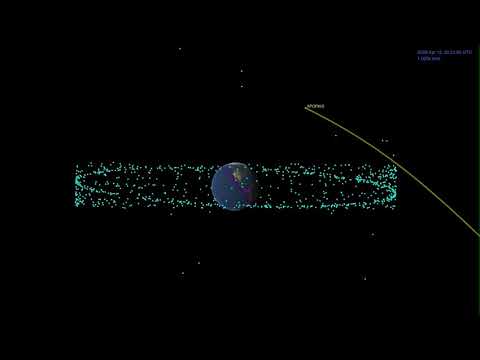
Rossi and Schettino set out to investigate whether the asteroid could encounter human-made debris during its passage through the region around geosynchronous orbit (GEO) – the space around Earth that extends out to tens of thousands of kilometers.
They expected to find little cause for concern. Most human-made debris circles Earth much closer in than Apophis's flyby.
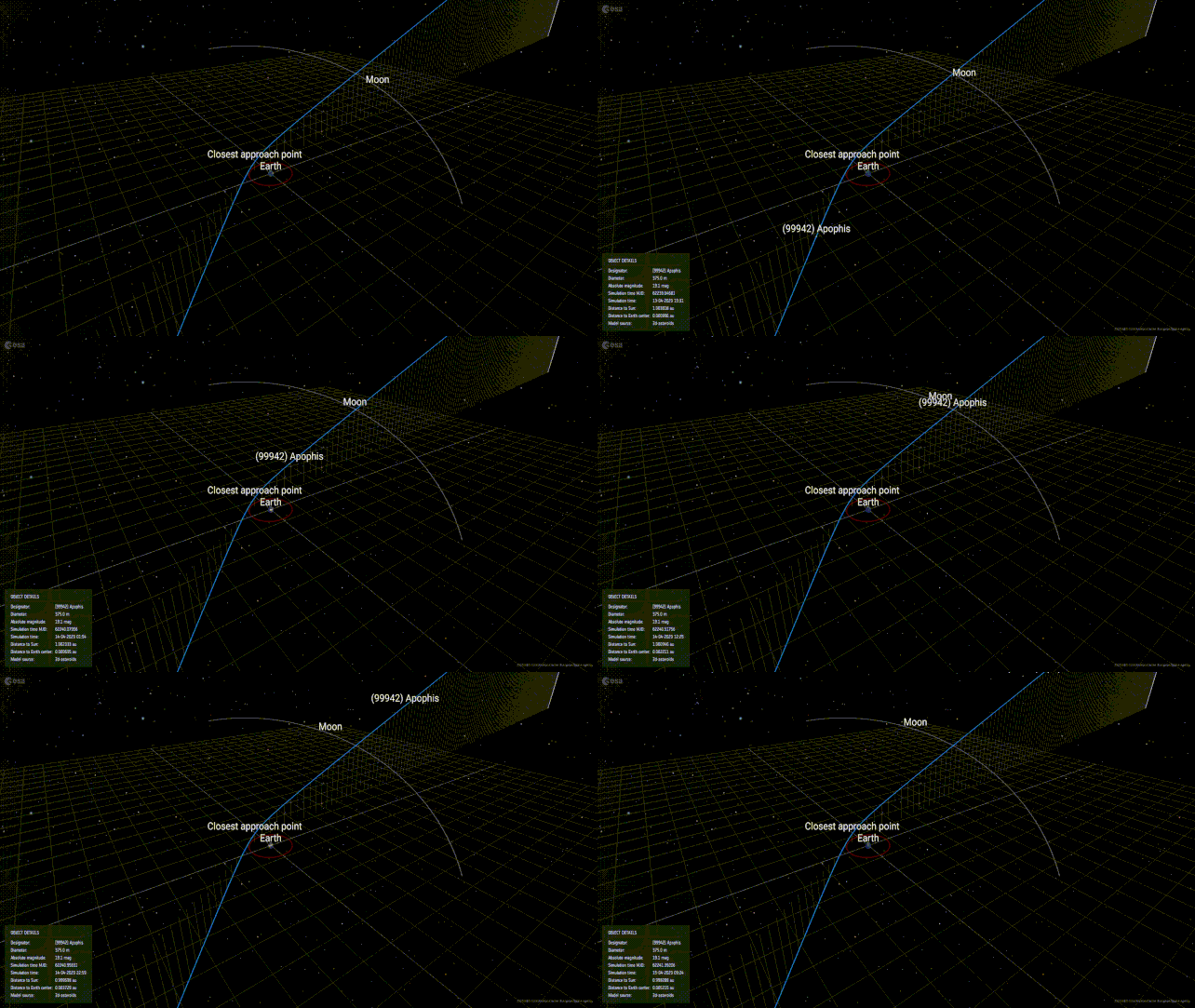
"I have to say that I was expecting a 'null experiment', i.e., no possible interactions," Rossi said. "I was struck by the possibility to have some objects potentially coming to less than a few kilometers from the asteroid."
When the researchers ran the simulations, though, "null experiment" was definitely not what happened.
They modeled Apophis's trajectory – very well defined after all that number-crunching – and the number of known objects in GEO. That's an altitude where an orbiting body can keep up with Earth's rotation, typically around 36,000 kilometers.
They also added a population of unseen debris to the simulations before modeling the possible outcomes.
In most scenarios, everything works out just fine. But, to the researchers' surprise, there is a small but very real possibility that something in GEO will smack into Apophis.
You probably remember NASA's Double Asteroid Redirection Test (DART), which deliberately altered the orbit of the asteroid Dimorphos by crashing a spacecraft into it. This isn't that.
The concern isn't that a piece of space debris could significantly change Apophis's trajectory. Indeed, the impact itself wouldn't necessarily be catastrophic. A small crater or plume of debris could even provide additional observations for the spacecraft.
The bigger problem is that it would muddy the interpretation of the flyby.
Scientists hope to watch Earth's gravity reshape Apophis during the flyby. An unexpected collision beforehand could make it much harder to disentangle which changes were caused by our planet and which were caused by the impact.
"The most important thing to stress is that any impact on the asteroid would not alter its orbit in a significant way," Rossi explained.
"The consequences would be most probably the formation of a small crater and a plume of ejecta. Both might be detectable (depending on sizes) by the spacecraft, which, in turn, would not be affected by the ejecta.
"There is also the possibility that the instruments that RAMSES should place on the surface (gravimeter and seismometer) will detect a signal from the impact."

A collision also wouldn't trigger a runaway Kessler syndrome, Rossi said. Unlike the crowded environment of low-Earth orbit, debris in the geostationary region is much more sparse, so even if an impact ejected a few rocks from Apophis, the likelihood of them hitting something else is small.
Related: Giant 'God of Darkness' Asteroid May Not Escape Earth Unscathed
What the study really highlights is just how little we know about the population of small debris lurking in high Earth orbit. While large objects are routinely tracked, many smaller fragments remain effectively invisible.
Rossi hopes Apophis's flyby will provide extra motivation to improve that picture before 2029.
"Yes, I do," he said when asked whether the encounter should spur a more complete survey of high-altitude space debris.
"In the next few years, new surveillance telescopes will be introduced by the EU Space Surveillance System… [They] will be used exactly for the purpose of increasing our knowledge of the high Earth orbit populations."
The findings have been published in The Planetary Science Journal.
This article was fact-checked by Michael Irving and edited by Michael Irving. While we pride ourselves on our process, we are only human. If you spot a mistake, please let us know.