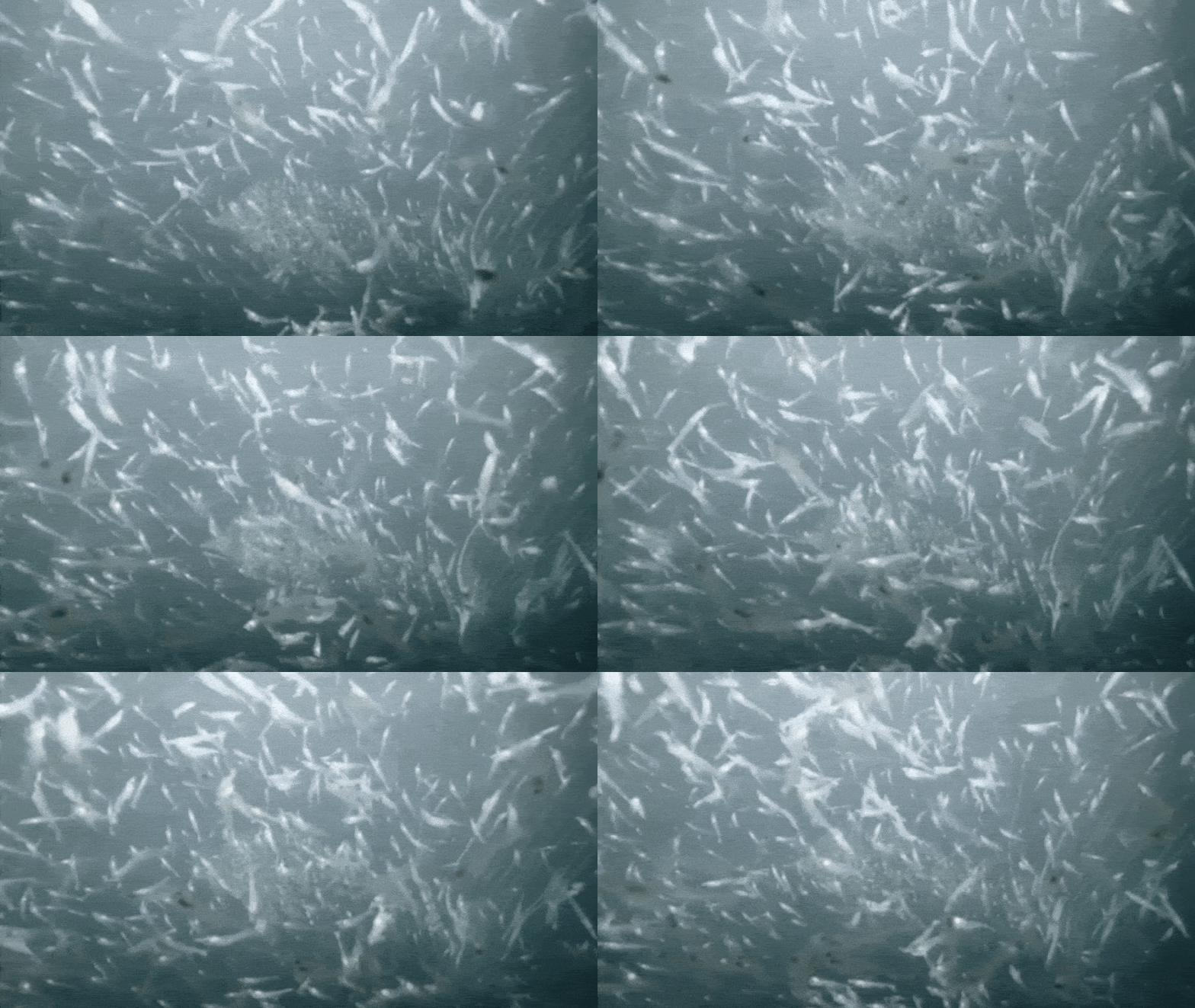
This Earth of ours still holds untold wonders, even if it can sometimes feel like we've seen it all.
But have you ever seen a flurry of shrimp reveling in 'waterfalls' of sediment that flow from a glacier reaching the sea?
Scientists from Aarhus University in Denmark and the Geological Survey of Denmark and Greenland teamed up with filmmakers Lars Ostenfeld and Antoine Drancey to capture breathtaking footage of this notoriously difficult-to-access ecosystem in South Greenland: the marine terminus of the glacier Naajat Sermiat.
It's too dangerous to send humans diving here, due to the danger of ice calving from the glacier, so the team used a remotely operated vehicle (ROV) equipped with a camera to dive virtually into the frosty water.
The results are breathtaking, but they also provide important data for understanding life on the front of a glacier that is retreating as the climate warms.
Arctic oceanographer Fleur Rooijakkers and the team have published their findings in Communications Earth & Environment.
"The initial idea for the ROV was to see what happens to the meltwater once it gets released into the ocean," Rooijakkers told ScienceAlert.
"Specifically, we wanted to see whether the meltwater could refreeze, since it comes into the ocean with temperatures below zero degrees, below the freshwater freezing point.
"During the first ROV attempt, it was very exciting when fish showed up! Then, when Lars and Antoine showed the really nice footage of their next attempt, it became clear just how extensive the life was.
"We could observe a whole ecosystem right at the boundary and even organisms resting on top of the glacier."
They encountered a bustling community of krill, fish, worms, crustaceans, amphipods, copepods, squid, shrimps, jellyfish, and crab larvae.
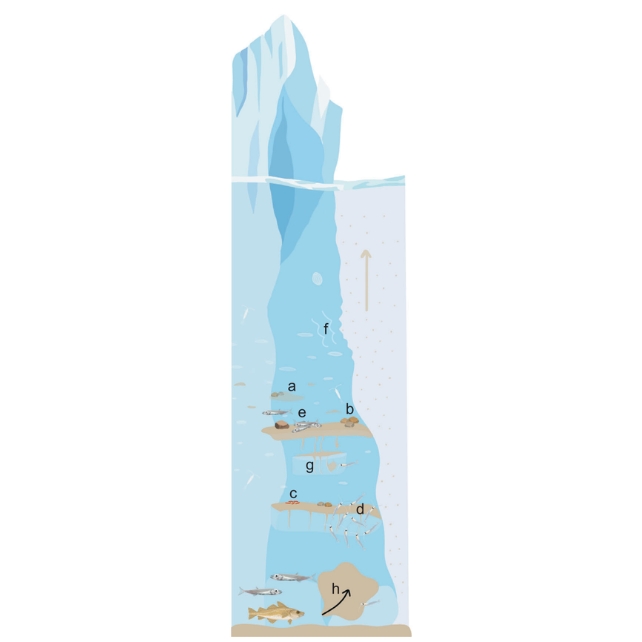
This wasn't entirely unexpected: scientists and local fishers in Greenland are aware that near a glacier, there can be better chances of catching fish.
They suspect this could be due to the meltwater released from the bottom of the glacier, carrying nutrient-rich waters to the surface, where they can feed phytoplankton, boosting the entire food chain.
But the new observations suggest life on the glacier responds directly to matter being released from the glacier itself, as it cascades down.
"I was really surprised by the structure of the ice and the sediments falling from the ice as if they were waterfalls," Rooijakkers told ScienceAlert.
"Though mesmerizing, it was hard to tell what it was initially, and took me a couple of watches to see that it was sediment falling on top of the ice."
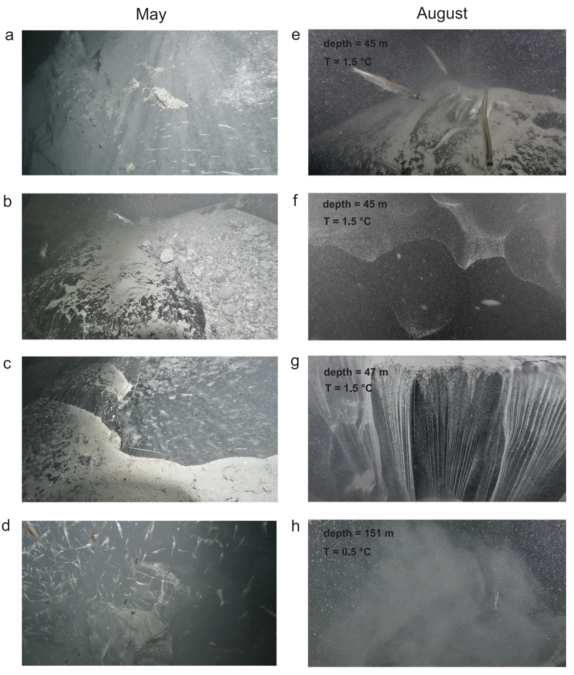
The krill, for instance, appeared to be actively swimming towards sediment plumes coming out of the glacier, hinting at the meltwater's potential nutritional value.
Krill have been spotted feeding in a meltwater plume in Antarctica before, but they have never been observed this close to a glacier, especially at the boundary where it meets the ocean.
"Though they seem cold and sterile, glaciers actually host a lot of lifeforms, like snow algae. These could then get transported in the meltwater and released at the boundary," Rooijakkers told ScienceAlert.
"However, more research is required to say whether material from within the glacier is a significant food source for krill."

As melting accelerates and the glacier retreats, the food webs strung up around this icy cliff could potentially be stretched out of shape.
Between 2000 and 2020, 169 glaciers in the Northern Hemisphere that once terminated in the ocean have retreated onto land, as a result of fossil fuel-induced climate change.
If Naajat Sermiat meets the same fate, the krill, and fish, and worms, and crabs that inhabit its face cannot follow.
Their future really depends on how the glacier feeds them.
Related: Narwhals Wearing Sensors Reveal Something Troubling Beneath Greenland's Glaciers
"If it is the nutrient-upwelling and/or advection, the retreat onto land would likely mean decrease of activity at that location," Rooijakkers explained.
"Luckily, there are other places in the fjords and on the shelves that drive upwelling, so all hope is not lost.
"It would be good news if the glaciers directly feed the ecosystems, as this would mean that they would continue to provide this as they retreat onto land."
The research was published in Communications Earth & Environment.
This article was fact-checked by Fiona MacDonald and edited by Fiona MacDonald. While we pride ourselves on our process, we are only human. If you spot a mistake, please let us know.