Going to class, meeting friends, and joining practice fill an ordinary teenager's day. After a concussion, those familiar activities can become difficult.
Headaches, trouble concentrating, and disrupted sleep can delay a return to everyday life for weeks, sometimes months.
If movement worsens symptoms, starting to exercise again can feel daunting. Knowing how much to do, and when to take the next step, could help a young person find their way back.
A study published in JAMA Pediatrics suggests that guidance can be delivered remotely.
Young people who followed a gradually increasing exercise program, supported by weekly video calls, recovered from symptoms faster than those assigned stretching exercises.
"Prolonged recovery can multiply issues for teens, causing them to fall behind in school or drift away from friend groups, and it can be hard to get back on track," Sara Chrisman, a pediatrician at Seattle Children's who led the research, told ScienceAlert.
A concussion is an injury caused by forces that suddenly move the brain inside the skull. Most people recover within days or weeks, although symptoms can last much longer.
Previous trials have shown that aerobic exercise, which raises heart rate, can help early in concussion recovery.
Earlier approaches used treadmill tests to establish exercise targets, requiring repeated clinic visits. Chrisman and her colleagues wanted to test remote delivery and investigate whether exercise could also help later.
They recruited 210 participants aged 11 to 18 across four US states. All still had symptoms and had not been cleared to return to sport. Their injuries had occurred about 73 days earlier on average, with some up to a year before.
About three-quarters had sustained their concussion in a sports-related collision. Other causes included non-sport collisions and motor vehicle crashes.
Researchers randomly assigned 104 participants to aerobic exercise and 106 to stretching. Everyone continued their usual concussion care.
The aerobic exercise group received fitness trackers and an initial heart-rate target of about 120 beats per minute, calculated from age. They began with 10 minutes exercising at that level and were told to stop if any symptom increased by two points.
Most chose brisk walking or an exercise bike, within limits approved by their concussion clinician. During weekly video calls over six weeks, trained health coaches reviewed progress and symptoms.
As participants tolerated activity, the program raised the target to about 150 beats per minute and then lengthened sessions.
The stretching group also did their prescribed exercise daily and had weekly coaching calls, giving both groups regular attention and support.
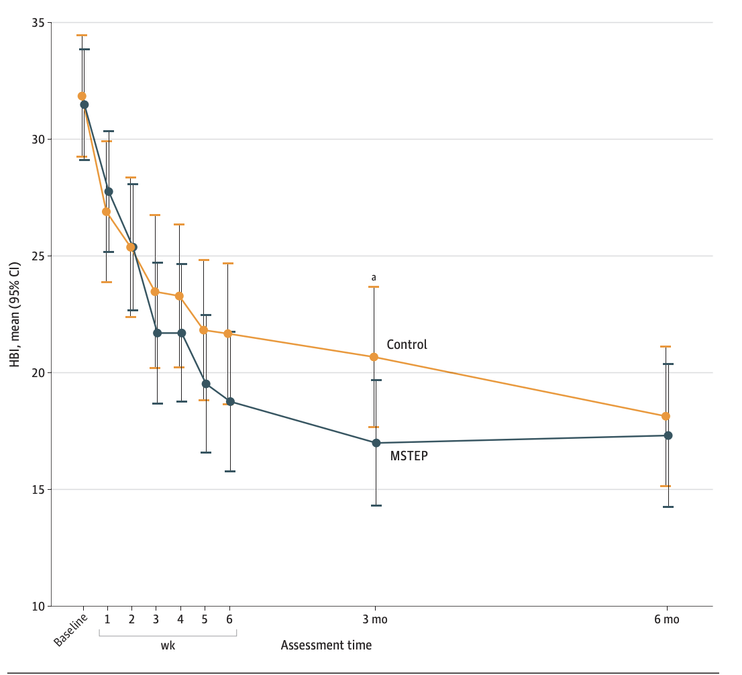
Both groups improved, but symptoms eased faster in the aerobic exercise group. Three months after enrollment, that group reported greater improvements in symptoms and health-related quality of life.
The additional improvement averaged roughly three points on the symptom questionnaire (participants scored about 32 initially) and four on the quality-of-life measure. No adverse events related to trial participation were reported.
Remote delivery could make support easier to access, particularly for families living far from specialist services.
It's not clear exactly why the program helped. Chrisman explained that other research has linked regular exercise to better memory and concentration, potentially involving substances that support nerve-cell growth. This trial didn't measure that mechanism.
A headache that flares during a workout can leave a young person wary of moving again.
"Having someone guide you through a program to slowly increase your heart rate can help you push through that fear until you are back to your normal routine," Chrisman explained.
The researchers could not separate the effects of exercise from those of the tracker or from simply being given permission to be more active.
Timing also appeared important. Exploratory analyses found an additional benefit among participants enrolled within 90 days of injury, but no clear advantage over stretching among those who enrolled more than 90 days after injury.
"People with symptoms lasting more than 3 months may need more intensive support to get back on track, including help with school, sleep and mood," Chrisman said.
At six weeks and six months, between-group differences in concussion symptoms and health-related quality of life were not statistically significant. Sleep, anxiety, and depressive symptoms improved in both groups without a clear additional benefit from aerobic exercise.
Most injuries were sports-related, so the findings may not apply equally to concussions from other causes.
Chrisman emphasized working with a medical provider, reporting worsening symptoms, and avoiding sports and other restricted activities until cleared.
The team summed up its approach to recovery: "the brain heals by doing."
"The goal is to do a little bit more each day, and eventually you'll get to where you need to be," Chrisman told ScienceAlert.
The research has been published in JAMA Pediatrics.
This article was fact-checked by Rachel Garner and edited by Rebecca Dyer. While we pride ourselves on our process, we are only human. If you spot a mistake, please let us know.