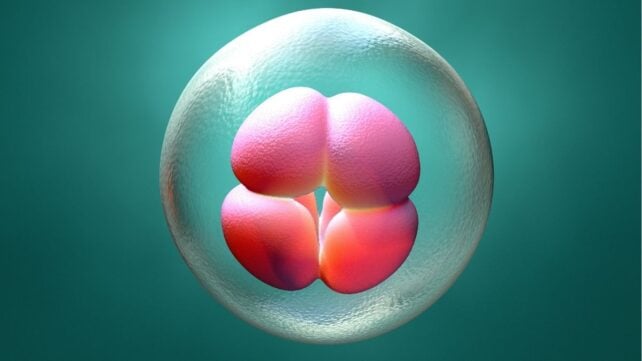
The first moments of life are a delicate yet busy time, when one cell becomes two, then four, and a flurry of genetic cues starts orchestrating their growth.
Within this process, a gene called NANOG is essential for the early development of embryos. We already knew that was true of mice – but now, we can really say the same goes for humans.
In those earlier mouse experiments, researchers found NANOG was key to the development of the very first cells that go on to form the embryo. It's also involved in producing the yolk sac, which is essential to supporting those initial cells as they gradually start building a whole new animal.
The protein that NANOG codes for – it's called NANOG, no italics – is a transcription factor.
Its job (in mice, humans, and other mammals) is to regulate which bits of DNA get translated into proteins, sort of like a supply manager in the cell.
It can turn certain genes on or off, depending on the circumstances, to make sure the right amounts of proteins are being produced at the right time.
While mice and people share many anatomical traits, there are obviously a lot of differences between us. So while mouse studies can hint at what might be going on in the human body, we don't ever know if it's the same until we actually test it.
And that's often a tricky gap to bridge, because there's a reason we use mouse cells: there are far more ethical limitations on research in human bodies, embryos, and cells, than there are on mice.
Now, with a carefully designed study on real human embryos, an international team of researchers, led by developmental biologist Kathy Niakan from the University of Cambridge, has confirmed that NANOG does indeed play an essential role in human embryo development – but not in the same way it does in mice.
One of the best ways to see how a certain gene works, and what effect it has, is by switching it off.
And that's what researchers usually do to explore gene mechanisms in animal models, such as mice: they 'knock out' a specific gene, using genome-editing techniques such as CRISPR/Cas9, which uses enzymes to 'cut' and 'paste' snippets of DNA.
But these knockout methods can sometimes lead to off-target DNA changes and genome rearrangements, so Niakan and colleagues took a different approach: base editing.
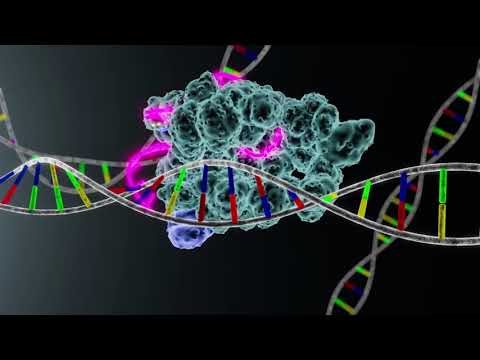
Research into the use of base editing in human embryos is still in its early days. Most studies so far have used tripronuclear embryos (which aren't considered viable in IVF, and so are often otherwise discarded).
These embryos have abnormal developmental and chromosomal features, which is why they're not used in IVF, and are therefore more readily available for research. But that's also why they can't tell us much about normal human embryo development.
The embryos at the center of this research were either 'surplus', donated by people in assisted conception and egg-sharing programs, or were generated from the gametes of donors. In other words, they weren't tripronuclear: they were 'normal'.
This is the first time scientists have investigated base editing in developmentally normal embryos (which, the researchers point out, were not allowed to develop beyond 14 days).
By changing only a single base letter in the genetic code (compared to the double-strand edits involved in CRISPR), Niakan and colleagues were able to disrupt the normal function of NANOG in human embryos, and human embryonic stem cells, without making any other unwanted changes.
With NANOG disabled, the pluripotent epiblast cells could not transform into stem cells. Instead, they were redirected to form the yolk sac or placental cells.
In other words, the embryos became 'confused', putting all their resources into its support system rather than the building blocks of an actual fetus. But, unlike what's been seen in mice, NANOG does not seem to be essential to yolk sac development in humans.

While the findings of this study could have future applications in research and, speculatively, reproductive technologies, stem cell scientist Dusko Ilic of King's College London, who was not involved in the study, cautions that "the immediate value of the study is mechanistic, not clinical."
"The work also shows the potential of base editing as a research tool, but it does not demonstrate that embryo editing is safe for clinical use," he says. "Likewise, any relevance to infertility, implantation failure or pregnancy loss remains prospective."
Related: Scientists Film The Exact Moment a Human Embryo Implants
But as developmental biologist Robin Lovell-Badge of the Francis Crick Institute – who provided feedback to the research team – points out: "The more understanding we have of the early steps of human embryo development, the better chance we have of reducing distress, disappointment and sometimes debilitating disorders."
The research is published in Nature.