A few nights of poor sleep can make you feel years older than you really are, and that may not just be a feeling.
A chronic lack of sleep could potentially age you.
In 2025, brain scans of 27,000 adults revealed that those with poor sleep have central nervous systems that look older than expected.
A common treatment for insomnia could help slow the clock.
A randomized controlled trial has now found preliminary evidence that insomnia patients who receive cognitive behavioral therapy (CBT) can improve their biological aging.
Two people born in the same year aren't necessarily aging at the same rate. Those who have healthier sleep habits may be adding years to their life.
The analysis included nearly 100 adults aged 60 or over with insomnia, drawn from a larger trial in which 291 participants were randomly assigned to receive CBT or sleep education therapy.
CBT for insomnia involves several sessions with a trained clinician, who guides a patient through the thoughts, behaviors, and habits that may affect their ability to fall asleep, stay asleep, or wake up at an appropriate time.
Sleep education, meanwhile, involves general information about healthy sleep habits, without introducing behavioral techniques, such as getting out of bed when you can't sleep.
Blood tests before the sleep education and up to two years after showed significant increases in the pace of aging.
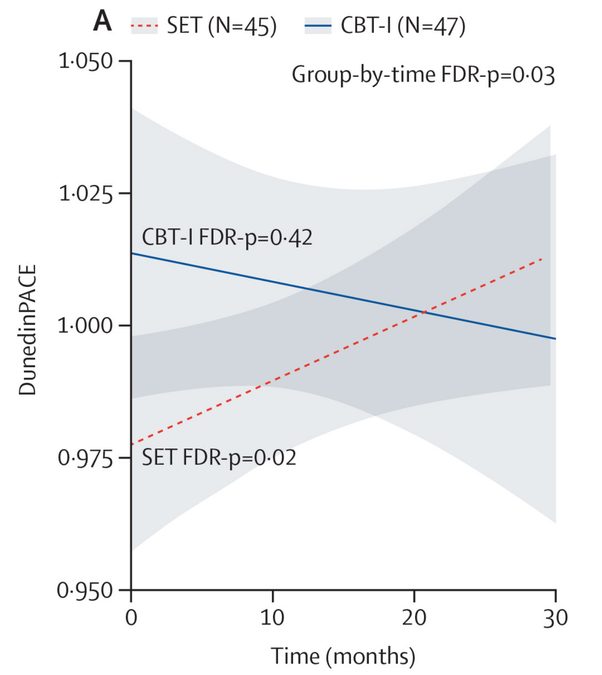
But according to one clock in particular, CBT for insomnia showed a slower pace of biological aging.
This clock, called DunedinPACE, is essentially an aging calculator that was created based on longitudinal health data.
It relies on epigenetic changes to DNA to predict the onset of chronic diseases and death and estimate how fast a person is aging.
The clock isn't about to tell someone exactly when they will die, but DunedinPACE scores are associated with poorer health and higher mortality.
"To our knowledge, this is the first study to examine whether treating insomnia affects the pace of biological aging," write researchers from the University of California, Los Angeles (UCLA).
"Treatment of insomnia in older adults could therefore represent a strategy for slowing biological aging in this clinically vulnerable population."
CBT is a gold standard treatment for insomnia that is equivalent to many sleep medications, yet without the side effects.
There are other perks, too. Compared to pharmaceutical sleep aids, CBT tends to lead to fewer episodes of relapse, and improvements often continue well beyond the end of treatment.
Yet CBT for insomnia tends to be underutilized, possibly because there is a shortage of trained practitioners, because pharmaceuticals are more well known, or because patients or providers are looking for a 'quick fix'.
CBT may take 4 to 8 sessions before benefits to sleep start to show. But patience and persistence could be worth it in the long run.
"Insomnia in older adults is often treated as a quality-of-life issue, but these findings suggest it may also be a modifiable risk factor for how the body ages," says lead author and psychoneuroimmunologist Judith Carroll from UCLA.
"Just as we counsel patients on physical activity and diet to support healthy aging, this points to sleep as another important behavior worth targeting to improve health."
The current study was only conducted among older adults, which is a population that could be particularly susceptible to the biological effects of insomnia.
Insomnia may not take the same toll on younger people, as their physiology may be more resilient to sleep loss.
Further research is needed to test that idea, but numerous studies have found that insomnia is linked to poor health outcomes in older adults, including impaired cognitive function and an increased risk of cardiovascular disease, cancer, frailty, and mortality.
Previous work by some of the same authors at UCLA has shown associations between insomnia in later life and hallmarks of biological aging, like shorter telomere lengths.
For instance, participants who put their insomnia into remission after receiving CBT show one particularly hopeful measurement.
In previous analyses, this group had the greatest reduction in a critical marker of cellular aging called p16INK4a.
The other groups showed either increases or no change in p16INK4a relative to their baseline.
This suggests that treating insomnia might reduce the population of old and aging cells circulating in blood.
Why that is remains unclear. Sleep may reduce inflammation throughout the body and slow energy systems related to fight-or-flight responses.
This could lower blood glucose levels, pace the metabolism, and decrease cellular stress and damage.
A chronic loss of sleep, meanwhile, could activate the body's stress-response systems for a sustained period of time, possibly accelerating aging through inflammation and cellular stress.
These mechanisms need to be tested further.
"Taken together, these findings suggest that treatment of insomnia in older adults could be considered an important clinical target for slowing biological aging and reducing disease risk," the UCLA research team concludes.
Between 10 and 25 percent of adults over 65 in the US have clinical insomnia.
CBT could help millions live better, and possibly longer as well.
The research has been published in The Lancet Healthy Longevity.
This article was fact-checked by Rebecca Dyer and edited by Rebecca Dyer. While we pride ourselves on our process, we are only human. If you spot a mistake, please let us know.