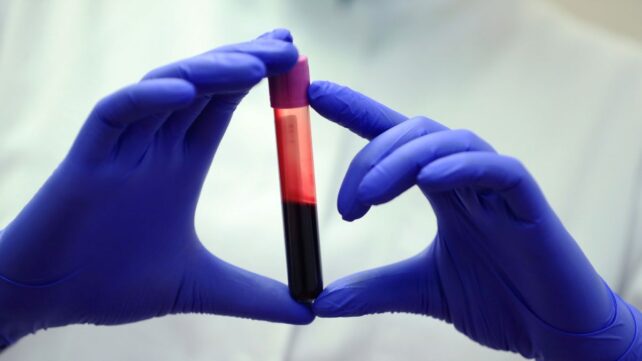
The rise of carbon dioxide (CO2) in Earth's atmosphere is detectable and measurable in the blood of its human inhabitants, a new study suggests.
In 20 years' worth of health data from a US population database, scientists have found shifts in blood chemistry that, they say, are consistent with higher exposure to CO2.
It's not dangerous yet, but if the trend continues, some blood chemistry values could approach the limit of today's accepted healthy range by around 2076, according to the researchers' modeling.
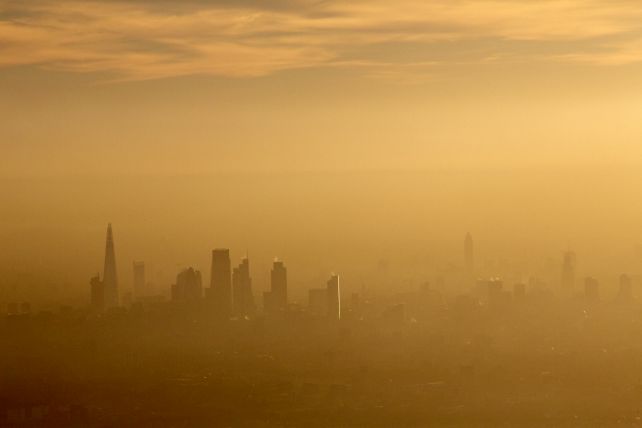
"What we're seeing is a gradual shift in blood chemistry that mirrors the rise in atmospheric carbon dioxide, which is driving climate change," says respiratory physiologist Alexander Larcombe of Curtin University in Australia.
"If current trends continue, modelling indicates average bicarbonate levels could approach the upper limit of today's accepted healthy range within 50 years. Calcium and phosphorus levels could also reach the lower end of their healthy ranges later this century."
According to the fossil record, Earth's atmospheric CO2 levels remained relatively stable for at least the 150,000-year history of Homo sapiens, hovering around 280 to 300 parts per million (ppm). In recent decades, it has risen dramatically, from around 369 ppm in 2000 to around 420 ppm today.
In human blood, CO2 is converted into bicarbonate. In normal concentrations, this compound is useful, helping the body maintain healthy pH levels. However, Larcombe and his colleague, retired geoscientist Phil Bierwirth, affiliated with the Australian National University, theorized that bicarbonate could also be a blood tracer of atmospheric CO2 levels.

They examined blood chemistry data from the US National Health and Nutrition Examination Survey (NHANES), which collected samples from approximately 7,000 Americans every two years between 1999 and 2020, to quantify any population-level shift in blood bicarbonate levels.
And that's exactly what they found. In the timeframe of the study, the average blood concentration of bicarbonate rose from 23.8 to 25.3 milliequivalents per liter – an increase of about 7 percent, or 0.34 percent per year. This paralleled the rise in CO2 over the same time period, the researchers note.
Meanwhile, calcium and phosphorus levels in the cohort showed the opposite trend, with calcium dropping by 2 percent and phosphorus by 7 percent.
This may be related to the fact that when carbon dioxide dissolves in the bloodstream, it alters the body's acid-base balance. To keep blood pH within its narrow healthy range, the kidneys conserve bicarbonate, a buffering molecule that helps neutralize excess acidity. Bones can also buffer acid by exchanging minerals such as calcium and phosphorus.
Related: CO2 Makes Up Just 0.04% of Earth's Atmosphere. Here's Why Its Impact Is So Massive
At the moment, these shifts are small and within the body's tolerable range. However, the parallel rise is striking. If the researchers are correct, we may see physiological changes at the population level over time.
"I actually think that what we are seeing is because our bodies are not adapting. It appears we are adapted to a range of CO2 in the air that may now have been surpassed," Bierwirth says.
"The normal range maintains a delicate balance between how much CO2 is in the air, our blood pH, our breathing rate, and bicarbonate levels in the blood.
"As CO2 in the air is now higher than humans have ever experienced, it appears to be building up in our bodies. Maybe we can never adapt such that it is vitally important to limit atmospheric levels of CO2."
The research has been published in Air Quality, Atmosphere & Health.