Long before humans were collaging the genomes of different species together, nature was doing it on its own.
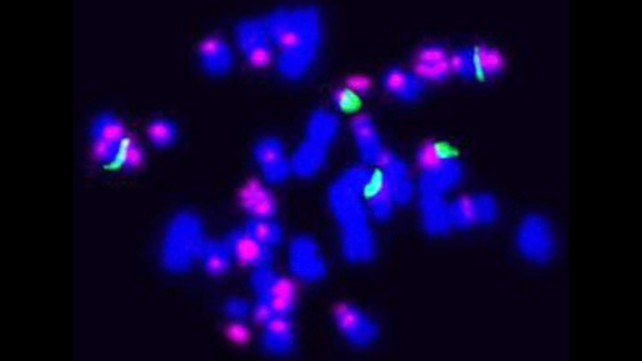
Now, biologist Sachihiro Matsunaga from the University of Tokyo has led a team in encouraging algal DNA to merge with the chromosomes in hamster cells, producing a hybrid genome that persists across more than 150 generations of cell division.
The results are published in Nature Communications.
They call it a 'planimal', a portmanteau of plant and animal which Matsunaga first conceived in 2018, to refer to artificial animal cells that are fused with algae to give them plant-like traits – namely, photosynthesis.
Matsunaga's plans for these cells are lofty.
In his 2018 paper, he said planimal cells will one day "contribute to overcoming global food problems by reducing energy consumption", "enable photosynthetic therapies" for medical applications, and "support migration to other planets under the harsh conditions through long-distance space travel".
Theoretically, such a cell could harness sunlight in-house to produce the oxygen and sugars that the animal parts of it need to survive.
It sounds like science fiction, but it's actually already happening on our own planet, without any human involvement.
Back in 2000, scientists actually discovered such an organism on a sandy beach at Isonoura in Wakayama, Japan.
They named the single-celled eukaryote Hatena arenicola.
It spends half of its life as a 'plant', thanks to an intimate symbiosis with the photosynthetic algae Nephroselmis, which lives inside the Hatena cell.
Their merger seems to be quite a lot further along than other examples you might've heard of. The algae's chloroplasts are greatly enlarged, while the rest of its cellular 'organs' are degraded.
Scientists agree that plants got their ability to photosynthesize through a similar process.
It was the ancient origin of chloroplasts, and the strange organism Hatena, that inspired Matsunaga.
Now, in collaboration with scientists from institutions in Japan and Australia, he has realized his synthetic 'planimal' cells in a lab and watched them carry the algal genes across multiple generations of asexual cell division.
"We have succeeded in creating hybrid chromosomes containing genetic material from both an alga and a mammal, and have shown that this genetic material can be stably passed on to daughter cells through repeated cell divisions," he says.
They didn't use typical genetic modification methods: they used lab techniques to force the cells to follow pathways inspired by endosymbiosis.
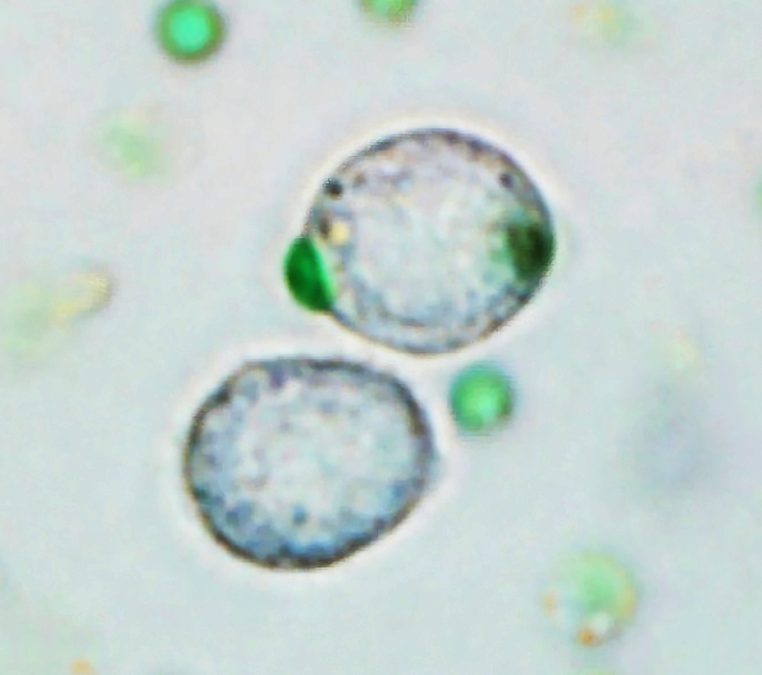
One of those pathways is phagocytosis, in which the animal cell engulfed the algal cell. That's a natural process: all the researchers had to do was put the animal and algal cells in the same container and wait.
This method worked, and even produced some stable cell lines, but the success rate was extremely low: only 3.7 colonies formed for every 1.2 × 10⁷ cells.
An artificial route proved more effective.
The scientists bathed the hamster and algae cells in polyethylene glycol, which jumbled their cell membranes just enough to get the two different species to fuse.
The yield from this method was about 800 times greater than letting phagocytosis do the work.
To be sure the algal DNA was properly integrated into the hamster cell genomes, it also needs to survive cell replication across generations.
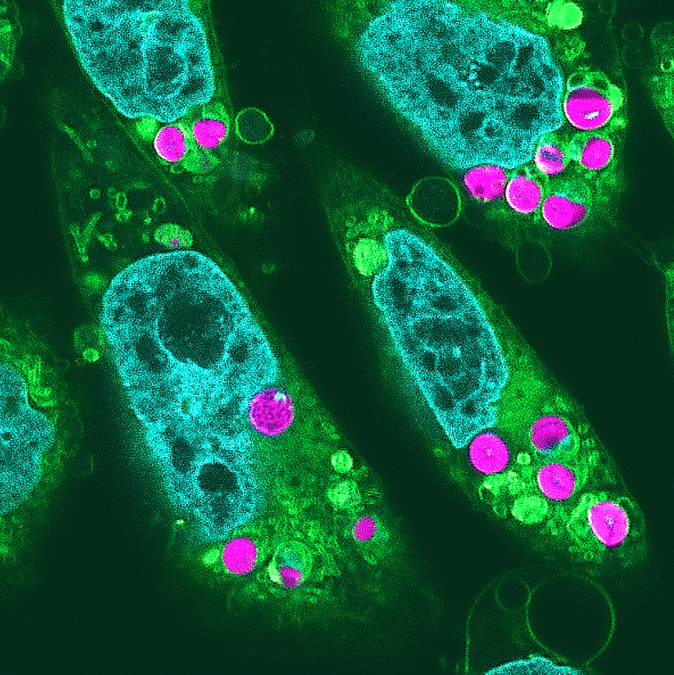
"Remarkably, our planimal cells retained nearly an entire algal genome over many generations. This demonstrates that even the vast evolutionary divide between plants and animals can be crossed at the level of chromosomes, without reproduction."
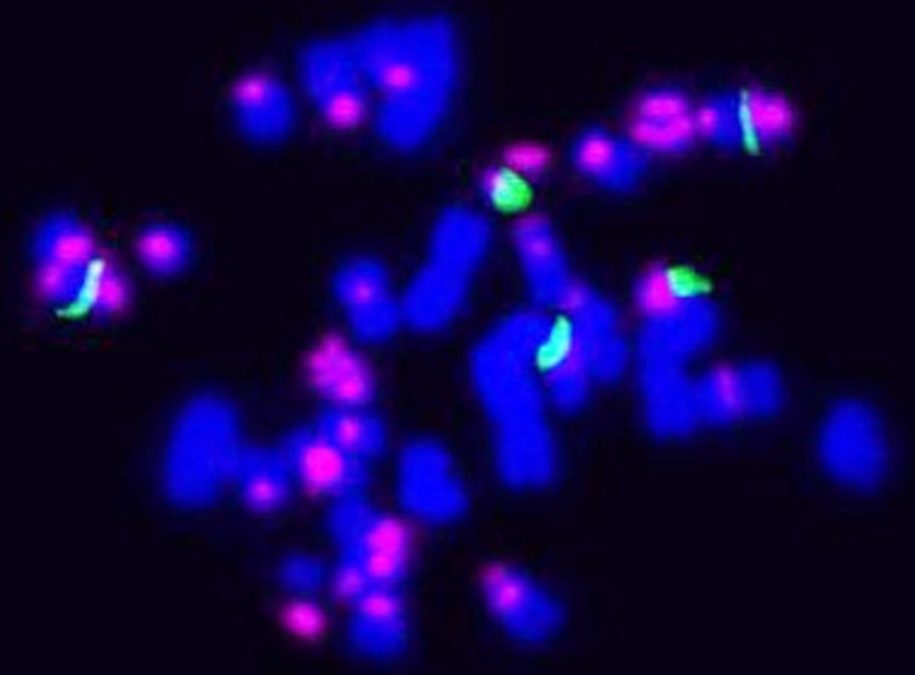
"We wanted to understand whether entire chromosomes could cross the enormous evolutionary divide between algae and animals and whether animal cells could stably maintain and pass on such foreign genetic material to their daughter cells," Matsunaga says.
"We also wanted to discover how animal cells accommodate DNA from such a different organism without losing their ability to survive and divide. These questions are fundamental to understanding how genetic material can move across species boundaries and contribute to evolution."
But the planimal cells are not all the way there yet. Most of the protein-coding genome from the algae was inactive, with only about 4 percent of it actually producing detectable transcripts.
"The red alga we use has a remarkably compact genome containing genes for metabolic functions that animal cells do not possess," Matsunaga says.
"Our ultimate goal is to activate these biological pathways and give animal cells some of the unique abilities of plants and algae. Imagine animal cells that could sustain photosynthesis for long periods, producing oxygen while using carbon dioxide to make useful organic compounds."
The next challenge will be figuring out how to get the animal cell to use the algae's genetic material, and maybe one day, photosynthesize.
The research has been published in Nature Communications.
This article was fact-checked by Fiona MacDonald and edited by Fiona MacDonald. While we pride ourselves on our process, we are only human. If you spot a mistake, please let us know.