Cancer cells are proving trickier than we thought, so scientists are getting even trickier to shift the survival odds in our favor.
Recent medical research has highlighted a significant issue: cancer cells display plasticity.
Some cancer cells can spontaneously revert from a differentiated state to become 'immature' and stem-cell-like again, switching their identity to yield more diverse, aggressive, and proliferative tumors.
As a result, they thwart traditional treatments like chemotherapy and radiation, which aim to stop cellular division and kill cancerous (and other) cells outright.
Unfortunately, these therapies may also create evolutionary pressure that favors more resistant and aggressive cancers that can more effectively spread throughout the body.
So in a new experiment, medical researchers used the cannabis compound, THC, to push cancer cells to 'lock in' and make tumors less ferocious.
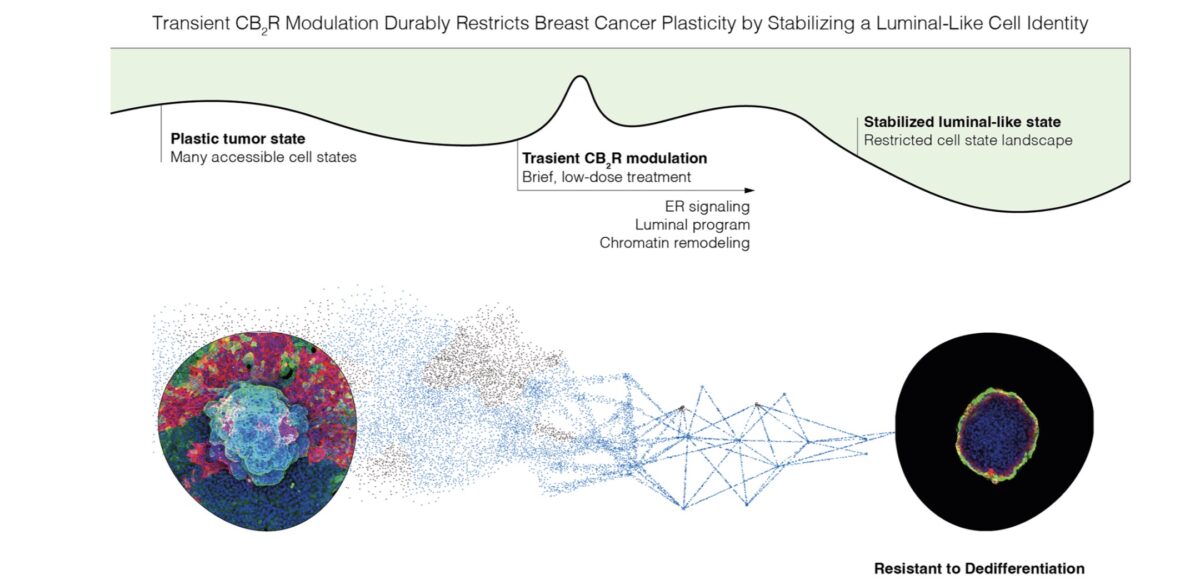
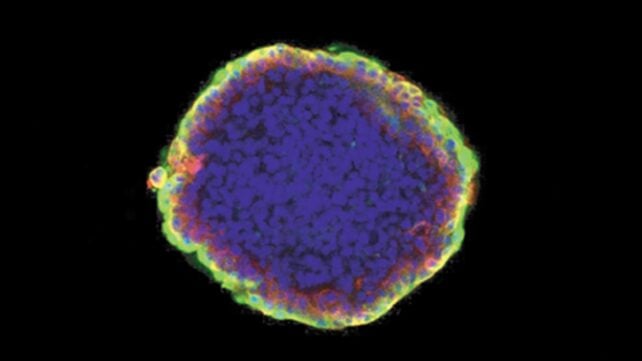
In a study published in Communications Biology, researchers explored the effects of an ultra-low-dose, 4-day cannabinoid treatment on organoids – lab-built 3D mammary tumor models created from breast cancer cells sourced from humans as well as in mouse models.
This test targeted the endocannabinoid system (ECS), which can regulate developmental pathways paralleled in both cancer evolution and embryonic development, the researchers note.
The ECS features two main cannabinoid receptors, CB1R and CB2R, which the researchers modulated with two types of ligands – molecules that either boost or block their activity to induce a biological response.
After the researchers administered a low-dose, 4-day pulse of THC (an agonist), the organoids exhibited reduced cell invasiveness, self-renewal capabilities, and tumor initiation.
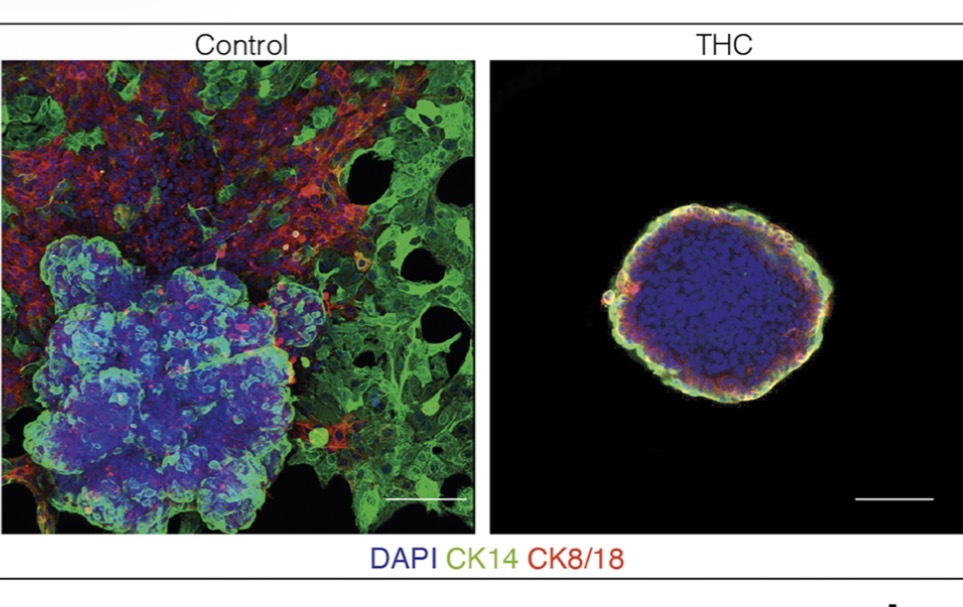
Interestingly, this result seems to be mediated predominantly by CB2R, which is associated with inflammatory responses, rather than CB1R, which is associated with cannabis' psychoactive effects.
The researchers played a bio-molecular 'good cop bad cop' routine. They treated CB1R and CB2R with separate inverse agonists, called SR1 and SR2, respectively, which reduce the receptors' baseline activity.
Despite the switcheroo, the organoids still seemed to be less, well, cancerous. Amazingly, the CB2R inverse agonist SR2 reproduced the cancer-mollifying effects of THC, while the CB1R inverse agonist SR1 did not.
But here's the strange part – organoids made from mice genetically engineered to lack CB2R showed similar changes.
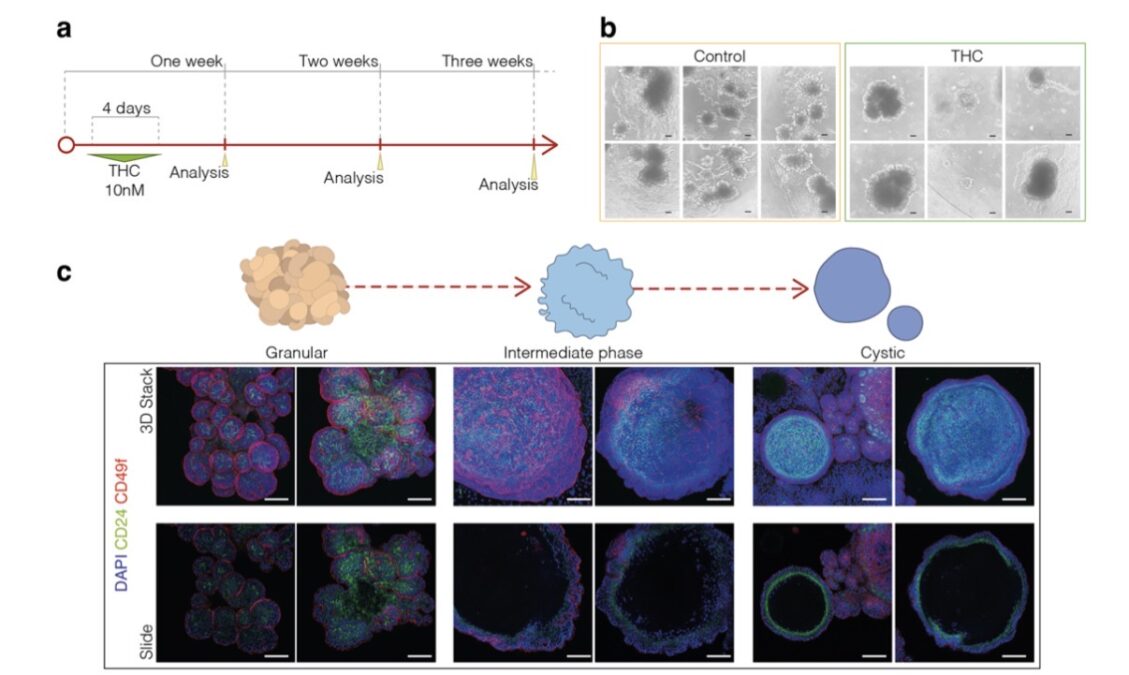
Altogether, this may suggest that the baseline activity of CB2R is what's important for the differentiation of cancer cells, and manipulating it may influence cancer cells' plasticity.
Equally important for practical purposes, the researchers found evidence that these tumor-inhibiting effects appear to be stable in vivo.
The effects persisted for up to 100 days when the researchers transplanted the THC-treated organoids into living cancer-prone mice, which developed tumors later and showed slower tumor growth and less aggressive lesions than mice receiving control organoids.
In a separate experiment, THC-treated cells also produced fewer clusters of cancer cells in the lungs four weeks after injection.
Furthermore, organoids that were modulated also showed resilience when the researchers actively tried to increase their tumor-forming activity.
This opens up numerous therapeutic avenues. Controlling the process could influence "differentiated cells [to] occupy space and resources that would otherwise be used for tumor expansion", the researchers explain.

CB2R modulation also seems to increase estrogen receptor activity, making breast cancer cells more responsive to endocrine therapy via the commonly used drug tamoxifen.
Related: Common Sugar Appears to Loosen Cancer Cells And Help Them Spread
In addition to showing the value of investigating complementary kinds of treatments, the research suggests that subtle CB2R modulation holds promise for reprogramming tumor cell behavior, with genome-wide effects that persist long after cannabinoid withdrawal.
"This view is consistent with the concept that tumor cell populations occupy continuous and dynamic state landscapes, where relatively small perturbations can trigger large-scale and self-reinforcing transitions in collective behavior," the researchers conclude.
This research was published in Communications Biology.
This article was fact-checked by Peter Dockrill and edited by Peter Dockrill. While we pride ourselves on our process, we are only human. If you spot a mistake, please let us know.