After centuries of medical science, it's reasonable to assume that we have a complete tally of all the organs in the human body by now.
But scientists just keep discovering new ones working thanklessly in the background, performing vital functions like sensing pain or producing saliva.
The latest is all in your head. In a new study published in Nature, biologists at Washington University (WashU) School of Medicine in St. Louis have identified a new immune organ inside the skull.
From that crucial post, it seems to act like a 'security station' to fight brain cancer at the early stages.
So far this organ has only been found in mice, but the researchers say there are signs that humans have them, too. And if we can supercharge these structures, we might have a new weapon against deadly brain cancers.
"This study reveals that the skull bone marrow is far more than just a structural framework – it harbors previously unrecognized hubs for brain-specific immune responses," says Jonathan Kipnis, a brain immunologist at WashU and senior author of the new study.
"Uncovering this localized immune niche changes how we view neuroimmune interactions and opens exciting new avenues for treating brain tumors and other neurological diseases."
The human body is patrolled by not one, but two distinct immune systems – one for the central nervous system, including the brain and spinal cord, and one for the rest of the body.
It's long been thought that the two systems were completely separate, and in fact, immune cells from the peripheral system can cause all sorts of trouble if they get into the brain. Some are known to contribute to neurodegenerative diseases because the sensitive tissues in the nervous system can be harmed by the 'reckless' techniques that work elsewhere in the body.
But a growing body of research suggests there's a bit more crossover than previously thought. In previous work, the team behind the new study identified tiny channels running from brain tissue, through the dura mater (the outermost protective membrane around the brain) and into the skull itself.
This time, the researchers used fluorescent tracer proteins to observe how molecules moved along these channels, following them from neurons into the bone marrow of the skull.
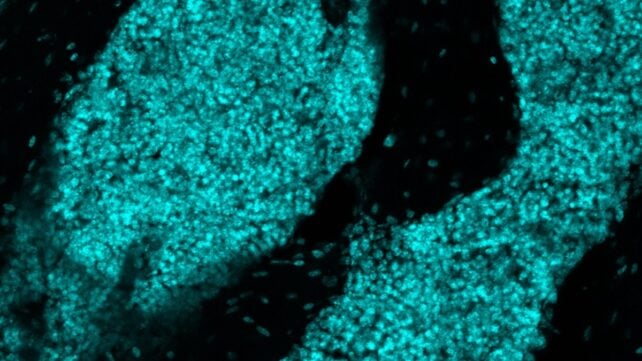
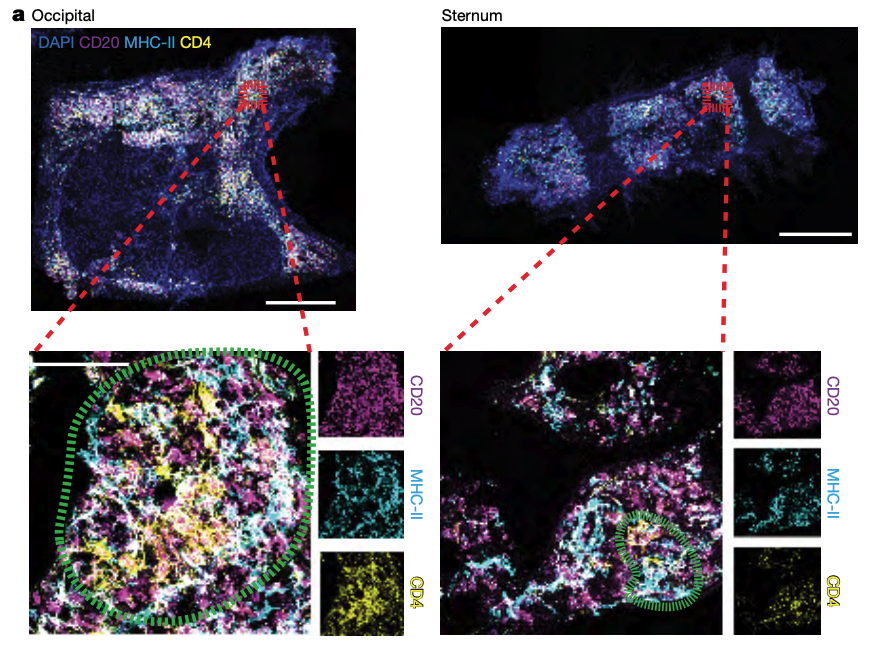
Eventually they tracked them into what looked suspiciously like germinal centers – structures that form in lymph nodes and act like training camps for immune cells.
Basically, naive B cells enter these structures, multiply to great numbers, get armed, are handed 'Wanted' posters for particular pathogens by other immune cells, and are sent out into battle.
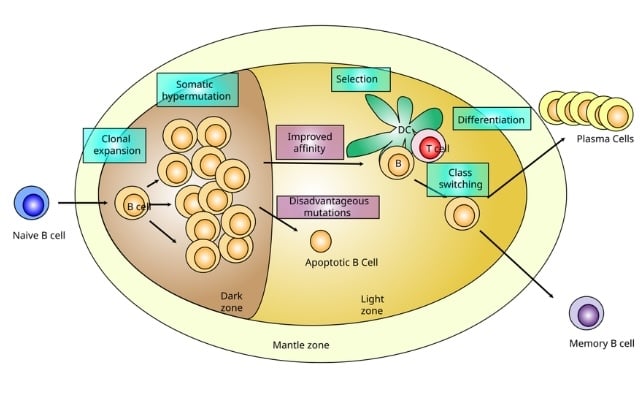

In this case, these training camps are strategically located near the brain, so they can fight on the front lines without having to recruit soldiers from further afield in the body.
"We have never seen such structures in healthy bone marrow before," says Jang Hyun Park, cell biologist at WashU and first author of the study.
"It is an exciting discovery that points out that a complex brain requires its own specialized immune structures to defend it."
The researchers tested that idea in mouse models of glioma, a particularly nasty form of brain cancer. They altered the activity of these lymphoid structures by applying a hydrogel laced with either immune-promoting or immune-suppressing compounds under the scalp.

Mice with disrupted skull lymphoid structures had much more aggressive tumors and lower survival rates than control mice.
However, mice given a mix of three immune-boosting proteins showed stronger immune responses from their skull lymphoids, fighting off their cancer more effectively and significantly increasing their survival.
Of course, findings in mice don't necessarily translate to humans, but the researchers say that follicular T cells have previously been detected in the bone marrow of human skulls, which could be a clue that these structures are also hiding in our own heads.
If so, it could eventually mark a major improvement in how we fight brain cancer: A hydrogel injected under the scalp is far less invasive than full brain surgery to remove tumors.
Related: This Tiny Organ Plays a Far More Profound Role in Human Longevity Than We Realized, Study Finds
"The finding fundamentally changes our current understanding of neuroimmunology," says Kipnis.
"Knowing that the brain relies on first responders in the surrounding skull for defense has the potential to change how we think about developing therapies for many neurological conditions, including Alzheimer's disease, Parkinson's disease, schizophrenia, long COVID, and many others that have an immune component to them.
"Such therapies could access these immune hubs directly through the skull, without major peripheral side effects."
The research was published in the journal Nature.
This article was fact-checked by Clare Watson and edited by Clare Watson. While we pride ourselves on our process, we are only human. If you spot a mistake, please let us know.