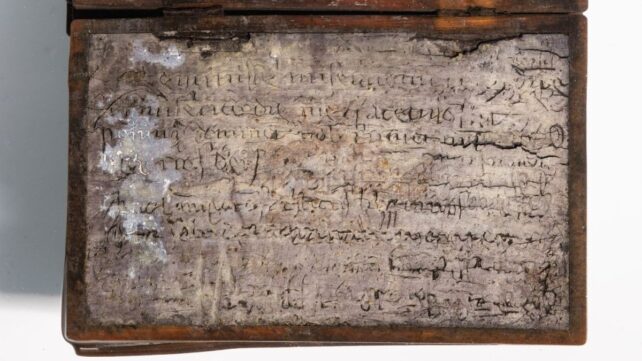
If you've ever stared in dismay as your phone slips out of your grasp and into the gaping white throat of your toilet, don't worry – there's precedent dating back hundreds of years.
Unlike your phone, though, a small personal notebook thought to have belonged to a medieval German merchant landed in exactly the right place to survive in excellent condition for centuries.
According to an initial analysis, the tiny ledger dates back to around 700 or 800 years ago – and its preservation is so remarkable that researchers think they will be able to read what is inscribed on its wax-coated pages.
"It sounds strange, but for us archaeologists, latrines are almost always a treasure trove," says archaeologist Barbara Rüschoff-Parzinger, cultural affairs officer of LWL in Germany.
"Comparable medieval artifacts are also known from Lübeck and Lüneburg, where a similarly damp soil environment preserved the finds. However, in no other case has the entire book been preserved as an archaeological find, as was the case here."
Organic products like wood and leather do not easily survive the ravages of time.
Interaction with oxygen, combined with the presence of bacteria that break down biological material, usually means these materials decay before preservation conditions are reached.
Waterlogged waste sites such as cesspits, middens, and latrines can be a surprising exception; there, oxygen levels can be low enough to stifle the decomposition processes that would occur in a more oxygenated environment.
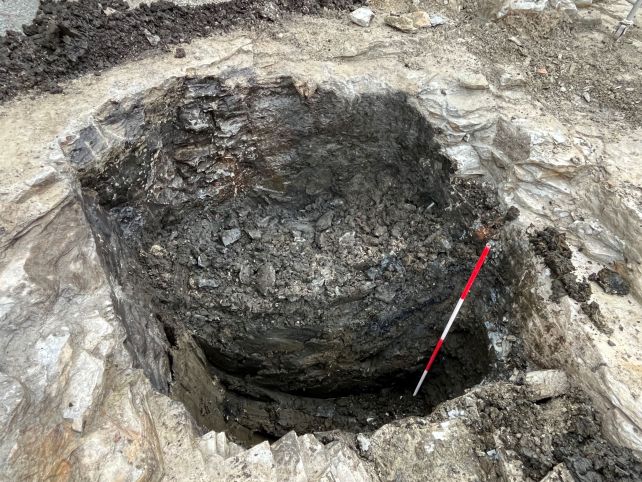
Digging through a medieval bog doesn't sound like a glamorous job, but for this reason, toilets can be archaeological goldmines.
This particular lavatory was discovered during archaeological work in Paderborn, Germany, and dates back to around the 13th or 14th century.
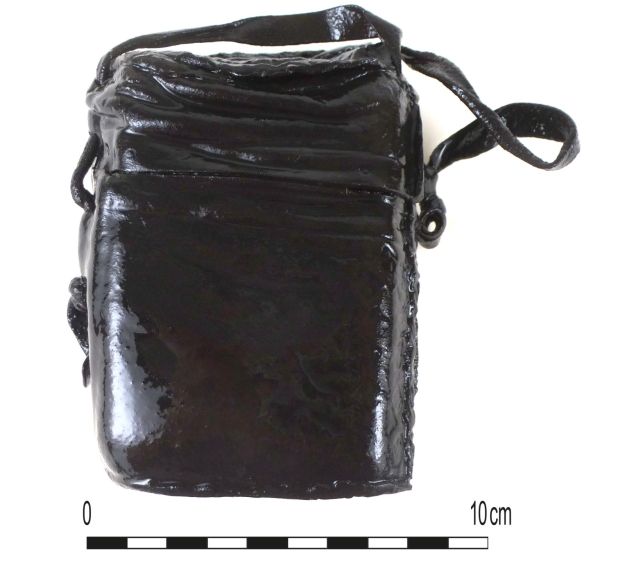
From amid the still rather smelly digested contents of many a medieval stomach found therein came a small, oblong object measuring 10 by 7.5 centimeters (4 by 3 inches).
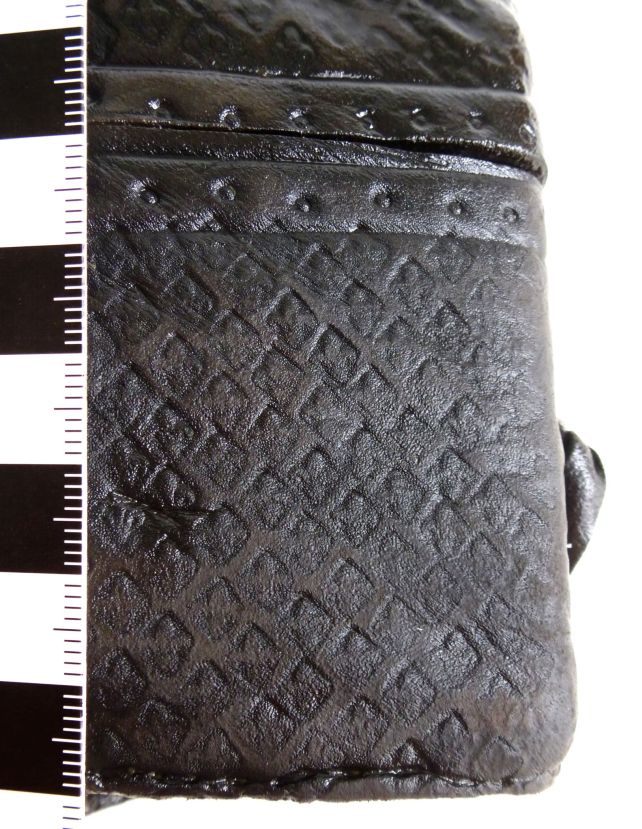
Closer inspection revealed a cover of beautifully embossed leather, wrapped around a series of wooden pages, coated with wax – what is known as a wax tablet book, a medieval tool for jotting down notes.
A sharp stylus is used to inscribe on the soft wax; at the other end of the stylus is a blunt, spatula-shaped end that can scrape away the wax, leaving a clean surface for further notes.
"Who wrote the book and what purpose did it serve? Initial assumptions suggest that a Paderborn merchant may have been the author, jotting down business transactions and recording his thoughts in note form," says archaeologist Sveva Gai of LWL.
"Merchants were educated people: Unlike most people, they could both read and write."
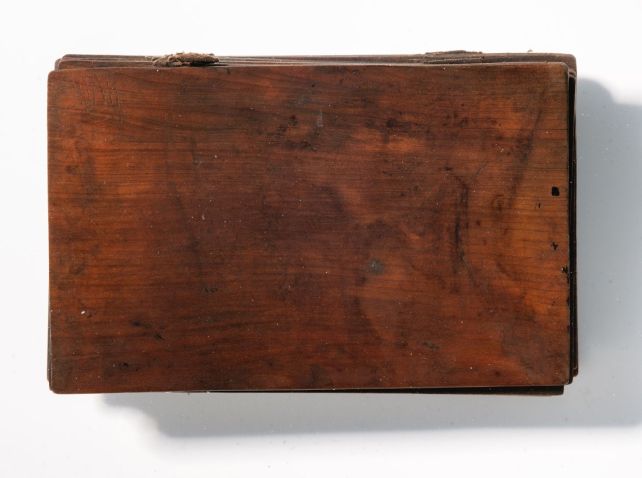
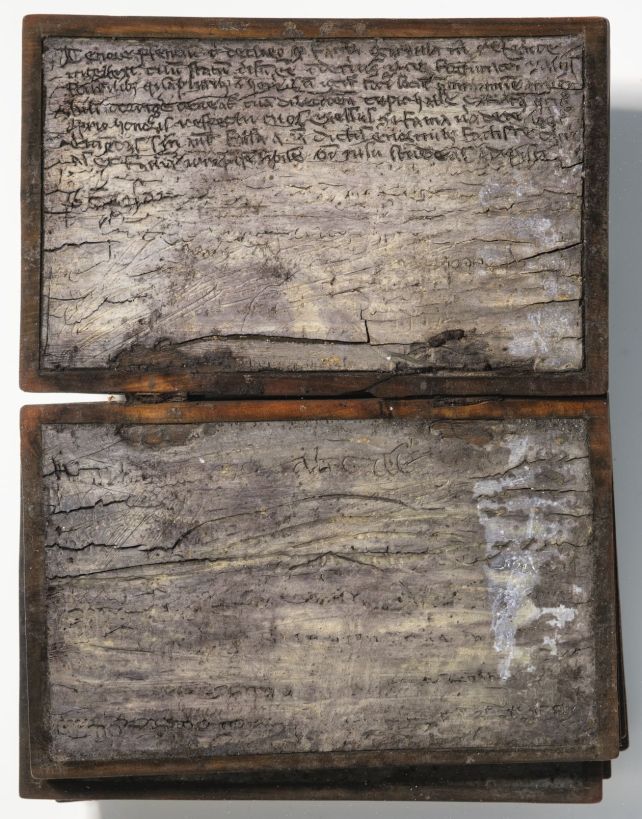
After careful cleaning, the true scope of the find emerged. The book contains 10 pages, eight of which are double-sided, with the two end pages consisting of just a single side each.
And on many of these pages, the cramped handwriting of the original owner is still visible.
"I only had to clean the outside of the book, as the inner pages were so tightly bound that there was no dirt on them," says conservator Susanne Bretzel of LWL.
"The wood also hadn't warped, so the wax is still intact and the writing itself is easily legible."
That writing, the team assessed, appears to have been inscribed by a single person, and whoever it was seems to have been a little slipshod with their erasing – some of the text is written over the faint impressions of an older text.
Meanwhile, the leather binding, gorgeously embossed with a fleur-de-lis pattern, and the language of the script – Latin – suggest someone from a more well-to-do social class.
The researchers have their work cut out for them. They hope to determine more about the owner of the book by determining its age, and the types of materials used in its construction.

Meanwhile, for all its legibility and exceptional condition, figuring out what is written on the pages will also take some painstaking work.
Related: Viking Poop Helps Scientists Reconstruct Genome of Ancient Human Parasite
"The text is not easy to decipher, even for experts in the field," Rüschoff-Parzinger explains.
"Individual words are recognizable, but the transcription will take some time, as some words may have been corrupted by incorrect spellings."
Work at the site is ongoing, but there are other clues that the toilet may have been a fancy one: it contained scraps of silk that, the researchers believe, were used as toilet paper by the upper crust.
And here we modern plebs just have wet-wipe fatbergs.