Researchers have identified a previously unknown neurodevelopmental disorder influenced by genetics – a discovery that promises new diagnoses for thousands of children and families worldwide.
The disorder is caused by a mutation in the RNU2-2 gene. This mutation is recessive (which means it needs to be inherited from both parents to become active), while the gene itself is non-coding (so it doesn't build proteins, but works more indirectly in cells).
Those two characteristics – recessive and non-coding – help explain why the neurodevelopmental disorder has remained hidden for so long. These aren't usually the areas of our DNA that scientists search for the source of health conditions like this.
The international team of researchers behind the discovery wanted to analyze RNU2-2 in more detail after a dominant mutation of the gene was previously found to cause a severe brain disorder with prominent epilepsy – though one that's less common than the newly uncovered developmental disorder.
"Our discovery gives families something they've often waited years for, a clear molecular explanation for their child's condition," says geneticist and paper co-lead Daniel Greene of the Icahn School of Medicine at Mount Sinai in the US.
"For many families, that clarity can be profoundly meaningful after a long and uncertain diagnostic journey. At the same time, it gives the research community a concrete biological target to guide future therapeutics."
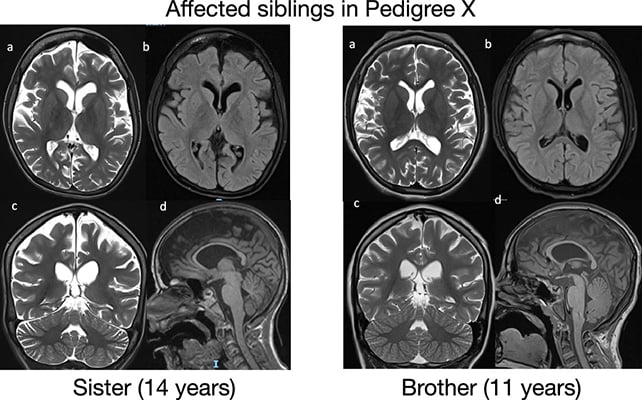
The disorder, named ReNU2 syndrome, comes from a lack of the U2-2 RNA molecule, which is coded by the RNU2-2 gene. While parents can carry one altered copy of the gene without being affected, when two copies come together, the condition appears.
Estimating that ReNU2 syndrome could account for around 10 percent of recessive neurodevelopmental disorder cases with a known genetic cause – so potentially thousands of people in the UK – the researchers say it can show up as developmental delays, limited speech ability, and low muscle tone.
Learning difficulties may be evident, as well as traits shared with autism and problems with walking or other types of movement. Epilepsy or respiratory and feeding problems could be involved, but it seems to affect each child differently.
The researchers identified ReNU2 syndrome by analyzing 110,009 individual genome records from two health research databases, selecting 14,805 unrelated individuals with a neurodevelopmental disorder and comparing them with 52,861 unrelated individuals without a disorder as a control group.
Statistical algorithms were then used to identify non-coding genes associated with these disorders, and to estimate the number of people in the population who might have ReNU2 syndrome. The findings were then double-checked in selected patients using blood tests.

"It can be considered a breakthrough because of the surprisingly high abundance of these variants – more than three times higher than the next recessive mutation causing severe neurodevelopmental disorders," says neuroscientist Cornelius Gross of the European Molecular Biology Laboratory in Italy, who wasn't involved in the study.
"This finding makes it of general medical relevance because it shows that non-coding genes are hot spots for disease and deserve greater attention in our search for the genetic basis for disease."
Besides giving those with the disorder and their families some clarity in terms of a diagnosis, this research will be vital for understanding how the condition might be managed in the present, and even prevented in the future.
However, plenty of challenges remain: Getting medication into the brain and the cells affected by ReNU2 syndrome will be difficult to accomplish, and, as the disorder is inherited from birth, it's not clear if it could be retroactively treated.
Related: Excess Brain Waste May Lead to Psychosis, And The Risks Could Start in Childhood
"While a specific treatment for recessive ReNU2 syndrome is not yet available, understanding that the disorder stems from a loss of U2-2 RNA points to potential gene replacement strategies in the future," says geneticist Ernest Turro, from the Icahn School of Medicine at Mount Sinai.
The research has been published in Nature Genetics.