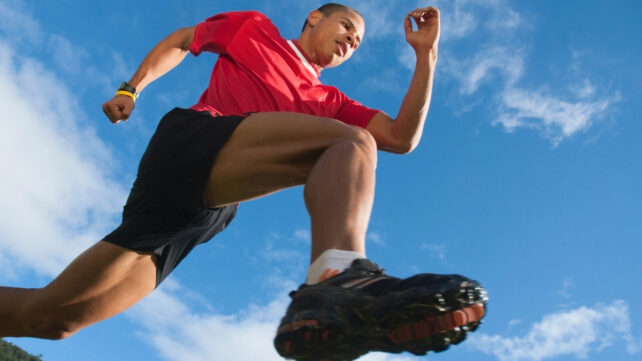
Exercise is good for you – that much we can all agree on – but which exercises work best for which types of benefit?
Knowing that can help in developing personalized exercise programs that suit individuals better.
In a new study published in the BMJ, researchers from China decided to analyze the connections between different exercise routines and bone mineral density (BMD), a key measure of bone strength.
There was a particular focus on protecting against osteoporosis and the associated bone fragility that comes with getting older.
With that in mind, the study team gathered data for 18,429 individuals aged 40 or over, taken from 124 previous trials.
While it's well established that exercise can help strengthen bones, the researchers wanted to see which type of exercise might work best, and how much of it was needed.
"Age-related declines in bone mineral density are strongly associated with reduced bone strength and increased fracture risk," write the researchers in their published paper.
"Structured exercise serves as a highly accessible, cost effective adjunct to pharmacotherapy, offering both targeted skeletal and broad systemic benefits."
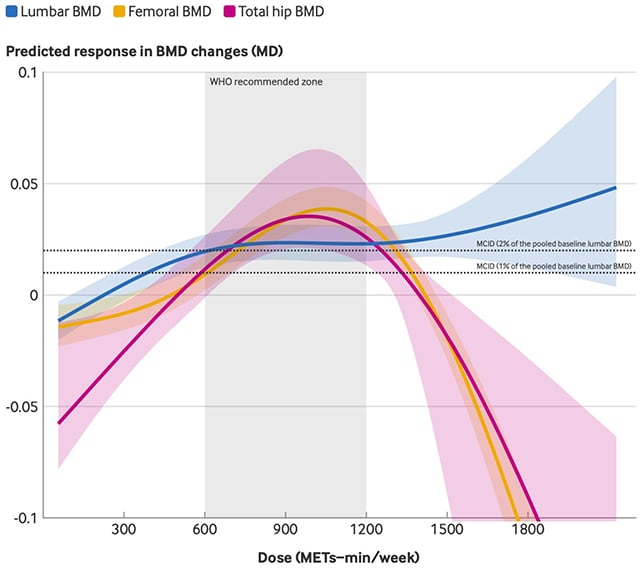
Having sifted the data into different exercise groups – including resistance training, yoga, and walking – the researchers also calculated exercise 'doses' through something called Metabolic Equivalent of Task (MET) minutes per week, which essentially measures energy burn and exercise intensity.
The data showed that brisk walking or jogging was the winner when it came to bone strengthening. A combination of aerobic and resistance training also scored highly, but in fewer areas of the skeleton. The gains weren't huge, but potentially enough to guard against the bone weakening that comes with old age.
As for exercise time and intensity, the study concludes that around 600 METs minutes per week is the level at which exercise starts to make a difference – the equivalent of around 2–3 hours of brisk walking or jogging.
"We found that structured exercise was associated with a modest yet clinically meaningful mitigation of age-related declines in BMD at the lumbar spine, femoral neck, and total hip," write the researchers.
Mixed aerobic exercise and mind-body exercises showed some association with a reduced risk of bone fractures, but here the data was less clear cut (synthesizing information across 124 trials does have its challenges).

The benefits of exercise did vary between groups though, a reminder that exercise – and health conditions – can affect us all differently.
"We also observed substantial heterogeneity in exercise responsiveness across participant subgroups," write the researchers.
"Exercise yielded more pronounced BMD effects in middle-aged individuals and those with a healthy BMI, whereas responses were blunted in older adults and those with overweight or obesity."
What's good about brisk walking or jogging is that it's relatively accessible. You don't need any special equipment or a gym membership to do it, or any particular skills or access to a trainer (as you might with weights or yoga, for example).
Osteoporosis affects millions of people worldwide, and can often lead to fractures (breaking a bone is sometimes the first indication people get that they have the condition). In the UK alone, it's thought that there are over 500,000 bone fractures per year caused by fragility related to osteoporosis.
Those fractures can lead to more health complications and even premature mortality. In older people especially, bones take longer to heal, which means extended hospital stays and longer periods of immobility – all negative as far as overall health is concerned.
Some of those injuries and early deaths could be prevented through exercise, the study concludes, though more research will be needed with more consistent parameters to confirm the link.
Related: 'Living Medication' May Have Restored Bone Strength in 10 Patients With Advanced Osteoporosis
"Given the overall low to moderate confidence in several estimates, these findings provide cautious support for the integration of dose specific, modality tailored exercise prescriptions into bone health guidelines," write the researchers.
The research has been published in the BMJ.
This article was fact-checked by Fiona MacDonald and edited by Fiona MacDonald. While we pride ourselves on our process, we are only human. If you spot a mistake, please let us know.