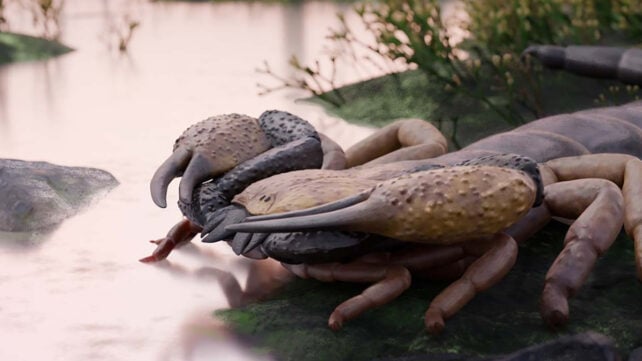
If you were wandering around Earth's floodplains 415 million years ago, you wouldn't have come across any other mammals – but you would have had to be wary of a giant scorpion measuring more than a meter (3.3 feet) in length.
After an extensive new fossil study, researchers in the UK have confirmed the identity of Praearcturus gigas, which may be the largest known scorpion in history.
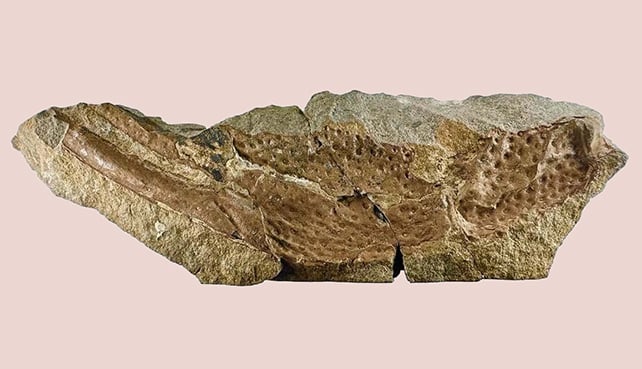
Fossils of the arthropod were first discovered in 1870 in the UK, but there's been a debate ever since about exactly what kind of creature it was. With the help of a variety of advanced imaging techniques, the researchers say the debate is now settled.
Besides confirming that we've got a huge scorpion here, the research teaches us more about the early history of life on land, back when it was covered with small plants and fungi, and when animals first began emerging from the oceans.
"Praearcturus lived when life on land was just starting out and the ancestors of reptiles, mammals and birds were yet to leave the water," says lead author Richie Howard, a paleontologist from the Natural History Museum in the UK.
"It suggests that this species might have grown so big because there weren't any other large predators, allowing it to dominate its environment."
The fresh analysis carried out here involved new camera lucida tracings, computed tomography scans, and comparisons to several other fossils from other UK sites dated to the Early Devonian period.
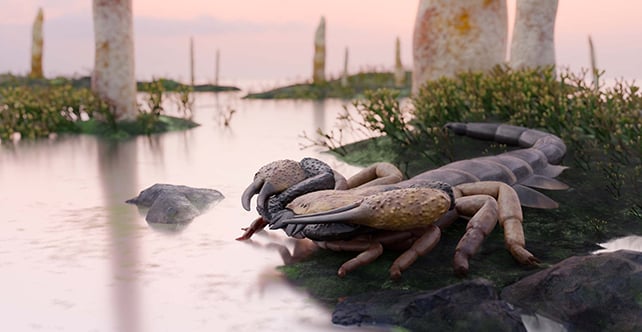
Fossils from Canada studied in 2015 and belonging to the ancient scorpion Eramoscorpius were also referenced in this new work, with anatomy comparisons used as evidence that P. gigas is indeed also a scorpion.
And what a scorpion! The researchers estimated its pincers to be 16 centimeters (6.3 inches) in length – meaning those alone were longer than the whole bodies of many living scorpion species.
The team also identified ridged surfaces on its limbs that were most likely used to make sounds – a technique known as stridulation that matches other extinct scorpion species.
It would've been one of the most fearsome beasts above the waterline, but the researchers point to evidence suggesting that the giant scorpion would also have spent time in the water too.
"Without complex ecosystems to support Praearcturus on land, these animals probably spent part of their lives hunting in water," says Howard.
"Some of the fossils found in Wales show that they had flap-like structures known as epimera that are similar to those found in lobsters and crabs."
Life on land would've been much different for other giant arthropods that arrived later: think millipedes as big as cars and dragonflies the size of modern birds of prey. They would have had large forests to roam through, and many more land animals to meet (and eat).
With the increase in competition for prey, the researchers suggest that P. gigas may have survived for another 40 million years after the time period these fossils are from, before disappearing from the Earth.
Further studies and fossil analysis should help add more detail to the timeline in the future, now we've established that P. gigas is indeed a scorpion.
The findings will also be useful for paleontologists looking at the periods when animals moved from the oceans to solid ground – with the lines particularly blurred when it comes to arthropods.

By understanding which ancient creatures walked on land and when, we can get a better idea of how different species evolved – right through to the scorpions on Earth today.
Related: Hidden Coral World The Size of Vatican City Found Deep Beneath The Ocean
"Our best family trees from DNA sequences suggest that scorpions are closely related to other arachnids with which they share book lungs, such as the spiders," says paleontologist Greg Edgecombe, from the Natural History Museum in the UK.
"This predicts that they are descended from an air-breathing ancestor. If this is the case, then Praearcturus is an example of an animal that likely returned to the water after its ancestors moved onto land."
The research has been published in Paleontology.