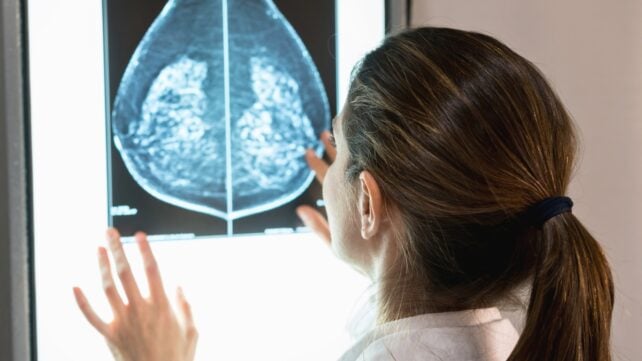
A woman's breast tissue undergoes dramatic changes as it ages, creating an environment where cancer cells are more likely to flourish, a new study has found.
The team of researchers, from the University of Cambridge in the UK and the University of British Columbia in Canada, created the most detailed map of breast tissue changes to date.
Made up of more than 3 million cells, the map tracks how breast tissue changes as women age, uncovering a particularly striking shift around menopause.
"Our map revealed that as women age, their breast tissue goes through major changes, with the most dramatic changes occurring at menopause," says Pulkit Gupta, a cancer scientist and joint first author on the study, who is now at Vanderbilt University.
"There are changes, too, during their twenties, possibly linked to pregnancy and childbirth, but these are far less pronounced."
As women get older, the number of cells in breast tissue declines, and the structure of the tissue also changes, the researchers found. That creates conditions where cancer cells could more easily survive and thrive – helping explain why breast cancer risk increases with age.
More than 320,000 women in the US are expected to be diagnosed with breast cancer this year, according to the American Cancer Society, making it the most common cancer in women.
Breast cancer rates are rising for younger women, for reasons that aren't entirely clear, but most cases are still diagnosed among women ages 50 and above.
Age is one of the biggest risk factors for nearly all cancers, including breast cancer. That's partly because people accumulate genetic mutations in their cells as they age, creating abnormal cells that can spread uncontrollably and bloom into tumors.
But how breast tissue itself ages and those changes contribute to cancer risk is still poorly understood.
"Even though breast cancer affects well over two million women worldwide, we understand very little about why and when it occurs," says Gupta.
To investigate, the researchers analyzed normal breast tissue samples from 527 women, aged 15 to 86 years old, who were undergoing breast reduction surgery.
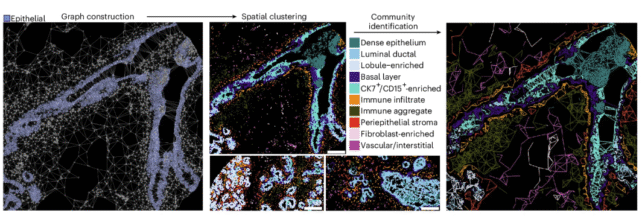
The team used advanced imaging techniques to map out individual cells, creating a detailed, two-dimensional picture of how breast tissue changes over time.
The map revealed that cells in breast tissue divide less often with age, and the number of immune cells and stromal cells (which create a tissue 'scaffold') declines. So does the number of epithelial cells, which line mammary ducts and milk-producing structures called lobules.
"It isn't surprising that we should see fewer epithelial cells, as these play a role in producing breast milk, something that becomes less important with age," says cancer pathologist Raza Ali, co-senior author from the University of Cambridge.
"But the sheer scale of changes across the breast surprised us."

The structure of the breast tissue itself also transformed; the milk-producing lobules shrank or vanished, fat cells increased, and blood vessels decreased.
Immune cells and stromal cells also moved further away from epithelial cells, potentially making it easier for cancerous cells to escape and spread.
Younger breasts also had more immune cells called B-cells and active T-cells, which can help identify and destroy cancer cells when they start to emerge.
Older breasts, meanwhile, had fewer of those cancer-fighting cells and instead were richer in M2 macrophages, an immune cell that other studies have implicated in cancer development.
Those changes create a more inflammatory environment, where the immune system is likely less effective at holding back cancer cells and "more permissive of carcinogenesis", the researchers write in their paper.
"We don't know for certain why the types of immune cells change," says Ali.
"We can speculate that one reason may be because breast milk contains a high concentration of immunoglobulins, probably to help build the infant's immunity, and these are produced by B cells."
"What is clear from our map," Ali adds, "is that all of these changes create an environment where cancer cells that emerge naturally find it easier with age take hold and spread."
Related: Scientists Want to Intercept Cancer Decades Before It Develops. Here's How.
The researchers found one large peak in aging that occurs in the late 40s, corresponding to menopause.
How quickly breast tissue ages probably depends on the individual woman, and that difference likely influences their cancer risk, the authors note.
The study didn't analyze ethnicity, genetics, or other factors that influence breast cancer risk, though previous studies have found that the normal breast tissue of women with genetic risk factors for breast cancer shows signs of accelerated aging.
The research was published in Nature Aging.