
If you're looking for ways to maximize your time in this world, the advice can be overwhelming.
Eat vegetables. Exercise. Live in the right city. Don't smoke. Have a lot of friends. Oh wait, maybe it's your genes.
According to famed, tap-dancing centenarian Dick Van Dyke, the secret is optimism – and never waking up in a bad mood.
Well, a new scoping review has bad news for anyone hoping for a shortcut.
It's all of those things.
A team led by pharmacologist Shaima Ibrahim of the American University in Cairo in Egypt reviewed 124 studies on centenarians and supercentenarians spanning 55 years of research, and found no single magic formula for living past 100.
Instead, the review, published in Discover Public Health, suggests longevity emerges from countless influences, from genes and DNA repair, diet and activity level, to social support, and plain old luck.
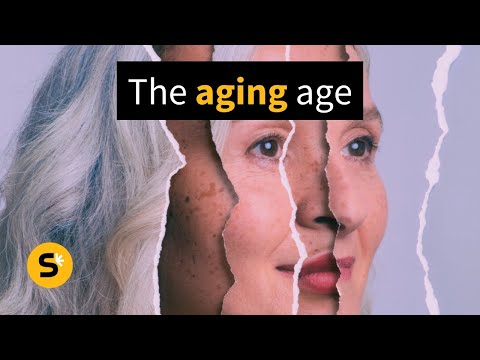
People who reach their 100th birthday don't have a secret strategy so much as a lifetime accumulating small advantages.
But there's another catch. Studying centenarians means studying only the people who reached 100 – not the many more who didn't. That makes it difficult to know whether a particular trait or behavior actually helped people live longer, or simply happened to be common among those who survived.
A human lifetime is a rich and complex tapestry woven of many threads.
A single study often has a tight focus on a single thread; a review zooms out and sees how that study fits in the bigger picture.
Ibrahim and her colleagues searched thousands of papers before narrowing them down to 124 studies of centenarians, semi-supercentenarians (aged 105–109), and supercentenarians (aged 110+) that investigated factors linked to exceptional longevity.
They then grouped the findings into broad categories.
Some focused on biology – genetics, epigenetics, DNA repair, telomeres, inflammation, metabolism, mitochondrial function, and cognitive resilience. Others examined lifestyle, including diet, physical activity, smoking, alcohol use, personality, and social connections.
The biological studies suggested that exceptionally long-lived people often age differently at a cellular level.
The researchers repeatedly found evidence of more efficient DNA repair, healthier mitochondria, better control of inflammation, and metabolic differences that may help protect against age-related disease.

Genetics also plays a role, although the review emphasizes that no single 'longevity gene' exists.
"Exceptional longevity is polygenic, involving multiple genetic variants each with modest effects that collectively exert substantial influence on lifespan," the researchers write in their paper.
Lifestyle factors played just as strong a role.
Across different populations, centenarians were more likely to eat largely plant-based diets, stay physically active through everyday activities such as walking and gardening, avoid smoking, and maintain strong social and family ties.
Personality traits such as resilience and lower neuroticism were also a consistent theme.
One of the most striking findings had to do with disease.
Centenarians don't avoid disease completely, but many seem to delay it until much later than average – a phenomenon the researchers refer to as "compression of morbidity".
Not everyone follows that pattern, however. Some exceptional agers develop age-related disease much earlier than average, but then manage to live with it for decades.
The researchers classify centenarians into three groups based on their relationship with disease: escapers, who avoid major age-related disease altogether; delayers, who develop it much later than average; and survivors, who develop disease earlier but live with it for many years.
This all paints a promising, if complicated, picture of longevity – but with some caveats.
Only a tiny fraction of the population lives to 100 – and centenarian studies rarely include the many other individuals who shared many of the same genes, diets, personalities, or habits but died decades earlier.
Related: At 100, Dick Van Dyke Credits One Habit For His Long Life. Studies Link It to 15% More Years
The review can't establish whether any of these factors actually cause exceptional longevity, but it does, perhaps, offer something more scientifically valuable. It highlights the biggest gaps in longevity research, particularly the need for long-term studies that can distinguish cause from coincidence.
"Longevity is driven by a complex interplay of factors in which genetic contribution strengthens dramatically at advanced ages, yet environmental and behavioral factors remain decisive for most individuals," the researchers write.
For those looking to live a long and happy life, the advice remains much as it always has. Get your steps in, plant a tree, and eat a carrot.
The findings have been published in Discover Public Health.
This article was fact-checked by Michael Irving and edited by Rebecca Dyer. While we pride ourselves on our process, we are only human. If you spot a mistake, please let us know.