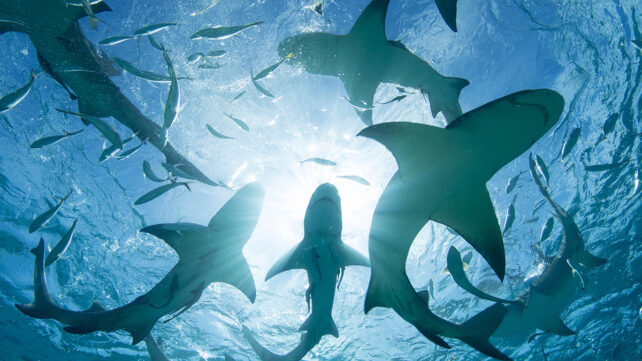
Sharks in the Bahamas have tested positive for cocaine, a new study concludes.
Researchers from the Bahamas, Brazil, and Chile also found traces of caffeine and painkillers in the sharks. This isn't a shift in lifestyle from the animals, but rather something that's being forced upon them, as marine pollution becomes ever more pervasive.
Finding traces of these substances in a tropical place widely seen as idyllic and pristine is concerning – it seems there are vanishingly few spots on Earth where wildlife can escape our influence.
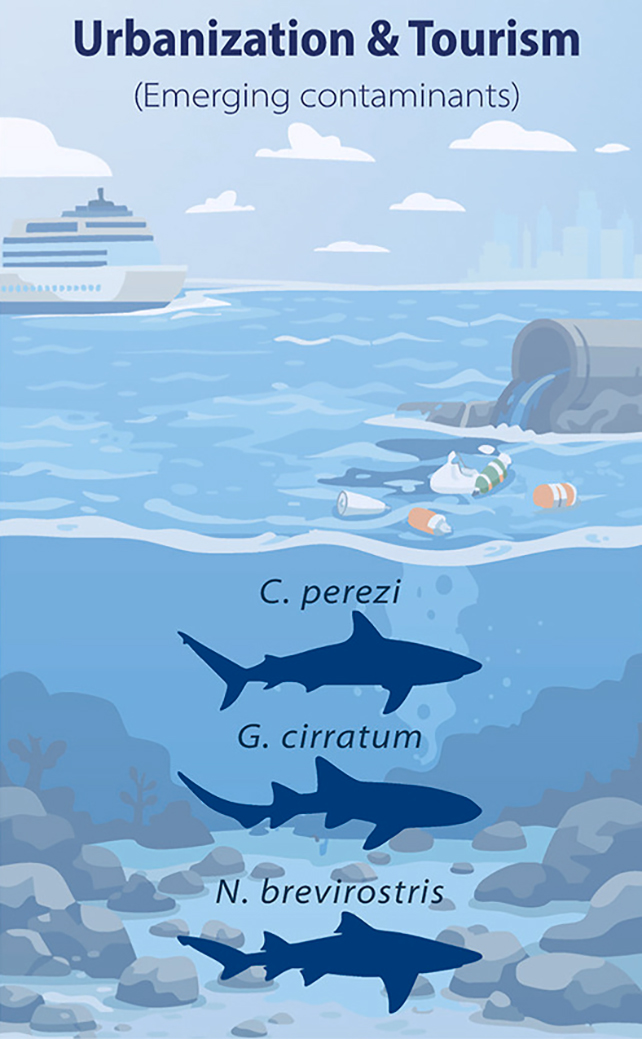
"Pharmaceuticals and illicit drugs are increasingly recognized as contaminants of emerging concern (CECs) in marine environments, particularly in areas undergoing rapid urbanization and tourism-driven development," write the researchers in their published paper.
"Their continual influx poses risks not only to marine biodiversity but also to human health through seafood consumption and recreational water exposure."
The research team analyzed blood samples from 85 sharks captured around Eleuthera, one of the most remote islands in the Bahamas. Of those sharks, 28 had drugs of some description in their system.
Caffeine was the most commonly detected substance, but two of the sharks tested positive for cocaine too. The researchers suspect the sharks may have bitten packets of cocaine that fell into the water.
"They bite things to investigate and end up exposed," biologist Natascha Wosnick, from the Federal University of Paraná in Brazil, told Joshua Rapp Learn at Science News.
The sharks were captured around popular diving and tourist cruise spots, and the suggestion is that untreated wastewater from boats may be contributing to these results – as well as greater wastewater from urban development and tourism more generally.
It's the first time caffeine has been detected in sharks anywhere, and the first time cocaine has been found in the systems of sharks in the Bahamas. The other two drugs identified in the blood samples were the painkillers acetaminophen and diclofenac.
It's an issue that experts are increasingly worried about. In a study published last year, cruise ships visiting the Arctic – essentially moving, floating mini-cities – were found to be releasing antibiotics, pharmaceuticals, and other substances into the water.

That has knock-on effects for anything living in that water. Traces of cocaine have previously been found in sharks off the coast of Brazil, which raises more alarm bells about how we treat the ocean as a huge liquid dumping ground.
What we don't know yet are the health effects that these drugs are having on marine life. In this study, the researchers assessed some metabolic markers in the sharks, suggesting that exposure to these drugs might be leading to higher stress and higher energy use as the aquatic predators' bodies work to detoxify their systems.
That's something that future research can try and pick up on. The study also calls for better wastewater management from tourism activities, as well as a broader look at how this kind of pollution might be affecting other parts of the natural ecosystem.
There are a worrying number of earlier studies highlighting the problem of drugs and medications now in the environment, and the urgent need to gather more data on their effects – including in locations assumed to be untouched and pristine.
Related: Pets Taking Cocaine on The Rise According to Recent Helpline Study
"The detected CECs represent a diverse group of biologically active compounds with the potential to interfere with fundamental physiological processes in marine organisms," write the researchers.
"This represents the first report concerning CECs and potentially associated physiological responses in sharks from the Bahamas, pointing to the urgent need to address marine pollution in ecosystems often perceived as pristine."
The research has been published in Environmental Pollution.